
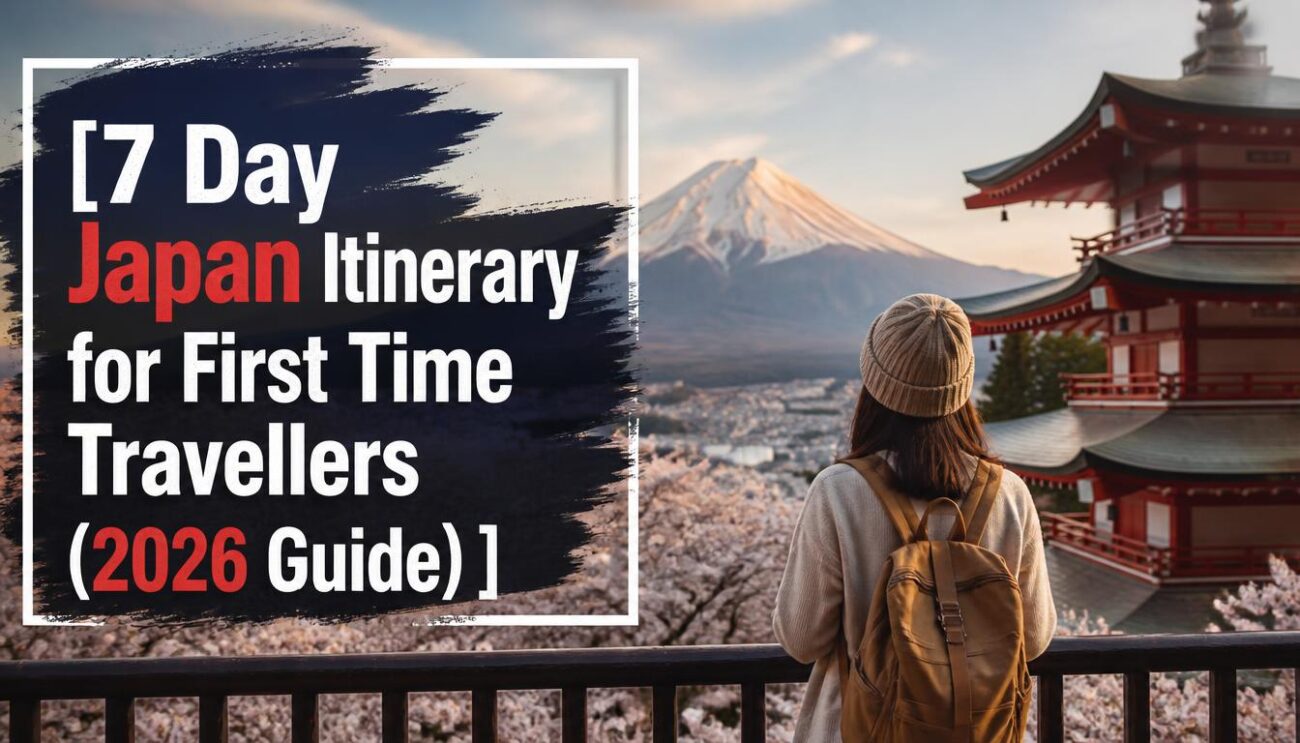
7 Day Japan Itinerary will help you explore Tokyo, Kyoto, Osaka, and other top destinations with a simple day-by-day travel plan.Planning your first trip to Japan is incredibly exciting, but it can also feel completely overwhelming. The country seamlessly blends ultra-modern skyscrapers with neon lights and ancient, quiet wooden temples. For a first-time visitor, deciding how to balance your time over a short week requires a highly strategic, efficient plan.
Planning your first trip to Japan can feel overwhelming because there is so much to see, from Tokyo’s bright city streets to Kyoto’s peaceful temples and Osaka’s famous food scene. This 7 Day Japan Itinerary keeps your journey simple, practical, and enjoyable by focusing on Japan’s most popular destinations without packing too many activities into each day. The classic Tokyo–Kyoto–Osaka route is especially suitable for a first visit because the cities are connected by efficient trains and can be explored in a logical direction.
This exact 7 day japan itinerary for first time travellers 2026 is meticulously designed to give you the ultimate balanced experience. You will experience the high-tech energy of Tokyo, the historic heart of ancient Kyoto, and magnificent views of Mount Fuji. Let’s dive into the step-by-step master plan to make your first trip flawless.
The 7-Day Golden Route Overview
Short on time? Here is a high-level summary of your perfect week-long route through Japan:
- Day 1: Arrival in Tokyo: 7 Day Japan Itinerary,Land at Narita or Haneda Airport.
- Day 2: Modern & Pop-Culture Tokyo: Experience Shibuya Crossing, Meiji Shrine, Harajuku, and the futuristic digital art displays at teamLab.
- Day 3: Historic Tokyo to Mount Fuji Transit: Visit the historic Senso-ji Temple in Asakusa, then take a scenic evening train to Lake Kawaguchiko.
- Day 4: Mount Fuji Views to Kyoto: Capture iconic views of Mt. Fuji over the lake, then ride the high-speed Shinkansen (bullet train) to Kyoto.
- Day 5: Ancient Temples of Kyoto: Hike through the thousands of vermilion gates at Fushimi Inari Shrine and wander the traditional streets of Gion.
- Day 6: Bamboo Groves & Golden Pavilions: Walk the Arashiyama Bamboo Grove early in the morning, visit Kinkaku-ji, and take an evening food tour.
- Day 7: Kyoto to Tokyo Return: Grab your last matcha treats, take the bullet train back to Tokyo, and catch your flight home.
2026 Travel Cost & Logistics Blueprint
Before you pack your bags, understanding your budget and booking windows is absolutely essential for a smooth trip.
Budget and Pricing Estimates (2026 Projections)
| Expense Category | Budget (Per Person) | Mid-Range (Per Person) | Luxury (Per Person) |
| Accommodation | $40 – $70 / night (Hostels/Capsules) | $120 – $220 / night (3-Star Hotels) | $450+ / night (Ryokans/5-Star) |
| Daily Meals | $25 – $40 / day (Konbini & Ramen Vending) | $60 – $110 / day (Izakayas & Sushi Sets) | $250+ / day (Kaiseki & Omakase) |
| Local Transport | $15 / day (Metro IC Card) | $140 total (One-way Bullet Train) | $300+ total (Green Car Bullet Train) |
| Attraction Tickets | Free – $15 per site | $25 – $35 (teamLab/Shibuya Sky) | $70+ (Universal Studios/VIP Tours) |
Key Logistics & Booking Windows
🚨 Critical 2026 Travel Warnings
- The JR Pass Notice: The national multi-day Japan Rail Pass had a massive price hike. For this specific 7-day itinerary, do not buy the national JR Pass. Buying individual bullet train tickets or regional passes online saves you over $150.
- Booking Windows: Because international travel to Japan is at an all-time high, you must book tickets for major attractions like teamLab Planets and Shibuya Sky exactly 30 days in advance online. Walk-up tickets are completely nonexistent.
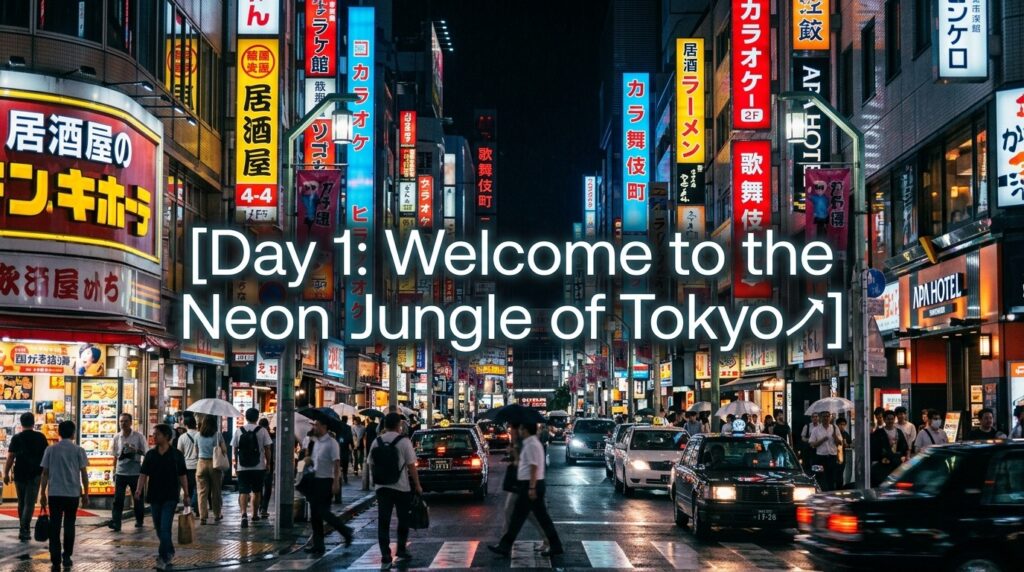
Day 1: Welcome to the Neon Jungle of Tokyo
Morning/Afternoon: Arrival & Essential Setup
7 Day Japan Itinerary Tokyo Land at Tokyo’s Haneda or Narita Airport. The very first thing you must do after clearing customs is set up your transit access. Go to the airport train counters or open your Apple Wallet to download a digital Welcome Suica or Pasmo Passport IC card to your smartphone. Load it with 5,000 Yen using your linked credit card. This digital card lets you tap smoothly past every metro gate, bus line, and convenience store register in Japan with zero physical hassle.
Take the comfortable 7 Day Japan Itinerary Tokyo Monorail (from Haneda) or the Narita Express directly into central Tokyo. For first-time visitors, we highly recommend booking a hotel in central, transit-friendly neighborhoods like Shinjuku or Rosebank-style walkable hubs like Shibuya. Check into your hotel, unpack your bags, and take a quick shower to beat your initial international flight jet lag.
Evening: The Lights of Shinjuku
Step out into Shinjuku, the busiest train station hub in the world. Walk through the eastern exit to experience the towering neon billboards and massive crowds of Kabukicho. Don’t forget to look up to see the iconic giant animatronic Godzilla roaring over the Toho Cinemas building!
7 Day Japan Itinerary For dinner, slip into the narrow, atmospheric alleys of Omoide Yokocho (Memory Lane). This historic alleyway is packed with tiny, open-air stalls cooking fresh skewers over charcoal. Find an empty wooden stool, order a cold draft beer or a refreshing lemon highball, and enjoy a plate of hot chicken yakitori to celebrate your first official night in Japan.
Day 2: Modern Icons, Pop Culture, and Digital Art
Morning: Serenity at Meiji Jingu & Harajuku Trends
7 Day Japan Itinerary Wake up early to beat the massive mid-day crowds and head straight to Meiji Jingu Shrine. Walk through the massive wooden Torii gates into a dense, peaceful forest of over 100,000 trees that completely blocks out the roaring noise of the surrounding city. Pay your respects at the main cleansing pavilion by washing your hands before viewing the beautiful rows of decorative sake barrels donated to the Emperor.
Exit the shrine grounds and walk right into the colorful madness of Takeshita Street in Harajuku. This is the epicenter of Japan’s quirky youth culture and extreme street fashion. Stop by a local stall to grab a fresh, warm strawberry and whipped cream crepe, or browse through vintage thrift clothing boutiques.
Afternoon: The Famous Shibuya Crossing & Shibuya Sky
Walk south down the stylish, tree-lined avenue of Omotesando toward Shibuya. Your destination is the world-famous Shibuya Crossing. Wait for the traffic lights to turn red, and join thousands of pedestrians walking across the massive intersection simultaneously. For the best aerial photo of the organized chaos, make sure you pre-booked a sunset ticket to Shibuya Sky, an open-air observation deck sitting 229 meters directly above the crossing.
Evening: Immersive Art at teamLab Planets
7 Day Japan Itinerary Hop on the local subway line toward Toyosu to experience teamLab Planets. This is an immersive, world-famous digital art museum where you take off your shoes and walk barefoot through water filled with projected, glowing oi fish. You will move through massive rooms packed with infinite crystal mirrors and floating orchids. Wrap up your evening with a hot bowl of rich, creamy pork broth ramen at a nearby automated ticket-machine noodle bar.
Day 3: Historic Traditions and Mount Fuji Retreat
Morning: Step Back in Time at Senso-ji Temple
Spend your final morning in 7 Day Japan Itinerary Tokyo exploring the city’s oldest and most sacred Buddhist temple, Senso-ji, located in the historic neighborhood of Asakusa. Walk underneath the massive red paper lantern hanging from the Kaminarimon (Thunder Gate) and stroll down Nakamise Shopping Street. This historic path has been lined with local stalls for centuries, selling authentic souvenirs, traditional woodblock prints, and warm ningyo-yaki (small sponge cakes stuffed with sweet red bean paste).
Afternoon: Scenic Escape to Lake Kawaguchiko
It is time to leave the concrete jungle behind. Head back to Shinjuku Station and board the Fuji Excursion Express Train directly to Kawaguchiko, one of the famous Fuji Five Lakes. The train winding out of the city and climbing into the mountain ridges offers magnificent, peaceful countryside views.
Evening: Authentic Ryokan & Hot Springs
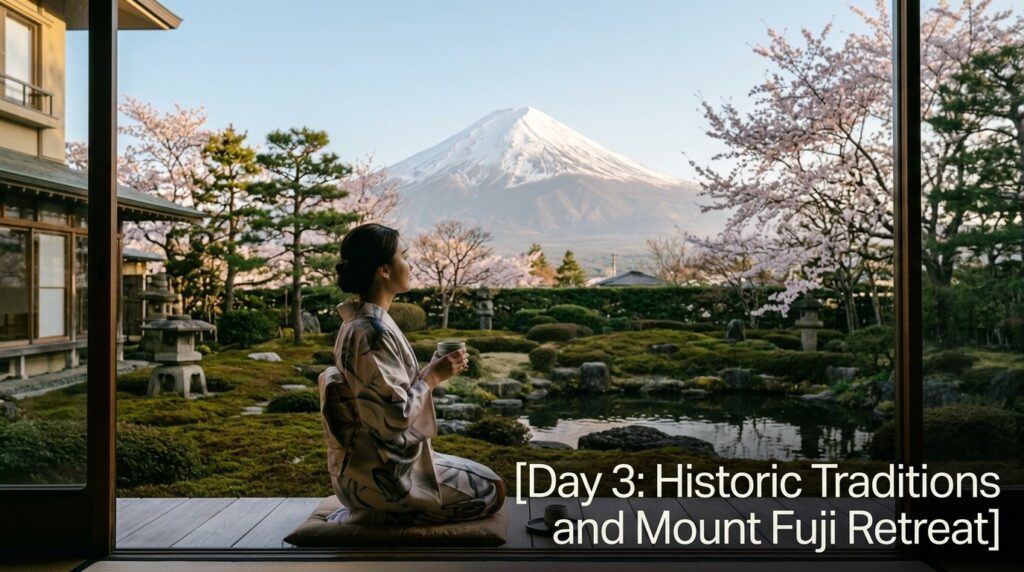
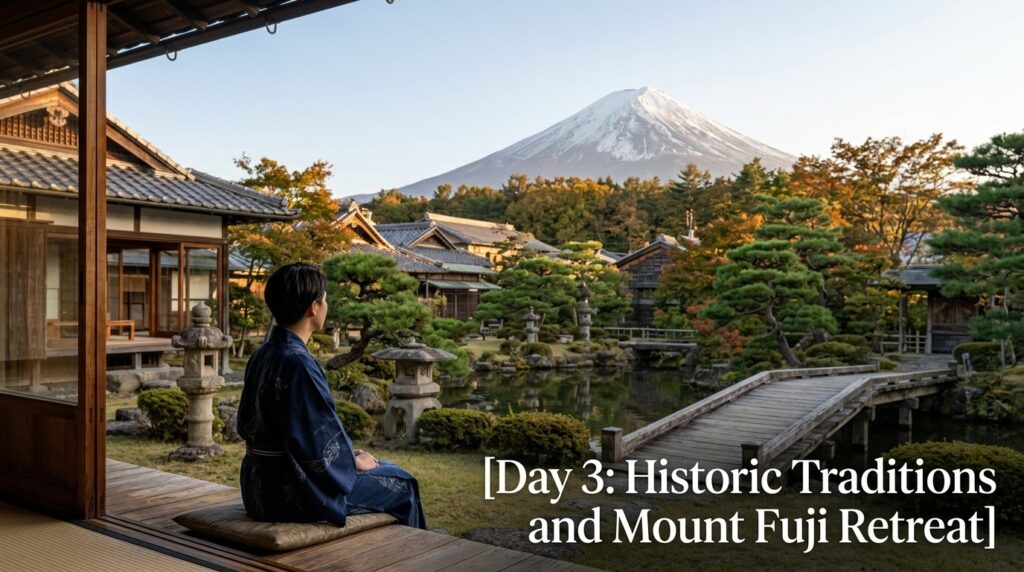
7 Day Japan Itinerary Check into a traditional Japanese inn, known as a Ryokan, along the shores of the lake. Change out of your travel clothes and slide into a comfortable cotton yukata robe provided by your hosts.
Spend your evening soaking in an onsen (natural geothermal hot spring bath) to soothe your muscles. Conclude your evening with an elaborate, multi-course traditional Kaiseki dinner brought directly to your room, featuring fresh seasonal ingredients, local mountain vegetables, and tender wagyu beef.
Day 4: Breathtaking Mountain Views and Bullet Train to Kyoto
Morning: Iconic Mt. Fuji Photo Spots
7 Day Japan Itinerary Wake up early for a morning stroll along the northern shores of Lake Kawaguchiko. On a clear morning, the lake offers a flawless reflection of Mount Fuji’s snow-capped volcanic cone.
Take a quick local bus or taxi over to the famous Chureito Pagoda. Climb the 398 stone steps up the hillside to capture the single most famous postcard image of Japan: a striking, red five-story pagoda framed perfectly with Mount Fuji towering in the background.
Afternoon: Riding the High-Speed Shinkansen
7 Day Japan Itinerary Check out of your ryokan and take a local scenic bus south to Mishima Station. Here, you will board your very first Shinkansen (Japanese bullet train) bound for Kyoto.
Expert Bullet Train Tip
When booking your bullet train tickets from Mishima/Tokyo going west toward Kyoto, always request seats on Row E (the right side of the train). This ensures you get one final view of Mt. Fuji flying past your window at 320 km/h!
Evening: Wandering the Historic Alleys of Pontocho
Arrive at Kyoto Station, which is a stunning architectural marvel of modern steel and glass. 7 Day Japan Itinerary Take a quick subway ride to the historic downtown district and explore Pontocho Alley. This is a narrow, atmospheric pedestrian street lit entirely by traditional paper lanterns, lined with upscale yakitori joints and wooden riverside dining platforms (kawayuka) overlooking the Kamogawa River.
Day 5: Thousands of Vermilion Gates and Geisha Districts
Morning: Fushimi Inari Shrine at Sunrise
7 Day Japan Itinerary Set your alarm for 6:00 AM to experience Fushimi Inari Shrine before the massive tour buses arrive. This world-famous Shinto shrine is dedicated to the god of rice and business.
The 7 Day Japan Itinerary main path winds up a mountain under an infinite corridor of over 10,000 vibrant vermilion Torii gates, all donated by local businesses. You do not need to hike the entire two-hour loop to the mountain peak; walking the first twenty minutes provides spectacular, peaceful photos.
Afternoon: The Historic Heritage of Kiyomizu-dera
Head north toward the historic Higashiyama District. Walk up the steep, winding, preservation lanes of Sannenzaka and Ninenzaka, which are lined with beautifully restored wooden machiya townhouses, traditional tea shops, and local pottery studios. At the top of the hill sits Kiyomizu-dera Temple. This UNESCO World Heritage site features a massive wooden veranda built entirely without a single nail, offering panoramic views over the entire valley of Kyoto.
Evening: Spotting Geishas in Gion
7 Day Japan Itinerary As dusk falls, stroll through the exclusive historic neighborhood of Gion. Walk along the stone-paved street of Hanamikoji, where you might catch a brief, magical glimpse of a Geiko (Kyoto geisha) or Maiko (apprentice geisha) dressed in an elaborate silk kimono gliding silently on her way to an evening banquet appointment. For dinner, stop by a local tavern to enjoy Yudofu (Kyoto’s famous silky hot-pot tofu) and crisp seasonal vegetable tempura.
Day 6: Bamboo Groves, Golden Pavilions, and Food Walks
Morning: Arashiyama Bamboo Grove
Head to western Kyoto to experience the ethereal Arashiyama Bamboo Grove. Walk slowly down the walking paths as towering stalks of green bamboo sway gently in the morning wind, filtering beautiful shafts of sunlight onto the forest floor. Afterward, take a short five-minute walk over to the historic Tenryu-ji Temple to admire its landscape garden, which has remained unchanged since the 14th century.
Afternoon: The Breathtaking Golden Pavilion (Kinkaku-ji)
7 Day Japan Itinerary Take a local bus or taxi north to view Kinkaku-ji, famously known as the Golden Pavilion. The top two floors of this Zen Buddhist temple are completely covered in brilliant, shimmering gold leaf. It sits majestically on the edge of a mirror-like pond, creating an unforgettable visual contrast against the deep green pine trees and manicured rock formations.
Evening: Nishiki Food Market Exploration
Spend your final evening in Kyoto tasting local street food delicacies along the narrow five-block corridor of Nishiki Market, known affectionately to locals as “Kyoto’s Kitchen”.
Day 7: Final Souvenirs and Return Journey
Morning: Last-Minute Souvenir Shopping
7 Day Japan Itinerary Spend your final morning in Kyoto grabbing meaningful souvenirs to bring home. Head to the basement floors of Kyoto Station’s department stores to purchase beautifully wrapped boxes of Uji Matcha sweets.
Afternoon: Return Bullet Train to Tokyo
Board the Shrinkage once more for your smooth, high-speed return journey back to 7 Day Japan Itinerary Tokyo. Watch the Japanese countryside glide past your window one final time as you prepare to transfer directly to the airport for your evening flight home to the USA.
Pros and Cons of a 7-Day Japan Itinerary
| Pros | Cons |
| Covers the Essentials: Experience both ultra-modern cities and ancient wooden temples efficiently. | Fast-Paced Schedule: Changing hotels and cities multiple times can feel tiring for some travelers. |
| Flawless Transport: The bullet train network makes traveling long distances completely stress-free. | Limited Deep Dives: You will not have enough time to visit peripheral areas like Osaka, Hiroshima, or Hokkaido. |
| High Financial Efficiency: Sticking strictly to the core Tokyo-Kyoto route saves money on unnecessary regional transit tickets. | Crowd Challenges: Because you are visiting major highlights, encountering large tour groups is inevitable. |
Common Mistakes First-Time Travelers Make in Japan
- Buying the 7-day National JR Pass blindly: Thanks to recent price structure changes, buying individual tickets for your point-to-point train routes is much cheaper than buying the full national pass for this specific route.
- Over-packing heavy luggage: Japanese trains have limited overhead storage space, and navigating busy metro staircases with massive suitcases is exhausting. Travel light or utilize cheap luggage forwarding services (Takuhaibin).
- Forgetting to carry physical cash: While major Tokyo department stores accept credit cards, many local temple ticket booths, traditional capsule vending machines, and neighborhood street food stalls strictly accept cash coins and bills.
- Booking flights to the wrong airport location: Haneda Airport is located right next to central Tokyo (a 25-minute taxi/monorail), while Narita Airport sits over an hour away. Always prioritize Haneda flights if the prices are comparable.
Expert Insider Tips for a Flawless Week in Japan
- Rent a Pocket Wi-Fi or e-SIM instantly: Having reliable, high-speed data is mandatory for using Google Maps, which gives you flawless, real-time platform directions for the intricate subway systems.
- Utilize Convenience Stores (Konbini): Do not sleep on 7-Eleven, Lawson, or FamilyMart. They offer incredibly fresh, delicious, and cheap meals like rice balls (onigiri), egg salad sandwiches, and hot fried chicken perfect for a fast breakfast.
- Learn a few basic phrases: While translation apps work beautifully, locals will deeply appreciate it if you say Arigatou gozaimasu (Thank you very much) or Sumimasen (Excuse me / Sorry).
- Dine during the lunch window: High-end dining spots that cost over $150 for dinner often serve identical premium ingredients during lunch via set menus (Teishoku) for less than $25.
First-Time Traveler Packing Checklist
- [ ] Passport with at least 6 months validity remaining
- [ ] Universal Type A plug adapters (Japan uses two flat parallel prongs)
- [ ] Slip-on walking shoes (you will take your shoes off constantly at temples and restaurants)
- [ ] Lightweight, reusable tote bag for carrying your daily garbage (public trash cans are extremely rare)
- [ ] Digital e-SIM profile pre-installed on your smartphone
- [ ] Hand towel or small rag (many public restrooms do not provide paper towels)
Suggested Image Prompts for Visual Layouts
- Featured Image: A panoramic view looking across the sea of pedestrians crossing the neon-lit Shibuya Crossing at dusk in Tokyo.
- H2 Modern Tokyo: An eye-level photograph capturing the towering green bamboo stalks of the Arashiyama Grove with sunbeams filtering through.
- H2 Mount Fuji: A crisp morning shot of the iconic red Chureito Pagoda with a clear view of a snow-capped Mount Fuji standing in the background.
- H2 Ancient Kyoto: A beautiful close-up of a visitor walking underneath the infinite corridor of vibrant vermilion Torii gates at Fushimi Inari Shrine.
Frequently Asked Questions
Is 7 days enough time to visit Japan?
While you cannot see the entire country in a week, 7 Day Japan Itinerary to experience the core highlights of the “Golden Route” (Tokyo, Mount Fuji, and Kyoto) without burning out.
Do I need to speak fluent Japanese to navigate safely?
Not at all. Major transit signs, train station announcements, and restaurant menus across 7 Day Japan Itinerary Tokyo and Kyoto are fully displayed in English. Using the live camera feature on Google Translate will solve any unexpected language blocks instantly.
Can you drink tap water safely across Japan?
Yes! The municipal tap water across every prefecture in Japan is treated to elite global safety standards. It is completely safe, clean, and healthy to drink directly from any sink or public fountain.
How do I get from Tokyo to Kyoto most efficiently?
The absolute best method is taking the Tokaido Shinkansen (Nozomi Bullet Train). It takes just 2 hours and 15 minutes to travel directly between the two major city centers with zero transit delays.
What is the absolute best month to execute this itinerary?
The ideal windows are during autumn (October to November) for crisp weather and vibrant maple leaves, or spring (late March to April) to view the iconic cherry blossoms.
Are tattoos allowed inside traditional Japanese hot springs?
Historically, tattoos were banned due to old cultural associations with local gangs. However, in 2026, many modern ryokans and public onsens provide skin-colored waterproof stickers to cover ink, or offer private onsen rooms (kashikiri) for total comfort.
Is 7 days enough for a first trip to Japan?
Yes. Seven days is enough to experience Japan’s major highlights, especially if you focus on Tokyo, Kyoto, and Osaka and avoid adding too many distant destinations.
What is the best route for first-time travellers in Japan?
The classic route is Tokyo → Kyoto → Osaka. This Golden Route minimises backtracking and allows first-time visitors to experience modern Tokyo, historic Kyoto, and Osaka’s famous food and entertainment scene.
How much cash should I carry daily?
We recommend keeping roughly 3,000 to 5,000 Yen (around $20 – $35 USD) in physical cash inside your wallet daily to handle small temple entrance fees, street snacks, and automated coin lockers smoothly.
Do I need to tip taxi drivers or waitstaff?
7 Day Japan Itinerary If you leave extra coins on a restaurant table, the server will assume you forgot your money and run down the block to return it to you. Excellent service is always built directly into the base price.
Conclusion
7 Day Japan Itinerary is a destination that feels like stepping directly into the future while simultaneously walking through a living history book. By following this strategic 7-day blueprint, you will avoid the common stress points, save money on transport.
A well-planned 7 Day Japan Itinerary can give you an exciting first taste of Japan without making your trip unnecessarily stressful. By following a simple route through Tokyo, Kyoto, and Osaka, you can experience futuristic city life, historic temples, traditional neighbourhoods, delicious Japanese food, and unforgettable local experiences in just one week. Keeping your schedule realistic is important because trying to visit too many destinations can leave you spending more time on trains than enjoying Japan.
Are you ready to turn your dream vacation into reality? Start booking your attractions, secure your central 7 Day Japan Itinerary Tokyo lodging, and prepare for an unforgettable adventure along the Golden Route today!
