
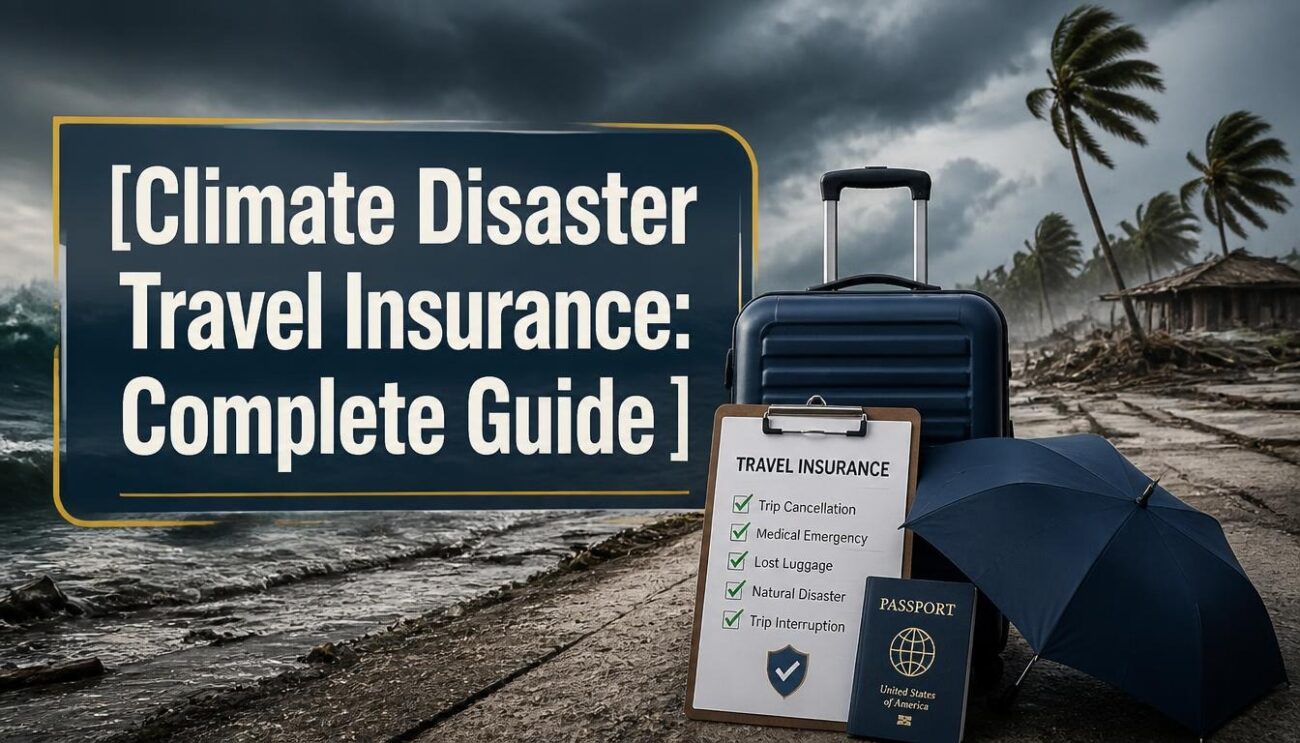
Climate Disaster Travel Insurance helps protect your trip when extreme weather affects your travel plans. Today, storms, floods, wildfires, hurricanes, and heat waves happen more often in many parts of the world. Therefore, travellers should understand what their policy may cover before booking a trip. This guide explains the basics in easy English. It also helps you compare plans, understand common benefits, and make smart choices. As a result, you can travel with more confidence and avoid many unexpected costs when weather causes serious problems.
Travel plans can change at any time because nature is unpredictable. However, not every travel insurance policy offers the same level of protection for climate-related events. Some plans may cover trip cancellation, while others may help with delays, emergency accommodation, or transportation. Moreover, each insurance company has different rules and conditions. Therefore, reading the policy carefully before you travel is always important. This complete guide explains everything you need to know in simple steps, so you can choose the right protection for your next adventure.
What Is Climate Disaster Travel Insurance?
Featured Snippet Answer
Climate Disaster Travel Insurance is a travel insurance policy that may help if a natural disaster affects your trip. It can cover costs related to trip cancellation, travel delays, emergency accommodation, medical care, or evacuation when the event meets the policy terms. Coverage always depends on the insurance provider and policy conditions.
Travel insurance protects you from unexpected travel problems. However, climate disasters create special risks that many travelers forget to consider. Strong storms, hurricanes, floods, wildfires, and severe snowstorms may interrupt flights, damage hotels, or close roads. Therefore, having the right insurance can reduce financial stress.
Each policy has different benefits and limits. Moreover, coverage usually depends on when you bought the policy and when the disaster happened. Reading every policy detail before buying is always a smart step.
Why Climate Disasters Matter for Travellers
Extreme weather events are becoming more common in many destinations. Therefore, travelers should think about possible weather risks before planning any trip.
A climate disaster may affect your journey in many ways. Flights may be canceled, roads may close, or hotels may become unsafe. As a result, your travel plans may change without warning.
Some destinations face hurricanes during certain months. Meanwhile, other places experience wildfires, floods, heavy rain, or severe winter storms. Learning about seasonal weather helps you prepare better.
Climate Disaster Travel Insurance cannot stop bad weather. However, it may reduce the financial impact if your trip is affected by a covered event.
What Events May Be Covered?
Different insurance companies define covered disasters in different ways. Therefore, always check the official policy wording before you buy.
Many policies may include coverage for:
- Hurricanes
- Tropical storms
- Floods
- Wildfires
- Earthquakes
- Volcanic eruptions
- Severe snowstorms
- Tornadoes
- Major windstorms
Some plans may also cover other weather-related emergencies if they seriously affect your trip. However, every insurer uses different rules and conditions.
| Climate Event | Possible Travel Impact |
| Hurricane | Flight cancellations and hotel closures |
| Flood | Road closures and transportation delays |
| Wildfire | Evacuations and poor air quality |
| Snowstorm | Airport closures and delayed travel |
| Volcanic Eruption | Flight disruptions and airport closures |
What Is Usually Covered?
Coverage depends on your policy. However, many comprehensive travel insurance plans may include several helpful benefits.
Trip Cancellation
Sometimes you cannot start your trip because a covered disaster happens before departure. Therefore, your policy may reimburse eligible prepaid travel costs.
Trip Interruption
Climate Disaster Travel Insurance Your vacation may end earlier than planned because conditions become unsafe. As a result, your insurance may help cover some additional travel expenses.
Travel Delays
Bad weather often causes long airport delays. Moreover, some policies may pay for meals, hotels, or transportation after a qualifying delay.
Emergency Accommodation
A hotel may close because of a disaster. Therefore, your policy may help pay for another place to stay if your coverage includes this benefit.
Emergency Medical Care
Natural disasters sometimes cause injuries during travel. Furthermore, many travel insurance plans include emergency medical coverage for eligible situations.
Emergency Evacuation
Authorities may order visitors to leave dangerous areas. In addition, some policies may help pay for emergency evacuation when it is medically or legally necessary.
What Is Usually Not Covered?
Climate Disaster Travel Insurance does not cover every situation. Therefore, understanding exclusions is just as important as knowing the benefits.
Many policies may not cover:
- Known weather events announced before you purchased insurance
- Traveling against government safety advice
- Normal weather delays that do not meet policy requirements
- Losses without proper documentation
- Expenses above the policy limits
Always read the exclusions section carefully. Moreover, ask questions if any part of the policy is unclear.
When Should You Buy Travel Insurance?

Buying Climate Disaster Travel Insurance early often provides the best protection. Therefore, many travel experts recommend purchasing a policy soon after making your first trip payment.
Waiting too long may reduce some available benefits. Moreover, a storm or wildfire announced before you buy insurance may not qualify for coverage under many policies.
Early purchase also gives you more time to review the policy. As a result, you can compare benefits and understand exactly what your plan includes before your departure date.
How to Choose the Right Climate Disaster Travel Insurance
Featured Snippet Answer
Choose Climate Disaster Travel Insurance by comparing coverage, medical limits, cancellation benefits, evacuation services, customer support, and policy exclusions. Read the full policy before buying, compare several providers, and select a plan that matches your destination, activities, and travel budget.
Not every traveler needs the same insurance plan. Therefore, choose a policy based on your destination, travel style, and planned activities.
Look for plans that include emergency medical coverage, trip cancellation, trip interruption, and evacuation benefits. Furthermore, check the claim process because simple claims save time during stressful situations.
Compare several insurance providers before making your decision. In addition, read customer reviews from trusted sources to understand how companies handle claims.
Also, review the maximum coverage limits. A lower-priced policy may not always provide the protection you need. Therefore, balancing cost and coverage is usually the smarter choice.
Why Reading the Policy Is So Important
Many Things to Do in Dubai at Night: Best Places to Visit only read the policy after something goes wrong. However, reading it before your trip helps you understand your rights and responsibilities.
Check the waiting periods, coverage limits, claim deadlines, and required documents. Moreover, save digital and printed copies of your policy for easy access during travel.
Understanding your policy before departure helps you make faster decisions during emergencies. As a result, you may avoid unnecessary delays when requesting assistance.
Best Time to Buy Climate Disaster Travel Insurance
Buying insurance at the right time can improve your protection. Therefore, many travelers purchase a policy soon after making their first trip payment.
Early purchase may unlock extra benefits with some providers. Moreover, it gives you enough time to compare policies and understand every coverage detail before departure.
If you wait until severe weather is already expected, coverage may become limited. As a result, buying early is often the safest choice for international travel.
How Weather Can Affect Your Trip
Bad weather can change travel plans very quickly. However, different disasters affect travelers in different ways.
Heavy rain may flood roads and delay transportation. Meanwhile, hurricanes can close airports and damage hotels for several days.
Wildfires may reduce air quality and force evacuations. Furthermore, volcanic eruptions can create ash clouds that stop flights across large areas.
Extreme heat may also affect outdoor activities. Therefore, travelers should always follow local weather updates and official safety advice.
Transportation Problems During Climate Disasters
Flights often experience delays during severe weather. Therefore, arriving at the airport early is usually a smart decision.
Train services may stop because of flooding or storm damage. Likewise, ferry services may be canceled when sea conditions become dangerous.
Road travel can also become difficult after heavy rain or snow. As a result, travelers should keep extra travel time in their schedule whenever possible.
Always save digital copies of your tickets. Moreover, keep your airline and hotel contact details available for quick assistance.
Budget Planning for Weather Emergencies
Unexpected weather may increase travel costs. Therefore, every traveler should prepare an emergency budget.
Extra hotel nights may become necessary after flight cancellations. In addition, food and local transportation costs may also increase during long delays.
Keep some emergency funds available through a credit card or another payment method. Furthermore, save all receipts because your insurance company may request them during the claims process.
Good financial planning helps reduce stress during emergencies. As a result, you can focus on staying safe instead of worrying about unexpected expenses.
| Emergency Expense | Why It May Be Needed |
| Extra Hotel Stay | Flight cancellation or evacuation |
| Meals | Long airport or travel delays |
| Local Transport | Road closures or new travel routes |
| Emergency Supplies | Basic items during severe weather |
| Communication Costs | Contacting airlines and insurers |
Choosing the Right Destination
Some destinations experience stronger seasonal weather than others. Therefore, checking historical weather patterns before booking is always helpful.
Hurricane seasons affect many coastal regions. Meanwhile, wildfire seasons may increase risks in dry areas during warmer months.
Mountain destinations may receive heavy snow in winter. Likewise, tropical areas may experience heavy rainfall during certain seasons.
Researching local weather helps you travel more confidently. Moreover, it allows you to choose the best travel dates for your plans.
Family Travel and Climate Disasters
Climate Disaster Travel Insurance Families should prepare carefully before every international trip. Therefore, parents should review insurance coverage for every family member.
Children may need extra food, medicine, or supplies during unexpected delays. Furthermore, parents should carry important documents in an easy-to-reach bag.
Choose accommodation with flexible booking options whenever possible. In addition, keep emergency contact numbers saved on every mobile device.
Simple planning helps families stay calm during difficult situations. As a result, everyone can respond more quickly if travel plans suddenly change.
Accessibility Tips for Travelers
Travelers with disabilities should prepare before leaving home. Therefore, contact airlines and hotels early to discuss accessibility services.
Medical equipment should always travel with the passenger whenever possible. Moreover, carry extra batteries, chargers, and important medical documents.
Weather emergencies may create additional challenges. However, early planning helps reduce many common travel problems.
Travel insurance policies may include emergency assistance services. Therefore, check whether these services match your personal travel needs.
Safety Tips During Extreme Weather
Safety should always come before sightseeing. Therefore, follow instructions from local emergency authorities without delay.
Avoid flooded roads because water levels can change quickly. Likewise, stay away from damaged buildings after earthquakes or severe storms.
Keep your phone fully charged whenever possible. Moreover, carry a portable power bank during longer trips.
Monitor trusted weather forecasts throughout your journey. Furthermore, inform family members if your travel plans change because of weather conditions.
Emergency preparation helps travelers make better decisions. As a result, stressful situations often become easier to manage.
Booking Advice Before You Travel
Choose flexible bookings whenever available. Therefore, changing your plans becomes easier if weather conditions suddenly become dangerous.
Read hotel cancellation policies before making reservations. Moreover, compare airline flexibility when booking international flights.
Book through trusted travel companies with strong customer support. Furthermore, keep confirmation emails in both printed and digital form.
Review your insurance policy immediately after purchasing it. As a result, you can request changes before your trip if necessary.
Local Travel Tips During a Climate Emergency
Stay informed through official local news and weather services. Therefore, you can react quickly if conditions change.
Follow advice from emergency management authorities. Moreover, avoid entering restricted or dangerous areas even if sightseeing attractions remain nearby.
Use official transportation whenever possible. Furthermore, ask hotel staff for the safest travel routes during severe weather.
Carry drinking water, snacks, and basic emergency supplies during day trips. As a result, you will be better prepared if transportation becomes delayed.
How to File an Insurance Claim
Start the claims process as soon as it is safe. Therefore, contact your insurance provider without unnecessary delay.
Collect receipts, booking confirmations, medical records, and official travel notices. Moreover, take photographs if they support your claim.
Complete claim forms carefully and honestly. Furthermore, provide every requested document to avoid unnecessary delays.
Keep copies of everything you submit. As a result, following up with the insurance company becomes much easier.
Why Comparing Insurance Policies Matters
Not every policy provides the same protection. Therefore, comparing several plans before buying is always worthwhile.
Look at medical coverage, evacuation services, cancellation benefits, and claim support. Moreover, review policy limits instead of comparing prices alone.
A slightly higher premium may provide much stronger protection. As a result, better coverage can save significant money during a serious travel emergency.
Frequently Asked Questions
Is Climate Disaster Travel Insurance worth buying?
Yes. It can help reduce financial losses if a covered climate disaster interrupts your trip. However, benefits depend on the policy terms and coverage limits.
Does travel insurance cover hurricanes?
Many comprehensive policies may cover hurricane-related trip cancellations, delays, or interruptions if the event meets policy conditions. Therefore, always check the policy wording before purchasing.
Will travel insurance pay for flight delays caused by bad weather?
Some policies provide benefits for long travel delays caused by severe weather. However, waiting periods and reimbursement limits may vary between insurance providers.
Can I buy travel insurance after booking my trip?
Yes. In fact, many travelers buy insurance after making their first trip payment. Moreover, purchasing early may provide better protection under some policies.
Does travel insurance cover emergency evacuation?
Many comprehensive plans include emergency evacuation benefits when medically necessary or required by local authorities. However, every policy has different rules and maximum coverage amounts.
What documents should I keep during a travel emergency?
Keep boarding passes, hotel receipts, transportation tickets, medical reports, official weather notices, and photos when appropriate. Furthermore, these documents may help support your insurance claim.
How do I choose the best travel insurance policy?
Compare medical coverage, cancellation benefits, evacuation services, claim support, customer service, and policy exclusions. Therefore, choose the plan that best matches your destination, activities, and travel budget.
Conclusion
Travel is one of life’s greatest experiences, but weather can change your plans without warning. Therefore, preparing before you leave home is always a smart decision. Choosing the right Climate Disaster Travel Insurance helps protect your finances when covered emergencies affect your journey. Moreover, understanding your policy before departure allows you to make better decisions during stressful situations. Careful planning, flexible bookings, and good insurance work together to create a safer and more enjoyable travel experience.
Every trip is different, so insurance needs also vary from traveller to traveller. However, comparing several policies before booking helps you find the coverage that fits your destination and travel style. Furthermore, keep important travel documents, emergency contacts, and insurance details with you throughout your journey. As a result, you will be better prepared for unexpected weather events while enjoying your travels with greater confidence and peace of mind.
