
Learning Salah can feel difficult when you are still learning the basic rules and movements. This Islamic Prayer Guide brings the main parts of daily prayer together in simple English. It explains Wudu, prayer times, Rakats, important recitations, and useful Duas. Therefore, beginners can learn each part slowly and build confidence with regular practice. Whether you are new to Salah or want to refresh your knowledge, this guide can help make prayer easier to understand.
Salah is a special part of Muslim life because it gives believers regular moments to remember Allah and seek His guidance. However, learning the correct order, Arabic words, and prayer movements may take time. This Islamic Prayer Guide helps you understand these important parts without making the process feel overwhelming. It also shares simple tips for better focus and a stronger prayer routine. With patience, sincere effort, and steady practice, Salah can become a peaceful and meaningful part of your daily life.
Islamic Prayer Guide and the Main Purpose of Salah
The Islamic Prayer Guide begins with understanding the purpose of Salah and its place in Islam. Muslims perform five daily prayers as an important act of worship and remembrance of Allah. Salah includes standing, bowing, prostration, sitting, and Quranic recitation. Each part helps Muslims show humility and devotion to Allah. Therefore, understanding why Muslims pray can make the practice more meaningful. Salah is not only a daily routine, but also a regular opportunity to remember Allah and turn to Him.
“And establish prayer for My remembrance.” Quran 20:14
O Allah, help me understand the true purpose of Salah. Keep my heart sincere when I stand before You. Help me remember You with humility and gratitude throughout each day. Make my prayers a source of faith, peace, and guidance. Ameen.
Islamic Prayer Guide and the Basic Steps of Prayer
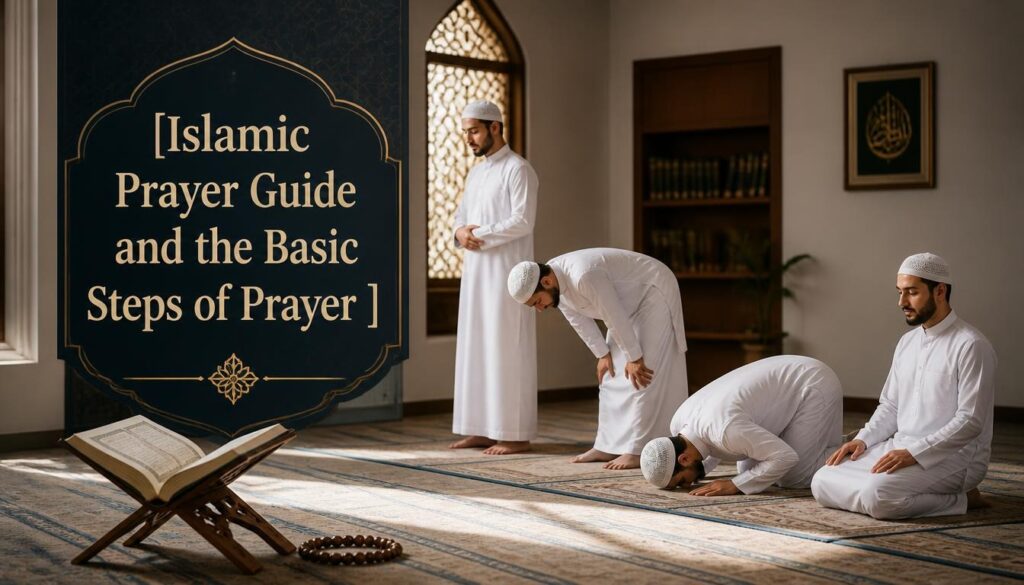
The Islamic Prayer Guide explains the basic steps of Salah so beginners can learn the correct order. Before prayer, a Muslim prepares properly, makes Wudu when required, faces the Qiblah, and makes the intention for Salah. The prayer then includes standing, recitation, Ruku, Sujood, sitting, and the final Salam. Each movement has an important place, so beginners should practice them slowly. With regular effort, these steps can become familiar and easier to follow.
“And bow with those who bow.” Quran 2:43
O Allah, help me learn the steps of Salah correctly. Give me patience when I find something difficult. Help me remember each movement and recitation with confidence. Keep my heart humble and focused whenever I pray to You. Ameen.
Islamic Prayer Guide and the Five Daily Salahs
The Islamic Prayer Guide also explains the five obligatory prayers Muslims perform each day. These prayers are Fajr, Dhuhr, Asr, Maghrib, and Isha. Fajr has two Fard Rakats, Dhuhr has four, Asr has four, Maghrib has three, and Isha has four. Their times are connected to the movement of the sun, so prayer times change by date and location. Therefore, Muslims should check a reliable local prayer timetable. Learning the five prayers can help beginners build a steady and organized worship routine.
“Indeed, prayer has been decreed upon the believers at specified times.” Quran 4:103
O Allah, help me remain faithful to the five daily prayers. Give me strength to pray on time, even when my day becomes busy. Help me protect my Salah and make it an important part of my life. Guide me toward consistency and sincere worship. Ameen.
Islamic Prayer Guide and the Importance of Wudu

The Islamic Prayer Guide includes Wudu because purification is an important part of preparing for Salah when it is required. Wudu generally involves washing the hands, rinsing the mouth and nose, washing the face and arms, wiping the head, and washing the feet. Muslims should also make sure their clothes and prayer place are clean. However, details may differ between schools of Islamic practice. Therefore, beginners can learn the method followed in their community from a trusted imam or qualified teacher.
“Indeed, Allah loves those who are constantly repentant and loves those who purify themselves.” Quran 2:222
O Allah, help me keep myself clean and prepared for prayer. Teach me to value purification and approach Salah with a sincere heart. Help me remember Your blessings each time I prepare to worship You. Keep me mindful, thankful, and humble before You. Ameen.
Islamic Prayer Guide and Prayer Times and Rakats
The Islamic Prayer Guide helps beginners understand the prayer times and Karats connected with each daily Salah. Fajr is prayed before sunrise, Ruhr after midday, As later in the day, Maghreb after sunset, and Isha during the night. The number of Ford Karats differs for each prayer, so learning them carefully can make Salah easier. Muslims may also perform Sunnah and Nafl prayers according to their practice. However, beginners can first focus on learning the five obligatory prayers clearly and consistently.
“So glorify Allah when you reach the evening and when you reach the morning.” Quran 30:17
O Allah, help me understand the times of prayer and remember them throughout my day. Give me discipline to pray without unnecessary delay. Help me learn the Rakats correctly and remain consistent in my worship. May every prayer bring me closer to You. Ameen.
Islamic Prayer Guide and the Words Used in Salah
The Islamic Prayer Guide also helps beginners understand the important words and recitations used during Salah. Muslims recite Surah Al-Fatihah and other Quranic verses during the appropriate parts of prayer. They also say Takbir when moving between different positions and praise Allah during Ruku and Sujood. Learning Arabic recitations can take time, especially for beginners who do not speak Arabic. However, regular practice can improve memory and pronunciation. Understanding the meanings can also help make the words more personal and meaningful.
“So recite what is easy in the Quran.” Quran 73:20
O Allah, help me learn the words of Salah with patience and care. Make Quranic recitation easy for me and help me understand what I say. Improve my pronunciation and keep my heart connected to Your words. Let my recitation increase my faith and gratitude. Ameen.
Islamic Prayer Guide and Simple Duas for Beginners
The Islamic Prayer Guide can help beginners learn simple Duas for worship and everyday life. Muslims can ask Allah for forgiveness, guidance, mercy, protection, and goodness in this life and the next. One beautiful Quranic supplication asks Allah for good in both worlds. Learning short and authentic Duas can make it easier to build a regular habit of supplication. Therefore, beginners can start with a few easy Duas and slowly learn more. Understanding their meanings can also make each supplication more sincere.
“Our Lord, give us good in this world and in the Hereafter and protect us from the punishment of the Fire.” Quran 2:201
O Allah, hear my Duas and guide me toward what is good. Forgive my mistakes and bless me with wisdom, peace, and strong faith. Help me remember You when I am happy and when I face difficulties. Keep my heart hopeful and close to You. Ameen.
Islamic Prayer Guide and Better Focus During Prayer
The Islamic Prayer Guide can also help Muslims develop better focus during Salah. Daily worries, phones, work, and other distractions can make it difficult to keep the mind calm. Therefore, choosing a quiet and clean prayer place can help you prepare before Salah. Learning the meaning of the words you recite can also make prayer more personal. Try to slow down and give attention to every movement. With practice, you can learn to approach Salah with greater peace, humility, and awareness of Allah.
“Successful indeed are the believers, those who are humble in their prayer.” Quran 23:1–2
O Allah, calm my heart when I pray to You. Remove distractions from my mind and help me focus on your remembrance. Teach me to pray with humility, patience, and sincere faith. Let my Salah bring peace to my heart and strengthen my relationship with You. Ameen.
Islamic Prayer Guide and Common Salah Mistakes
The Islamic Prayer Guide can help beginners understand common difficulties that may happen while learning Salah. New learners may forget the prayer order, rush through movements, or struggle with Arabic pronunciation. However, these challenges should not make you feel hopeless or embarrassed. Learning takes time, and asking a trusted imam or qualified teacher can provide helpful guidance. Therefore, focus on improving step by step instead of expecting perfection immediately. Regular practice can gradually make the prayer easier and more familiar.
“Allah does not burden a soul beyond that it can bear.” Quran 2:286
O Allah, help me learn from my mistakes without losing hope. Give me patience when I struggle and guide me toward correct knowledge. Help me improve my prayer one step at a time. Keep me humble enough to ask for help and strong enough to keep learning. Ameen.
Islamic Prayer Guide and Helpful Tips for New Muslims
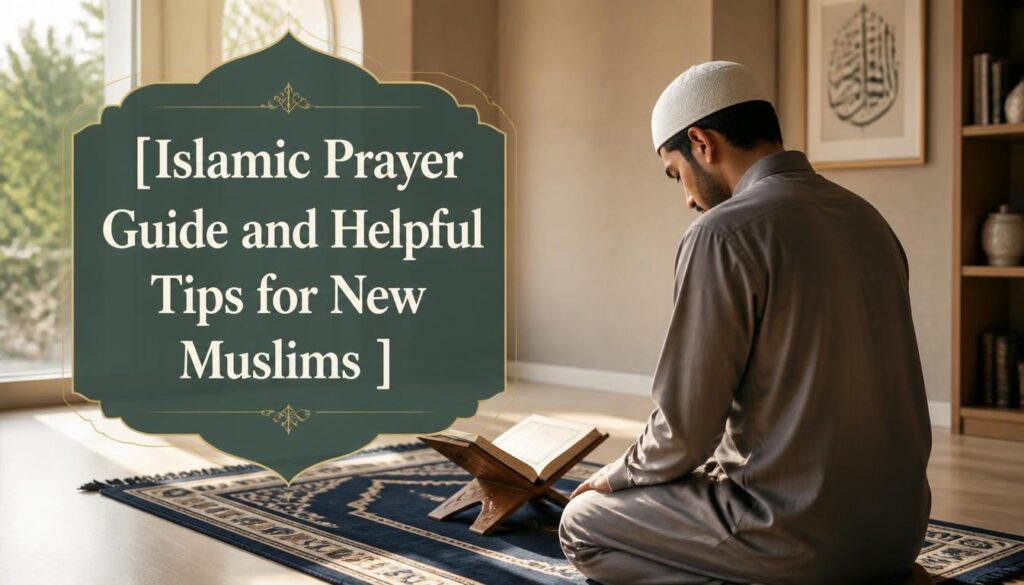
The Islamic Prayer Guide can be especially helpful for new Muslims who are learning Salah for the first time. There may be many new things to remember, including Wudu, prayer times, Rakats, movements, and Arabic recitations. However, beginners do not need to learn everything in one day. Start with the basic parts and practice them regularly. A trusted mosque, imam, or qualified teacher can also provide support when questions arise. With patience and sincere effort, new Muslims can gradually become more comfortable with daily prayer.
“And those who strive for Us We will surely guide them to Our ways.” Quran 29:69
O Allah, guide every new Muslim who is learning to pray. Make each new step easier and give them confidence when they feel unsure. Surround them with helpful people who offer kind and sound guidance. Strengthen their faith and make Salah a beautiful part of their journey with You. Ameen.
Islamic Prayer Guide and Building a Daily Prayer Routine
The Islamic Prayer Guide can help you create a daily routine that makes Salah easier to maintain. Preparing your prayer clothes, keeping your prayer mat ready, and checking reliable prayer times can help you avoid rushing. You can also use reminders when your schedule is busy. Over time, praying regularly can become a natural part of your day. Instead of seeing Salah as another task, use these moments to pause, remember Allah, and reflect on your faith. A steady routine can make daily prayer more peaceful and meaningful.
“And establish prayer and give Kazakh, and whatever good you put forward for yourselves.” Quran 2:110
O Allah, help me build a strong and consistent prayer routine. Give me discipline when I feel tired or distracted. Help me make Salah a lasting part of my daily life. Keep my heart sincere and thankful, and guide me to continue worshipping You with love and devotion. Ameen.
Frequently Asked Questions
What is an Islamic Prayer Guide?
An Islamic Prayer Guide explains the basic parts of Salah, including Wudu, prayer times, Rakats, movements, recitations, and Duas. It is especially helpful for beginners and new Muslims.
How many times do Muslims pray each day?
Muslims perform five obligatory prayers each day. They are Fajr, Dhuhr, Asr, Maghrib, and Isha.
How many Fard Rakats are in the five daily prayers?
Fajr has two Fard Rakats, Dhuhr has four, Asr has four, Maghrib has three, and Isha has four Fard Rakats.
Is Wudu required before Salah?
Wudu is required when a person is not already in a state of ritual purity. If valid Wudu remains, it does not need to be repeated before every prayer.
How can beginners learn Salah easily?
Beginners can learn Salah one part at a time and practice regularly. A trusted imam or qualified Islamic teacher can also help with movements and recitations.
Conclusion
Learning Salah is a gradual journey, and it becomes easier when you give yourself time to practice. This Islamic Prayer Guide brings together the main things beginners need to understand, including Wudu, prayer times, Rakats, recitations, Duas, and daily prayer habits. You do not need to remember every detail at once. Instead, begin with the basic steps and slowly build your knowledge as you become more comfortable. With sincere effort and regular practice, you can develop greater confidence and a stronger daily connection with Allah.
Keep learning, keep practising, and do not allow small mistakes to make you lose hope. This Islamic Prayer Guide gives you a simple foundation, while a trusted imam or qualified Islamic teacher can offer further guidance when you need it. Most importantly, approach Salah with sincerity, humility, and a heart that remembers Allah. May Allah guide your steps, strengthen your faith, accept your prayers, and make Salah a source of peace and guidance in your life. Amen.
