
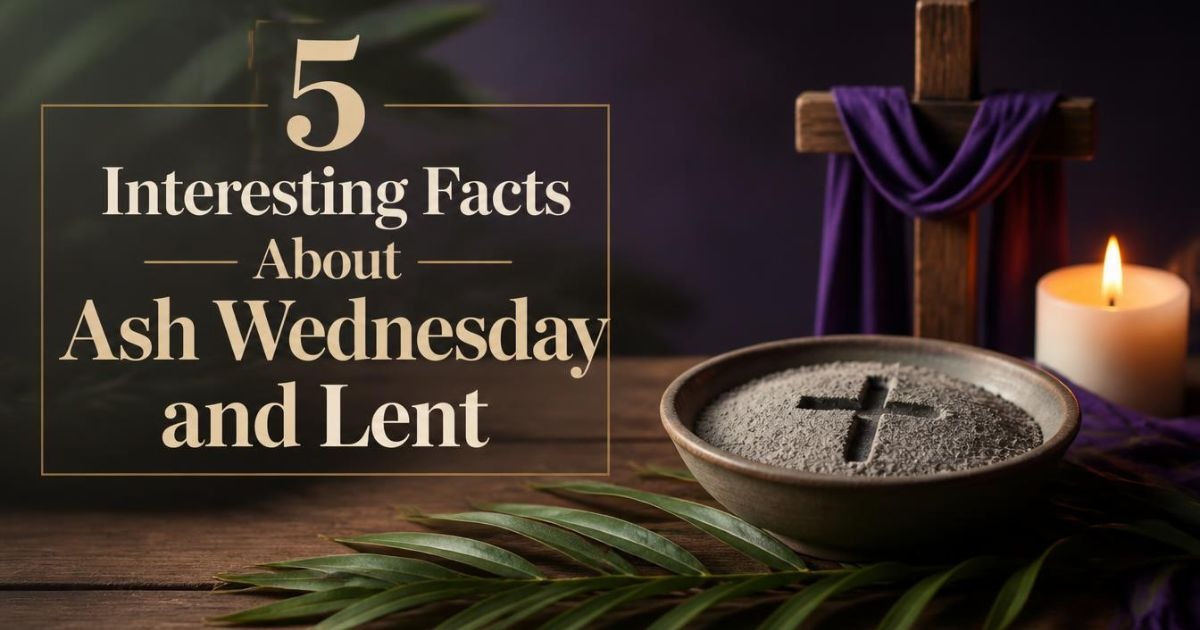
Ash Wednesday marks the beginning of Lent, one of the most meaningful seasons in the Christian year. It begins a special time of prayer, fasting, repentance, and preparation for Easter. During this season, Christians reflect on their faith, grow closer to God, and prepare their hearts for the celebration of Easter. Whether you are observing Lent at home, attending church, or planning your travel during Lent, these Interesting Facts can help you better understand why Ash Wednesday and the Lenten season are important to millions of Christians around the world.
Lent is not simply about giving up a favourite food or habit. It is a special time when Christians are encouraged to pray more, fast, help others, repent, and prepare their hearts for Easter. It is also a time to reflect on faith, grow closer to God, and make positive changes in daily life. Whether you are at home, attending church, or planning your travel during Lent, these Interesting Facts can help you better understand the traditions and deeper meaning behind Ash Wednesday and the Lenten season.
1. Interesting Facts About Ash Wednesday and the Beginning of Lent
One of the most important Interesting Facts about Ash Wednesday is that it marks the beginning of Lent in many Western Christian traditions. In 2024, Ash Wednesday was celebrated on February 14. It began a period of spiritual preparation leading toward Holy Week and Easter.
On Ash Wednesday, Christians may attend a church service where a priest or minister places ashes on their forehead, often in the shape of a cross. The ashes remind believers of repentance, humility, and human mortality. They are a visible reminder that life is temporary and that people should turn their hearts toward God.
The ashes are not meant to be used as a decoration. Instead, they carry a deep spiritual meaning and remind Christians of the importance of humility, repentance, and faith. They encourage believers to think about their actions, recognise their need for God, and turn their hearts toward Him during Lent. The ashes also serve as a reminder that life is temporary and that Christians are called to focus on what truly matters. By receiving the ashes, many Christians begin Lent with a renewed desire for personal reflection, prayer, repentance, and spiritual renewal.
2. Interesting Facts About the 40 Days of Lent
Another one of the most useful Interesting Facts is that Lent is traditionally connected with the number 40. This number is especially important because Christians remember the 40 days Jesus spent fasting and being tested in the desert before beginning His public ministry.
You may wonder why the period from Ash Wednesday to Easter appears to contain more than 40 calendar days. The traditional explanation is that Sundays are not counted as prescribed fast days. This is why Christians commonly refer to Lent as a 40-day season of preparation.
The number 40 also appears in several important biblical stories. For example, the Israelites spent 40 years in the wilderness, while Moses and Elijah also experienced important periods connected with 40 days. Because of these biblical examples, the number has become strongly associated with testing, preparation, repentance, and spiritual growth.
3. Interesting Facts About the Meaning of Ashes

One of the most meaningful Interesting Facts about Ash Wednesday is that the use of ashes has ancient roots in Christian and biblical tradition. In the Bible, ashes are associated with repentance, sorrow, humility, and turning back to God.
Another interesting tradition is that the ashes used on Ash Wednesday are commonly made from palm branches from the previous year’s Palm Sunday. This creates a meaningful connection between Palm Sunday and the beginning of the next Lenten season. For Christians who plan their travel and budget around important religious celebrations, understanding these traditions can also make their journey more meaningful. This simple practice shows how one celebration connects with another and reminds believers of the spiritual journey that leads toward Easter.
The ashes also remind Christians of human mortality. During the service, a minister or priest may say words reminding the person that they are dust and will return to dust. Although this message sounds serious, Ash Wednesday also points toward hope, forgiveness, renewal, and new life through Christ.
The tradition of using ashes developed over many centuries. Today, receiving ashes remains an important practice for many Christians because it gives people a simple physical reminder of an inward spiritual journey.
4. Interesting Facts About Prayer, Fasting, and Giving
One of the most important Interesting Facts about Lent is that the season involves much more than giving up a favorite food. Christians commonly focus on prayer, fasting, and almsgiving, three practices that can encourage spiritual growth and greater concern for other people.
Prayer gives Christians an opportunity to spend more time with God. During Lent, someone may choose to pray every day, read the Bible, attend church services, or spend more time in quiet reflection.
Fasting involves voluntarily giving up certain foods, activities, or comforts. The purpose is not simply to experience hunger or inconvenience. Instead, fasting can help Christians develop self-control and become more aware of their dependence on God.
Alms giving means giving to people who need help. A person might donate money, provide food, volunteer, help a neighbour, or support a charitable organisation. In this way, Lent can become a season of both spiritual growth and practical love.
5. Interesting Facts About Ash Wednesday Fasting Traditions
The fifth of these Interesting Facts concerns fasting and abstinence on Ash Wednesday. Christian denominations have different traditions, so fasting rules are not exactly the same for every Christian.
For Catholics in the Latin Church in the United States, Ash Wednesday and Good Friday are obligatory days of fasting and abstinence. The U.S. Conference of Catholic Bishops explains that the fasting obligation applies to Catholics from age 18 through age 59, while abstinence from meat applies from age 14, subject to Church rules and exceptions.
Catholic fasting traditionally allows one full meal and two smaller meals that together do not equal a full meal. People with health conditions or other special circumstances may have different obligations, so it is wise to follow the guidance of their Church or pastor. If you are planning travel during Lent, this simple travel guide can help you understand the traditional fasting practice and plan your meals while respecting the customs of the season.
Fridays during Lent also have a special place in Catholic practice because they recall the sacrifice of Jesus Christ. Other Christian denominations may follow different practices, so Christians should follow the traditions and guidance of their own church.
Why These Interesting Facts About Lent Matter

These Interesting Facts about Lent show that the season has a deeper purpose than simply giving something up. Lent encourages Christians to examine their lives, pray, practice self-control, help others, and prepare spiritually for Easter.
The season can also be a time to develop better habits. Instead of focusing only on what they will stop doing, Christians can think about what positive actions they can add to their daily lives. Prayer, kindness, forgiveness, generosity, and service can all become meaningful parts of the Lenten journey.
Interesting Facts About What You Can Give Up for Lent
Many Christians choose to give up something during Lent. This could be chocolate, sweets, unnecessary shopping, social media, entertainment, or another habit that takes attention away from spiritual life.
However, giving something up is not the only way to observe Lent. Christians can also choose to add a positive practice, such as:
- Praying more each day
- Reading the Bible regularly
- Helping someone in need
- Giving to charity
- Attending church more often
- Practicing forgiveness
- Spending less time on distractions
- Doing quiet acts of kindness
The goal is not simply to complete a difficult challenge. The deeper purpose is to use Lent as an opportunity for spiritual growth, reflection, and a closer relationship with God.
FAQs
What is Ash Wednesday?
Ash Wednesday is the traditional beginning of Lent in many Western Christian traditions. It is associated with repentance, prayer, fasting, and receiving ashes as a reminder of human mortality and the need for spiritual renewal.
Why do Christians receive ashes on Ash Wednesday?
Christians receive ashes as a symbol of repentance, humility, and mortality. The ashes remind believers to turn toward God and take their spiritual lives seriously.
Why is Lent called 40 days?
Lent is associated with 40 days because it recalls the 40 days Jesus spent fasting and being tested in the desert. Sundays are traditionally not counted as prescribed fast days in the calculation.
What are the three main practices of Lent?
The three commonly emphasized practices are prayer, fasting, and almsgiving. These practices encourage Christians to grow spiritually, practice self-discipline, and show generosity toward others.
When was Ash Wednesday in 2024?
Ash Wednesday was celebrated on February 14, 2024. It marked the beginning of Lent that year.
Conclusion
These Interesting Facts about Ash Wednesday and Lent show why this season remains important to many Christians. Ash Wednesday begins a period of repentance, prayer, fasting, generosity, and spiritual preparation. The ashes remind believers about humility and mortality, while the 40-day tradition points to the biblical story of Jesus fasting and being tested in the desert.
Lent also provides an opportunity to slow down, reflect on personal choices, strengthen faith, help others, and prepare for Easter. Whether someone chooses to fast, pray more, give to charity, forgive someone, or practice kindness, the purpose is to grow spiritually and become the best version of yourself through faith and reflection. By understanding these Interesting Facts, Christians and readers interested in Christian traditions can better appreciate the meaning behind Ash Wednesday and the Lenten season and discover the best ways to make this meaningful season more purposeful.
