
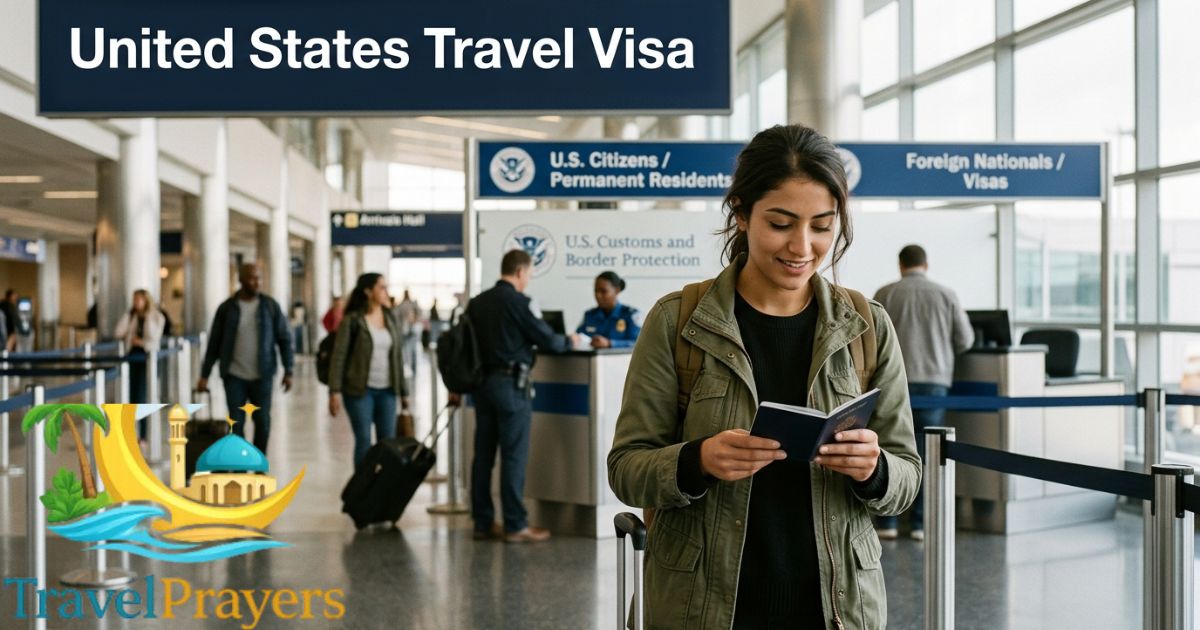
Planning a trip to the United States starts with choosing the right United States Travel Visa or confirming that you qualify to travel without a visa. For most tourists, the relevant category is the B-2 visitor visa, while short business trips generally fall under B-1. Some travelers from Visa Waiver Program countries can visit for up to 90 days with an approved ESTA instead of a traditional visa.
The application process involves more than completing a form. You may need to prepare documents, pay the application fee, attend an interview, wait for processing, and show that your trip is temporary. This 2026 guide explains the United States Travel Visa process, costs, documents, business travel rules, stay limits, visa types, and common mistakes.
Which United States Travel Visa Do You Need?
The right United States Travel Visa depends mainly on your nationality and purpose of travel.
For ordinary tourism, vacations, visiting relatives or friends, and certain medical treatment, the B-2 visitor visa is generally the relevant category. For temporary business activities such as meetings, conferences, consultations, or contract negotiations, B-1 may apply. Travelers combining tourism and business may qualify for a B-1/B-2 visitor visa.
If you are a citizen of a Visa Waiver Program country, you may not need a traditional visa for qualifying tourism or business trips of 90 days or less. Instead, you generally need an approved ESTA before traveling.
If you are also planning international travel from the UAE, our guide to Turkey Visa Requirements for UAE Residents explains the main documents and eligibility rules for Turkish travel.
How to Apply for a United States Travel Visa
Applying for a B-1/B-2 visitor visa generally follows these steps:
- Choose the correct visa category.
- Complete Form DS-160 online.
- Submit your photo according to the visa requirements.
- Pay the non-refundable application fee.
- Schedule your visa interview.
- Prepare your supporting documents.
- Attend the interview.
- Wait for the consular decision or any additional processing.
The exact order and local procedures can vary by U.S. embassy or consulate, so applicants should follow the instructions for the post where they will apply. Most nonimmigrant applicants generally need an in-person interview, although limited waiver categories exist.
Applicants should generally schedule their interview in their country of nationality or residence. If applying based on residence, you must be able to demonstrate that you live there.
What Documents Are Required for a US Tourist Visa?
The basic documents for a B-1/B-2 application include:
- A valid passport
- DS-160 confirmation page
- Visa application fee payment information or receipt, where required
- A photograph if the digital photo upload does not meet the requirements
- Your appointment confirmation and any documents required by your local embassy or consulate
A consular officer may also request evidence showing the purpose of your trip, your intention to leave the United States after your visit, and your ability to pay for the trip. Employment, family ties, financial records, and other documents may help explain your circumstances.
There is no universal document package that guarantees approval. The documents you need can depend on your individual circumstances and the instructions of the embassy or consulate handling your application.
How to Get a United States Tourist Visa
To get a United States tourist visa, you normally need to demonstrate that your planned trip is temporary and that you qualify for a B-2 visitor visa.
Start by completing the DS-160 accurately. Then pay the applicable fee and schedule your interview according to the instructions for your U.S. embassy or consulate. During the interview, answer questions clearly and honestly about your trip, finances, employment, family situation, and plans to return home.
A U.S. invitation letter or sponsor does not automatically guarantee approval. The State Department explains that visitor-visa applicants must qualify based on their own circumstances and ties abroad rather than simply relying on assurances from U.S. relatives or friends.
Complete Form DS-160 online.
Build Your Visa Timeline Before Booking Flights
Do not plan your trip around the visa itself until you know the likely processing timeline.
Interview wait times vary by location, season, and visa category. Because appointment availability can change, check the current wait time for the embassy or consulate where you will apply and apply as early as practical.
A sensible approach is to:
- Check eligibility first.
- Complete the DS-160 carefully.
- Pay the fee and schedule the interview.
- Prepare your documents while waiting.
- Avoid non-refundable bookings until your visa is approved.
A visa does not guarantee admission to the United States, so travelers should also understand that final entry is decided by U.S. Customs and Border Protection at the port of entry.
How Much Does a United States Travel Visa Cost in 2026?
The current U.S. Department of State fee schedule lists the non-refundable application processing fee for B visitor visas at $185. Some applicants may also have a separate visa issuance or reciprocity fee depending on nationality.
The total cost can therefore vary by applicant.
For ordinary tourism, vacations, visiting relatives or friends, and certain medical treatment, the B-2 visitor visa is generally the relevant category.
Do You Have to Pay $250 to Enter the USA?
Not as a general border-entry fee.
U.S. law created a Visa Integrity Fee for nonimmigrant visas, with an initial statutory amount of at least $250, but the current State Department public visa-fee schedule still lists the B visitor-visa application fee as $185 and does not list the $250 fee in that table.
For that reason, travelers should not assume that $250 is a fee paid at the U.S. airport or land border. Check the latest official instructions before submitting your application or making payment.
How to Apply for a US Visa for a Business Trip
For a short business trip, the B-1 category can cover activities such as consulting with business associates, attending professional or business conferences, and negotiating contracts. A B-1 visa does not authorize ordinary employment in the United States.
The application process is similar to a tourist visa:
- Complete the DS-160.
- Select the appropriate B-1 or B-1/B-2 category.
- Pay the required application fee.
- Schedule the interview.
- Prepare evidence explaining the business purpose of the trip.
- Attend the interview.
- Wait for the decision or any additional processing.
Be specific about what you will do in the United States. If your planned activity involves employment, paid work, study, or another specialized purpose, a different visa category may be required.
What Are the 7 Types of U.S. Visas?
There is no official rule that limits U.S. visas to exactly seven types. The United States has many visa categories based on the purpose of travel. Common categories include B-1 for business visitors, B-2 for tourists, F for students, J for exchange visitors, H for certain temporary workers, L for intracompany transferees, and O for people with extraordinary ability.
The correct category depends on what you intend to do in the United States, not simply the length of your trip.
2026 Rules That Travelers Should Know
Several current rules can affect visa planning in 2026.
Interview Waivers Are Limited
Most nonimmigrant visa applicants generally need an in-person interview. Certain applicants renewing a full-validity B-1, B-2, or B-1/B-2 visa within 12 months of its expiration may qualify for an interview waiver if they meet additional requirements. A consular officer can still require an interview.
Apply in Your Country of Nationality or Residence
Current State Department guidance says nonimmigrant applicants should generally schedule interviews in their country of nationality or residence, subject to designated-post rules and limited exceptions.
Visa Bonds Apply to Some Nationalities
A current State Department program requires nationals of certain listed countries who are otherwise eligible for a B-1/B-2 visa to post a bond of $10,000, $15,000, or $20,000, with the amount determined at the interview. The list can change, so applicants should check the official country list before applying.
A visa bond is different from the visa application fee and does not guarantee visa issuance.
Visa Validity Is Not the Same as Your Allowed Stay
A common mistake is confusing the visa expiration date with the date you must leave the United States.
Your visa allows you to travel to a U.S. port of entry and request admission. CBP determines whether you may enter and records your authorized stay through your admission record, including Form I-94.
Check your I-94 after arrival and follow the authorized departure date. Do not assume that a visa valid for several years means you can remain in the United States for the entire validity period.
Can You Extend a US Tourist Visa Stay?
In some circumstances, a visitor may request an extension of temporary stay through USCIS before the authorized period expires.
The important point is that the visa itself is not simply extended because you want to stay longer. An extension concerns your authorized stay in the United States and is handled through the appropriate USCIS process.
If you may need more time, review the current Form I-539 requirements and file before your authorized stay expires. Do not wait until after your I-94 date has passed.
What Happens If Your US Visa Is Refused?
A visitor visa refusal can occur when the officer determines that the applicant has not established eligibility under U.S. law. Section 214(b) is a common basis for visitor-visa refusals.
A refusal does not mean you can automatically appeal the decision. If you apply again, you normally submit a new application and pay the required fee again.
A stronger second application should address the reason for the previous refusal. Simply submitting the same information again may not change the result.
Common Mistakes to Avoid
Booking Non-Refundable Travel Too Early
A visa is not guaranteed. Avoid making expensive, non-refundable plans before approval.
Giving Inconsistent Information
Your DS-160, interview answers, supporting documents, and travel plans should be truthful and consistent.
Assuming a Sponsor Guarantees Approval
A U.S. friend or relative can provide support, but an invitation does not replace your own eligibility or evidence of your circumstances.
Using Unofficial Visa Websites
Use official U.S. government websites for visa applications, fees, ESTA, and immigration forms.
Confusing Business Travel With Employment
B-1 can cover certain temporary business activities, but it does not generally authorize employment in the United States.
Frequently Asked Questions
How to get a United States tourist visa?
Complete Form DS-160, pay the applicable fee, schedule a visa interview, prepare the required documents, and attend the interview. The officer then determines whether you qualify for the B-2 visitor visa.
Do I have to pay $250 to enter the USA?
The $250 Visa Integrity Fee was created by U.S. law for nonimmigrant visas, but it should not be described as a general $250 fee charged at the U.S. border. The current State Department fee schedule lists the B visitor-visa application fee as $185.
How to apply for a US visa for a business trip?
For qualifying short business activities, apply under the B-1 category or B-1/B-2 where appropriate. Complete the DS-160, pay the fee, schedule the interview, and provide information supporting the business purpose of your trip.
What are the 7 types of visas?
There are more than seven U.S. visa categories. Common examples include B-1, B-2, F, J, H, L, and O, but the appropriate category depends on the purpose of your trip.
Final Thoughts
Getting a United States Travel Visa is mainly about choosing the correct category, completing the application accurately, preparing for the interview, and showing that your trip fits the requirements for temporary travel.
For tourists, the B-2 visa is the usual route when a traditional visa is required. Short business visitors may use B-1, while eligible Visa Waiver Program travelers can use ESTA instead of a traditional visa for qualifying trips of up to 90 days.
Before you apply, check the latest official fee information, interview availability, visa rules for your nationality, and any current visa-bond or travel restrictions. Immigration rules can change, so verify important details with official U.S. government sources before paying fees or booking non-refundable travel.
