
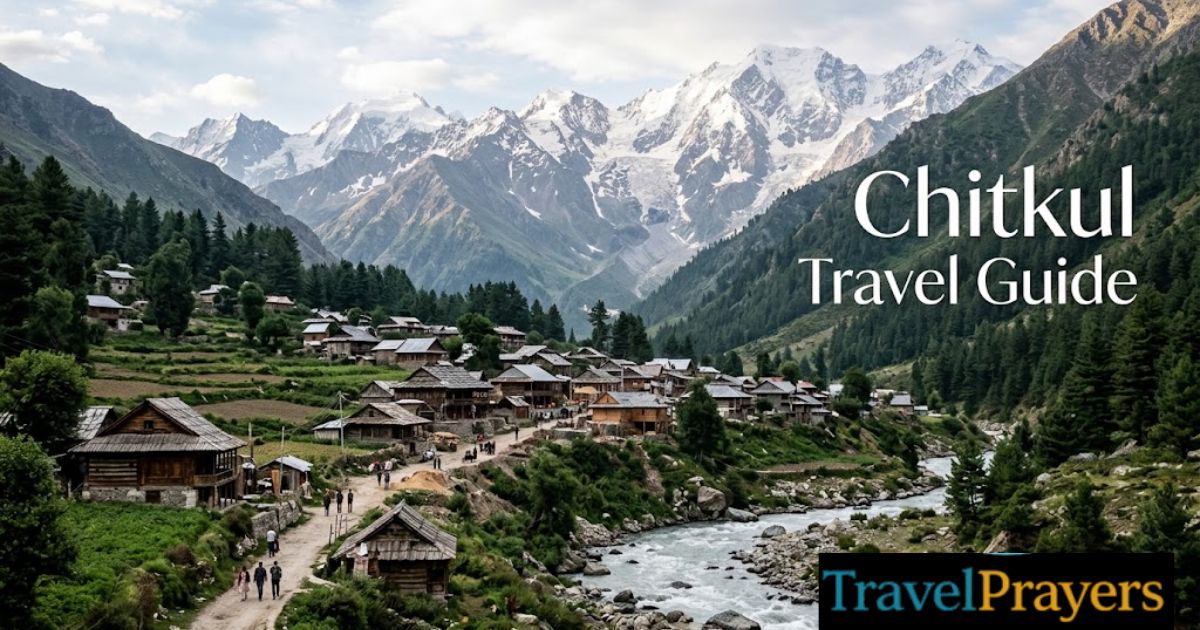
Chitkul is a high-altitude village in Himachal Pradesh’s Kinnaur district, at about 3,450 m (11,320 ft), where the motorable road up the Baspa Valley ends. Most travelers drive in from Shimla. The trip takes roughly 9–11 hours, so many break it with a night at Sangla or Rackham. May–June and September–October usually work best, and the road typically closes from mid-December to March.
The village rewards slow travel more than a quick photo stop. Below you will find what each season feels like, what the drive involves, where to sleep, and what to plan for with signal and cash. Road status and closures change quickly in this valley, so confirm them locally before you set out.
Why Travelers Are Visiting Chitkul
Travelers visit Chitkul because it feels like the end of the road in a literal way, and the village still looks the part. Wooden houses, apple orchards, the Baspa River and Kinner Kailash in the background make up the scene. Travel sources also describe it as one of the last points in India that visitors can reach without a permit.
The village draws road-trippers, couples, photographers, families and first-time Kinnaur visitors. It has also become noticeably busier in peak season. Because of that, many travelers now stay overnight, walk in the early morning and avoid the afternoon traffic.
Where Is Chitkul Located?
Chitkul sits on the right bank of the Baspa River in Kinnaur district, Himachal Pradesh. It is the last inhabited village of the Baspa Valley, also called the Sangla Valley. India’s official tourism portal lists its elevation at 11,320 ft and calls it the last inhabited settlement on the Indo-Tibetan border.
The valley road leaves the Hindustan-Tibet highway (NH-5) at Karcham. From there it runs through Sangla and Rakchham before it reaches Chitkul, roughly 40 km from the Karcham junction. The Indo-Tibetan Border Police (ITBP) controls the land beyond the village, and civilians cannot go past the check post.
Why June Works for Families and October Feels Better for Slower Travel
June is the easiest month for families. The road is open, days are mild and school holidays line up. The trade-off is crowds, and travelers have reported long waits on the valley road in peak season. A June 2026 Tripadvisor review, for example, describes a three-hour traffic wait.
October suits travelers who want quiet. Skies are often clear and the valley is calmer, but nights get cold and early snow is possible. This is an editorial recommendation, not a rule. Pick June if you need warmth and convenience. Pick October if you want space and can handle the cold.
Spring (March to April)
The road to Chitkul Travel Guide typically reopens between March and early April. After a heavy winter, the Karcham–Chitkul stretch can stay shut longer. Expect cold air, patches of snow and few visitors. Some guesthouses may not be open yet, so call ahead before you commit.
Summer (May to June)
Summer gives the most reliable access and the most visitors. Daytime weather is comfortable for walking by the river, while nights stay cold at this altitude. Book a stay in advance and start driving early to stay ahead of the traffic.
Monsoon (July to September)
The valley turns deep green, but landslides become the main risk. The highway between Rampur and Karcham is landslide-prone, and the Karcham –Sangla road can close for hours or days. Travel blogs also reported that in July 2026 debris from a swollen stream near Mast rang blocked the Rakchham–Chitkul road until crews cleared it. If you travel in monsoon, add one or two buffer days and check road conditions each morning.
Autumn (October to November)
Autumn brings crisp, clear days and thinner crowds. Temperatures drop quickly after sunset, and early snowfall can arrive. By November, many properties start winding down for winter. Confirm that your homestay is still open before you drive up.
Winter (December to February)
The Sangla–Chitkul road commonly turns unreliable from mid-December and stays closed until about March. Guesthouse water pipes can freeze, and many residents move to lower elevations. Winter is a poor choice for a first visit. Kalpa makes a better winter base in Kinnaur.
Self-Driving to Chitkul: Road Conditions, Parking & Travel Reality
The standard route runs Shimla → Narkanda → Rampur → Karcham → Sangla → Rakchham → Chitkul. The valley section is the hard part. The road is narrow and carved into cliffsides, and surface quality changes from smooth to rough within a few kilometers.
From Shimla
Shimla to Chitkul is roughly 245–260 km. Expect 9–11 hours of driving without long stops, and more when traffic or landslides slow the road. A lower-altitude alternative through Mashaba, Suni, Kangal and Rampur adds a little distance but can suit colder months. Most travelers split the trip with a night at Nakada, Rampur, Sanga or Rackham.
Distance from Sangla & Rackham
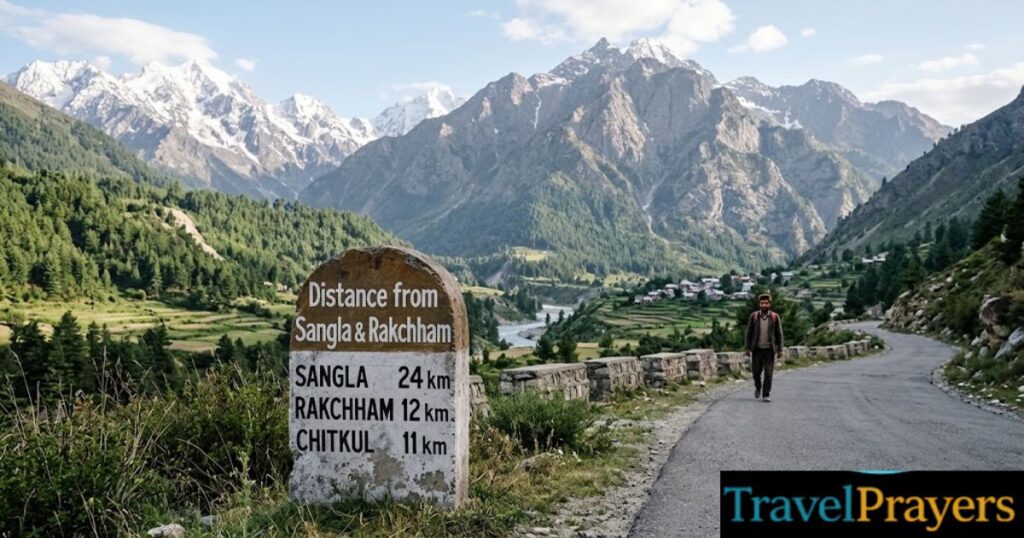
Sources disagree slightly on these short distances. Sangla to Chitkul is quoted at about 24–28 km, and Rackham to Chitkul at about 11–14 km. Budget 1 to 1.5 hours from Sangla because of the road, not the distance. Measure your own trip by time, not kilometers.
Self-Drive Reality
The Border Roads Organisation (BRO) began building the Karcham–Sangla–Chitkul section of a new road in 2024, as Hindustan Times reported. Travel sources describe repair work and scheduled closure windows on this stretch from May 2026. Ask a Sangla taxi driver about the current timings before you leave.
Practical rules help here. Drive in daylight, give uphill traffic room, and fill your tank before you turn off the highway at Karcham. If you dislike cliff-edge driving, hire a local driver from Sangla or Reckong Peo. One Tripadvisor reviewer suggested this, and it also saves you the parking stress.
Parking & Traffic Reality
Chitkul is small, and its lanes are narrow. Travelers report limited parking and slow queues in peak season, and facilities can feel stretched when many cars arrive together. Arrive early in the morning, park where locals direct you and walk in. Avoid arriving between late morning and mid-afternoon on weekends and holidays.
Chitkul Stay Guide: Traditional Wooden Homestays vs Riverside Camps
Both stay styles work, but they suit different priorities. Camps give you the river and the night sky. Homestays give you warmth, food and a village setting. Rates vary widely by season, so compare current prices rather than relying on old figures.
Riverside Stays
Riverside camps put you beside the Baspa, with the sound of water through the night. They suit stargazers and photographers. Cold is the main drawback. Ask about bedding, heating, hot water and washroom arrangements, and check how close your tent sits to the river.
Traditional Kinnauri Homestays
Wooden homestays sit inside the village and often serve home-cooked meals. They keep heat better than tents and give you a feel for daily life. Facilities stay simple. Book ahead for May–June, and ask whether rooms have heating if you travel in autumn or spring.
Is It Better to Stay in Chitkul or Rakchham?
Stay in Chitkul if you want the village experience and early-morning access. Stay in Rakchham if you want quiet and a shorter, calmer evening. Both are small, and neither has the full range of services a larger town offers.
Chitkul works better for:
- Sunrise and early-morning walks before day visitors arrive
- Stargazing from the village edge
- Short walks to the river, the temple and the ITBP post
- Travelers who want the “end of the road” feeling overnight
Rakchham works better for:
- Quieter nights with fewer people around
- A split journey that shortens the final drive
- Travelers who prefer a smaller hamlet over a busier village
- Those who can accept a 20- to 30-minute drive to reach Chitkul
Beyond Sightseeing: What Makes Chitkul Special
Chitkul has few “sights” in the usual sense. Its appeal comes from how the place feels at different hours. The sections below cover the things worth your time and the realities that come with them.
Baspa River Views
The Baspa runs beside the village, and you can walk down to the bank in minutes. One side of the river shows snow peaks, while the other shows wooden houses and orchards. Keep a safe distance from fast water, especially in summer when glacial melt raises the flow.
The Nagasti ITBP Walk
A flat-to-gentle track follows the river toward the Namaste ITBP post. Sources place the post anywhere from about 2 to 4 km from the village, so treat the distance as approximate. Civilians cannot go beyond the check post, and photography near ITBP posts and army areas is restricted. Walk there for the river and the open valley, not for access.
Early Morning Atmosphere
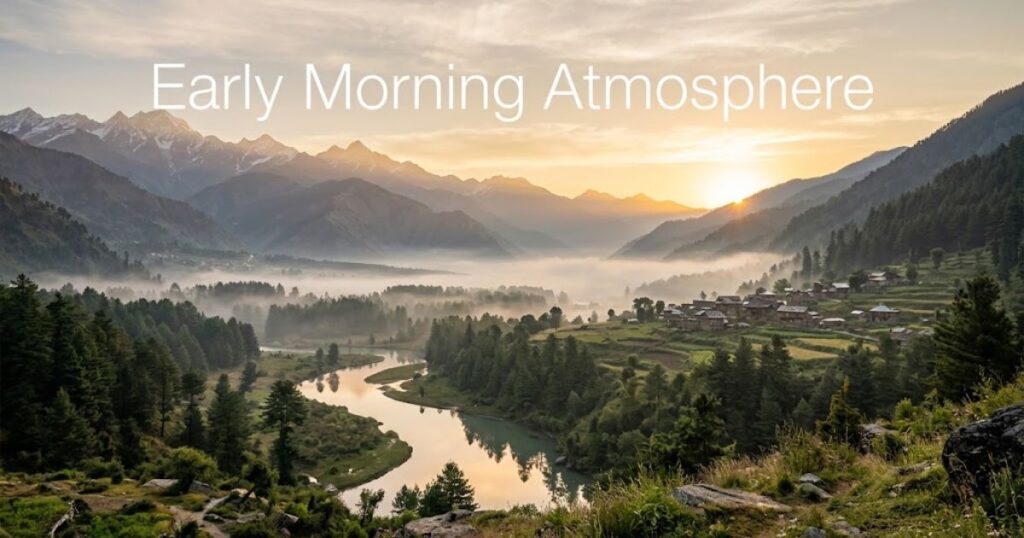
Early morning is when Chitkul feels most like a village. Smoke rises from kitchens, light hits the peaks and the lanes stay quiet. The day-trip crowd usually arrives later. Even a one-hour walk at sunrise changes how the place feels.
Stargazing & Night Skies
Low light and high altitude make clear nights excellent for stars. Skies cloud over often in monsoon, so autumn and early summer give better odds. Bring warm layers, a headlamp and patience. Nights at 3,450 m get cold fast, even in summer.
Chitkul Cafés & Tourism Reality
Chitkul has small eateries, tea stalls and the famous “last dhaba” sign. Menus stay simple, and supplies depend on the season. Several travelers note that new construction and tin roofs have changed the village’s look, and facilities can feel stretched during peak weeks. Go with realistic expectations, and you will enjoy the setting more.
Sustainable Travel in Chitkul
Small choices matter in a fragile mountain village. Carry out your trash, use refillable bottles and keep plastic away from the river. Choose locally run homestays, and ask before you photograph people or enter temples. Keep music low, and stay on existing paths.
If you prefer a calmer village with fewer visitors, our Shangarh guide in the Sainj Valley covers another quiet Himachal option.
Chitkul vs Sangla vs Rakchham
These three places sit on the same road, but each serves a different purpose. The table compares them side by side.
| Place | Role on the route | Best for | Main trade-off |
| Sangla | Larger valley base | Acclimatizing, services, first night | Busy and built-up in season |
| Rakchham | Small hamlet midway | Quiet stay, shorter final drive | Few services |
| Chitkul | End of the road | Early mornings, stargazing, the “last village” feel | Crowds, limited parking, thin facilities |
Sangla
Sangla works as the practical base. It offers more stays, more transport and, historically, the nearest ATM. It also helps you acclimatize before you climb higher. Some travelers say it has lost some charm as hotels have multiplied.
Rakchham
Rakchham sits roughly halfway between Sangla and Chitkul. It is small and calm, and the surrounding views are strong. Services are limited, and it only helps if the road beyond Sangla stays open. Choose it for quiet, not convenience.
Chitkul
Chitkul delivers the end-of-the-road experience, and it rewards an overnight stay. It also carries the most pressure from visitors. Stay at least one night if you can, and plan your walks around early morning and evening.
Internet, ATMs & Travel Reality in Chitkul
The signal is patchy. Travel sources agree that BSNL is the most reliable network at Chitkul, while Jio and Airtel coverage is unreliable. Expect slow data at best, and download maps and bookings before you leave Sangla or Reckong Peo.
Carry enough cash. The nearest ATM was historically in Sangla, and a shop-based mini-ATM service arrived in Chitkul in 2021, according to news reports from that time. Treat both as unreliable, and do not count on UPI working. Withdraw cash in Rampur, Reckong Peo or Sangla before you head up.
Important Travel Tips Before Visiting Chitkul
- Check road status on the morning you leave Sangla, and ask a local driver, not just an app.
- Add a buffer day in monsoon and shoulder seasons.
- Pack layers. Nights are cold even in summer.
- Take altitude seriously at about 3,450 m. Rest, drink water and avoid rushing in from lower elevations.
- Do not squeeze Sangla, Rakchham and Chitkul into one day.
- Carry cash and a BSNL SIM if you need reliable calls.
- Skip photography near ITBP posts and army areas.
- Check permit rules if you are a foreign national. Travel sources say Chitkul falls outside the protected-area list, but the district’s Kinnaur tourism information is the place to confirm current rules.
Is Chitkul Worth Visiting?
Yes, if you want a quiet mountain village, river walks and a true end-of-the-road feel. It works best for travelers who can handle a long drive and simple facilities. It disappoints visitors who expect polished services, quick access or a crowd-free peak season. Go early, stay overnight and keep your plan flexible.
Recommended Destinations
Chitkul fits well with Sangla, Kalpa and the wider Kinnaur circuit. For a quieter side trip, read our Shangarh guide. You can also browse more travel guides on our site to compare other Himachal and mountain destinations.
Himachal Tour Packages
If you book a package, ask a few questions first. Does it include a night in Sangla or Rakchham, or does it force a rushed day trip? What happens if the road closes? Who drives the valley section, and what vehicle do they use? A good package builds in buffer time instead of squeezing the route.
Frequently Asked Questions
Is Chitkul worth visiting?
Yes, for quiet mountain scenery and river walks. Expect simple facilities and a long drive.
What is the best time to visit Chitkul?
May–June and September–October work best. The road typically closes from mid-December to March.
Can we stay overnight in Chitkul?
Yes. Camps and wooden homestays operate in season, so book ahead and check heating.
Is the internet available in Chitkul?
Only patchily. BSNL is the most reliable network, and Jio and Airtel are unreliable.
How many days are enough for Chitkul?
Plan two to three days for the Sangla–Rakchham–Chitkul stretch. Add buffer days in monsoon.
Conclusion
Chitkul Travel Guide rewards travelers who plan around the road instead of racing it. Pick your season on purpose, split the drive and sleep a night in the valley. Carry cash, pack warm clothes and check road status every morning. These small steps turn a tiring trip into a calm one.
The village itself needs little more than your attention. Walk to the river at sunrise, take the quiet track toward Nagasti and leave no trace behind. Treat Chitkul as a place people live, not just a last-village photo stop, and the visit stays with you long after the drive home.
