
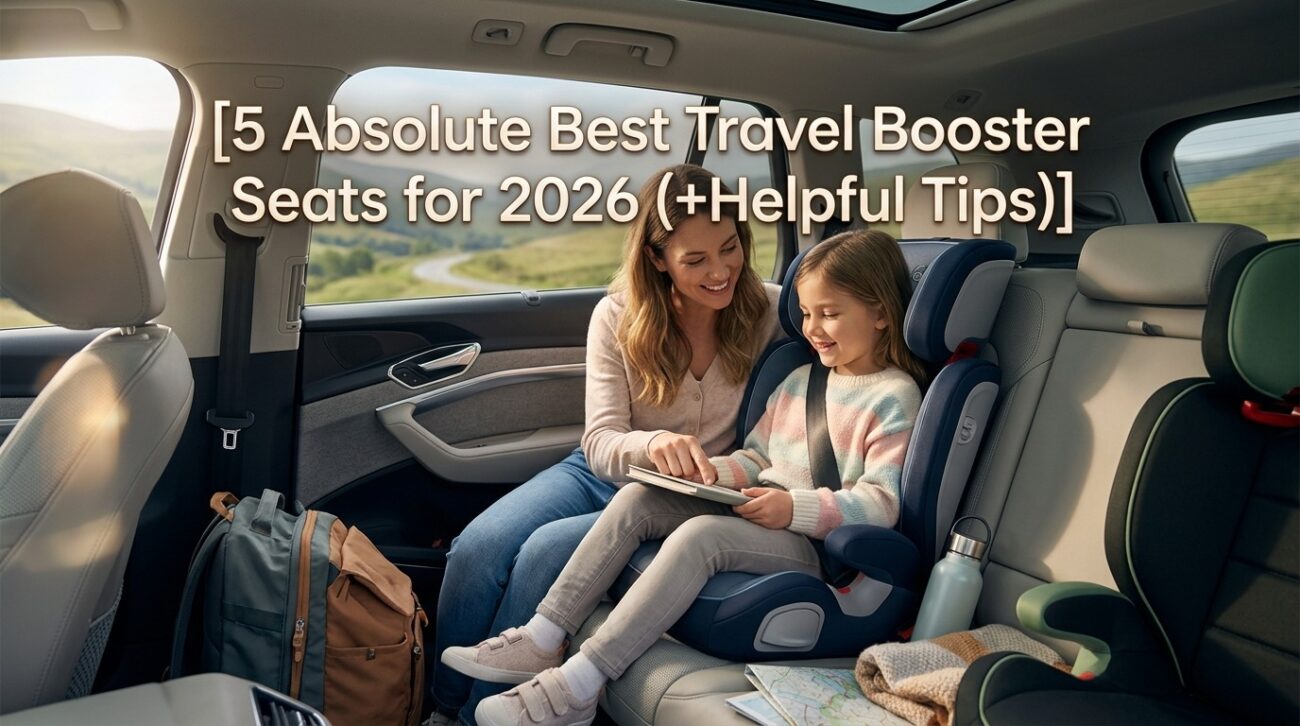
The Best Travel Booster Seats make family trips easier without forcing parents to carry a huge child seat through airports, train stations, or busy cities. A good travel booster should be portable, simple to use, comfortable for a growing child, and suitable for the vehicle seat belt system.
Travel Booster Seats with children often means moving between rental cars, taxis, family vehicles, and rideshares. A bulky everyday booster may work well at home but become frustrating when you need to carry luggage at the same time. Compact travel options solve this problem by reducing weight, storage space, or setup time.
What Makes the Best Travel Booster Seats Different?
A Travel Booster Seats has the same basic purpose as another belt-positioning booster: it helps place the vehicle seat belt correctly on a child who is not yet ready for the adult belt alone. The lap belt should sit low across the upper thighs or hips, while the shoulder belt should cross the shoulder and chest.
The main difference is portability. Travel-friendly models may be inflatable, fordable, narrow, lightweight, or easier to carry between vehicles. Some families need a booster for a week-long rental car trip. Others want a compact option for occasional taxis or visits with grandparents.
No single model is ideal for every child. Age, height, weight, booster readiness, vehicle fit, and local child passenger laws all matter. Parents should always follow the current manufacturer instructions for the exact seat they use.
Quick Comparison of the Best Travel Booster Options
| Travel Booster | Best For | Design | Main Travel Advantage |
| BubbleBum Inflatable Booster | Air travel and light packing | Inflatable backless booster | Very compact and lightweight |
| Hiccapop UberBoost | Taxis and rental cars | Inflatable backless booster | Packs into a travel bag |
| Graco TurboBooster 2.0 | Budget family travel | Standard backless booster | Simple and affordable |
| RideSafer Travel Vest | Multi-city and rideshare travel | Wearable child restraint | Highly portable format |
| Peg Perego Viaggio Flex 120 | Long road trips | Folding high-back booster | More support and adjustability |
These products solve different travel problems. A backpacking-style city trip may need a very compact restraint. A long driving vacation may justify carrying a larger high-back booster for added support and comfort.
1. BubbleBum Inflatable Travel Booster Seat
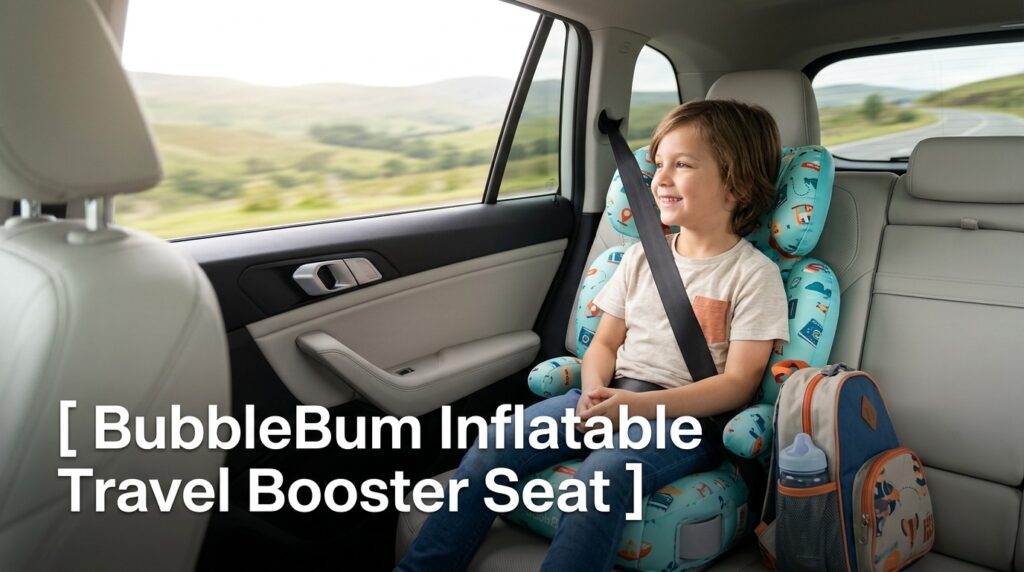
The Travel Booster Seats Bubble Bum is one of the most recognisable portable booster options for travelling families. Its inflatable design allows it to become much smaller than a standard rigid booster when packed.
That compact size is the main reason parents consider it for flights, cruises, city breaks, and trips involving public transport. Instead of carrying a large booster all day, families can pack the deflated seat with other travel gear.
Why BubbleBum Works Well for Travel
The Travel Booster Seats biggest advantage is portability. The manufacturer lists the inflatable model at about 1.2 pounds, making it far easier to carry than many traditional booster seats.
This matters when a trip involves more than a rental car. Imagine landing at an airport, taking a train into the city, walking to a hotel, and using a taxi the next morning. Carrying a full-size booster during every part of that journey can become tiring.
Bubble Bum is designed around this exact type of travel problem. Families can inflate it when needed and pack it more compactly after use.
The narrow shape may also be useful in vehicles with limited rear-seat space. However, parents still need to confirm correct belt fit for their child in the actual vehicle.
Who Is BubbleBum Best For?
Bubble Bum may suit families with a booster-ready child who can remain seated correctly for the whole journey. It is particularly practical for experienced booster riders.
It may also work well for occasional taxi rides, rental cars, family visits, and vacations where driving is only one part of the itinerary.
Parents of younger children should not choose a backless booster simply because it is easier to pack. A child’s size, developmental readiness, and current restraint stage are more important than luggage convenience.
Comfort and Everyday Use
Travel Booster Seats An inflatable design feels different from a hard plastic booster. Some children may find the cushioned surface comfortable, especially on shorter trips.
However, comfort is personal. A child who prefers more back, head, or side support may be happier in a high-back booster on long drives.
For sightseeing trips with several short vehicle rides, the compact design can be more valuable than extra seating features. For a ten-hour road trip, families may prioritize support differently.
Important BubbleBum Limitations
Bubble Bum is a backless Travel Booster Seats. It does not provide the same seating structure as a high-back booster.
The vehicle seating position and seat belt must be suitable for correct use. Parents also need to follow the shoulder positioning instructions carefully and check belt fit every time.
Inflatable travel products should be inspected before use. Follow the manufacturer’s guidance for inflation, condition, cleaning, lifespan, and replacement.
Best Use Case
Bubble Bum is a strong choice for families who prioritise minimum packing bulk. It is especially appealing for trips that combine flights, trains, walking, and occasional car rides.
Among the Best Travel Booster Seats, it stands out for families who want a genuinely packable backless booster rather than a smaller version of a standard rigid seat.
2. Hiccapop UberBoost Inflatable Booster Car Seat
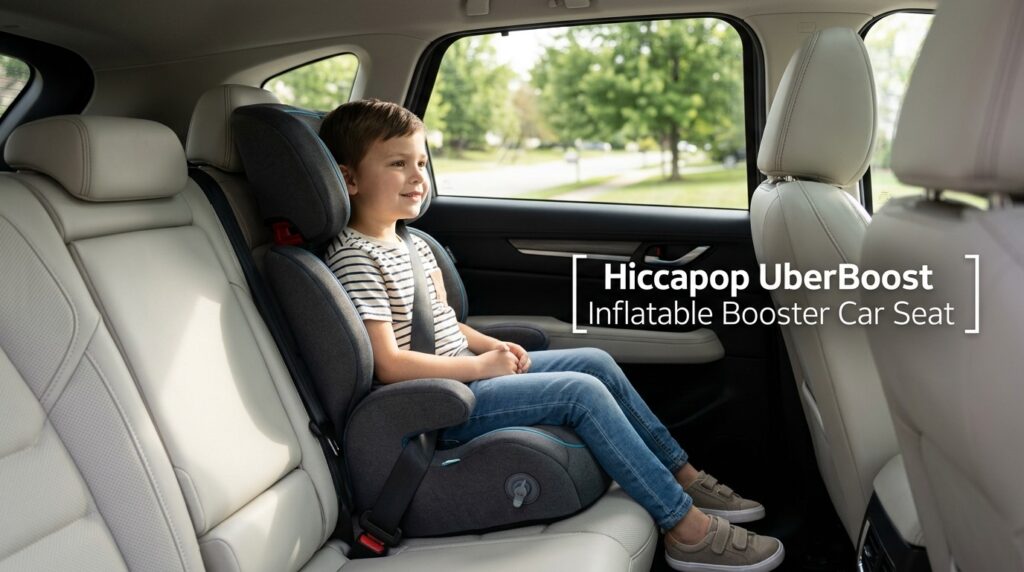
The Hiccapop UberBoost is another inflatable travel booster designed for families on the move. According to the manufacturer, it meets the applicable US federal motor vehicle safety standard and is designed for portable use.
Its travel appeal is easy to understand. The Travel Booster Seats inflates quickly, deflates after use, and rolls into its travel bag.
Why UberBoost Is Useful for Family Trips
Rental cars create a common problem for parents. You may need a booster at your destination, but carrying a bulky seat through the airport can feel excessive.
Travel Booster Seats offers a compact alternative for an appropriately sized and booster-ready child. Once deflated, it takes less luggage space than a conventional rigid booster.
It is also useful for trips where families switch vehicles. You might ride with relatives one day and use a rental car the next. A portable booster can reduce the effort required to move child travel gear.
Narrow Design for Smaller Vehicles
Hiccapop promotes the UberBoost as a narrow booster. A narrow footprint can be helpful in compact rental cars or rear seats shared with other child restraints.
However, “narrow” does not automatically mean that any three seats will fit correctly in every vehicle. Vehicle seat shape, belt buckle position, booster width, and the neighboring restraints all affect the final setup.
Families should check each child’s restraint independently. Every child needs a usable seating position and correct belt fit.
Non-Skid Base
The Travel Booster Seats Booster includes a non-skid base designed to help it remain stable on common vehicle upholstery.
This can make the seating experience feel more settled for the child. Still, the booster must be used exactly as instructed.
Parents should not add mats, towels, cushions, or other accessories under a booster unless the manufacturer specifically permits them.
Who Should Consider UberBoost?
Travel Booster Seats is best suited to families looking for a lightweight option for rental cars, carpools, and vacation transport.
It can be useful for older children who already understand booster behavior. A booster rider needs to stay in the correct position and avoid leaning, slouching, or moving the shoulder belt.
For children who sleep heavily in cars or struggle to remain correctly positioned, parents may want to compare other restraint options.
Travel Convenience
The travel Booster Seats bag is a simple but helpful feature. Family luggage becomes disorganized quickly, especially on trips with several destinations.
A dedicated storage bag keeps the deflated booster together and makes it easier to identify in a suitcase or backpack.
Before each vehicle ride, allow enough time to set up the booster correctly. Travel days can feel rushed, but a child restraint should never be treated as a last-second accessory.
Best Use Case
Travel Booster Seats makes sense for families taking short car journeys during a larger vacation. Think airport transfers, rental cars, taxis where legally and correctly usable, or visits with family.
It earns a place among the Best Travel Booster Seats because its compact inflatable format directly addresses one of the biggest family travel problems: carrying bulky equipment between rides.
3. Graco TurboBooster 2.0 Backless Booster
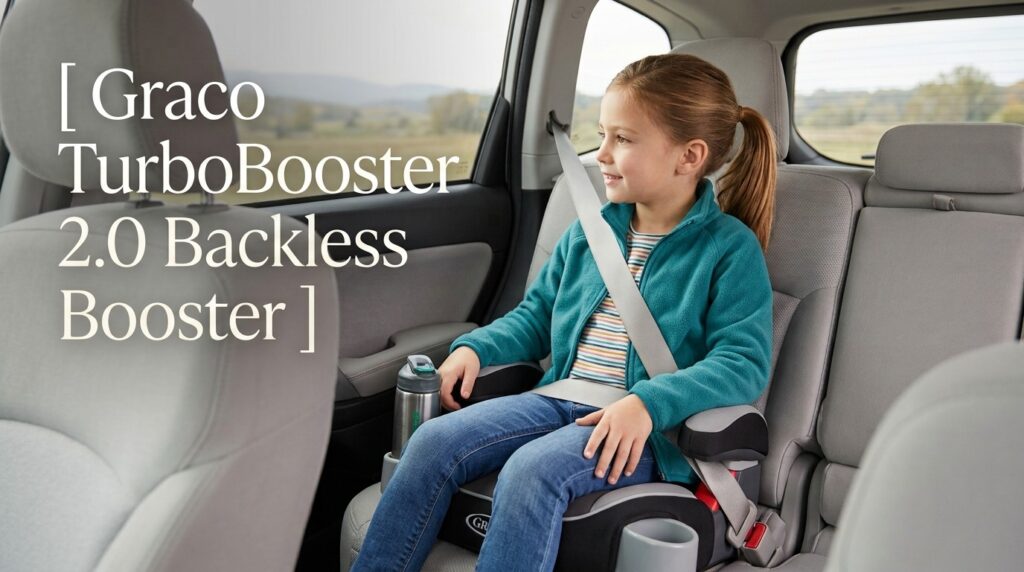
Not every travel booster needs to fold or inflate. Sometimes a simple, lightweight backless Travel Booster Seats is the more practical choice.
The Grace Turbo Booster 2.0 is a conventional backless booster designed for growing children within the manufacturer’s stated limits. Grace lists it for children from 40 to 100 pounds and up to 57 inches tall, with age guidance also provided by the manufacturer.
For travel, its biggest strengths are simplicity and price.
Why Choose a Standard Booster for Travel?
Inflatable and specialized travel restraints are useful, but some parents prefer familiar equipment.
A rigid backless booster does not need to be inflated. There is no folding system to learn, and the design is similar to the booster many families already use at home.
This can be valuable when grandparents, relatives, or another caregiver will help with transportation during the trip.
Clear instructions are still essential. However, a familiar booster style may reduce confusion compared with an unfamiliar travel system.
Budget-Friendly Travel Option
Traveling as a family can become expensive quickly. Flights, hotels, rental cars, food, attraction tickets, and baggage charges all add to the total cost.
Graco lists the standard TurboBooster 2.0 at a relatively accessible price compared with some premium travel restraints. Prices and availability can change, so families should check current information before buying.
A lower purchase price can make sense when the booster is needed for a road trip, grandparents’ vehicle, or occasional vacation.
Comfort Features
The Travel Booster Seats 2.0 includes height-adjustable armrests and hide-away cup holders.
Cup holders may sound like a minor feature, but they can be useful during long road trips. A child can keep a water bottle nearby without passing items back and forth.
The rigid seating surface also gives the booster a more conventional feel. Children who dislike inflatable seating may prefer this style.
The Portability Trade-Off
The obvious disadvantage is packing size. A standard backless booster does not collapse into a small travel pouch.
It may be easy to move between cars, but it is less convenient when walking around a city or using trains between car journeys.
This means it is better for car-focused vacations than minimalist international trips.
For example, a family flying to Florida and using one rental car for ten days may find it practical. A family spending two weeks moving through several European cities by rail may want something more compact.
Who Is It Best For?
The Grace Travel Booster Seats 2.0 is best for budget-conscious families with an appropriately sized and booster-ready child.
It also suits road trips, rental car vacations, and visits where the booster can remain in one vehicle for most of the trip.
Parents should follow the manufacturer’s size requirements and confirm correct lap-and-shoulder belt fit.
Best Use Case
Choose the Turbo Booster 2.0 when you value affordability and simplicity more than ultra-compact packing.
It is one of the Best Travel Booster Seats for car-heavy vacations because it offers a familiar backless design without premium travel-product pricing.
4. RideSafer Travel Vest
The RideSafer Travel Vest is different from a traditional booster. Instead of raising the child, its design works with the vehicle seat belt through a wearable restraint system.
That makes it an interesting option for families who travel frequently and need to carry child passenger equipment through airports or cities.
The manufacturer offers different vest sizes with specific child size limits. Families must select the correct current model and size rather than assuming one vest fits every child.
Why the Vest Design Is Travel-Friendly
A standard high-back booster takes up considerable luggage space. Even a backless booster can be awkward to carry during a full day of sightseeing.
A travel vest changes the packing problem. Its wearable format is much more compact than a traditional child seat.
This can be useful for trips involving taxis, rideshares, rental cars, and several hotel changes.
For example, a family visiting New York, Washington, and Boston may spend most days using public transport. They may only need a child restraint for selected car journeys. Carrying a large seat during the entire itinerary can be inconvenient.
A compact vest may be easier to manage in that type of situation.
Setup Requires Care
Portability does not mean zero setup.
Parents must learn how to fit the vest and route the vehicle belt correctly. The current instructions for the specific model and size should be read before the trip.
Do not wait until a taxi is parked outside a busy airport terminal to use a new child restraint for the first time.
Practice at home. Learn belt routing. Check the fit. Make sure the adults traveling with the child understand the system.
Travel Booster Seats This preparation can make real travel days much smoother.
Who Is RideSafer Best For?
The vest is especially interesting for frequent travelers, urban trips, and families who regularly move between vehicles.
It may also appeal to parents who need a compact alternative for a child who fits the manufacturer’s requirements.
However, families should not assume that a wearable restraint and a backless booster are interchangeable in every situation. The products have different designs and instructions.
Parents should consider the child’s size, maturity, travel plans, and vehicle seating position.
Long Trips Versus Short Transfers
For quick city transfers, compact equipment can be extremely valuable.
Long road trips create different priorities. A child may sleep, become tired, or struggle to maintain a comfortable position for several hours.
Families planning long driving days should think carefully about comfort and positioning. The most portable product is not always the most comfortable choice for every itinerary.
International Travel Considerations
Child restraint standards and legal rules vary between countries.
A product accepted for use in one market may not automatically satisfy the legal or approval requirements of another country. Rental vehicles, taxis, and local exemptions can also be governed by different rules.
Before international travel, families should check the rules for the country where the restraint will actually be used.
Do not rely only on what is legal at home.
Best Use Case
RideSafer is best for highly mobile families who need a compact restraint for repeated vehicle changes.
It is one of the more unusual Best Travel Booster Seats alternatives in this guide. Its biggest strength is portability, but parents should learn the system carefully before departure.
5. Peg Perego Viaggio Flex 120
The Peg Perego Viaggio Flex 120 takes a very different approach to travel.
It is a high-back booster rather than an ultra-light backless model. The seat can fold for storage and transport, but it remains much larger and heavier than an inflatable booster.
Why include it in a travel guide? Because not every family wants the smallest possible booster.
Some parents need a travel seat for long road journeys and prefer the support of a high-back design.
Folding High-Back Design
The Viaggio Flex 120 folds onto itself when not in use.
According to Peg Perego’s published specifications, it supports children within the stated 40-to-120-pound range and up to the listed height limit. The model also uses an adjustable high-back design.
The folding feature makes storage easier than many fixed high-back boosters.
However, this is not a backpack-style travel booster. Its weight and folded dimensions mean families need to plan how they will transport it.
Better Suited to Road-Based Travel
This seat makes the most sense when a vehicle is central to the vacation.
Consider a family flying to California and renting an SUV for a two-week road trip. They may drive from Los Angeles to the Central Coast, continue to San Francisco, and spend many hours in the car.
For that itinerary, seating support and adjustability may matter more than carrying convenience.
The Travel Booster Seats same seat may feel excessive for a three-day city break with one taxi ride.
Travel gear should match the trip.
Adjustable Design
Peg Perego describes the Viaggio Flex 120 as using its 4D Total Adjust system. The headrest, upper backrest, side wings, and seating configuration offer adjustment features.
This can help families adapt the booster as a child grows, within the manufacturer’s limits.
The seat also offers multiple recline positions.
Again, parents should use all adjustments according to the manual and ensure the vehicle seat belt fits correctly.
Rigid LATCH
The Viaggio Flex 120 includes rigid LATCH attachments.
LATCH on a belt-positioning booster should not be confused with the harness installation of a forward-facing car seat. The child is still restrained by the vehicle’s lap-and-shoulder belt when the booster is used in booster mode.
Always follow both the booster manual and vehicle instructions.
Portability Limitations
The Travel Booster Seats seat weighs far more than the inflatable options in this guide.
That matters at airports. Families may need a dedicated travel bag or luggage plan, depending on how they transport the booster.
It is also less convenient for subway travel, long walks, or daily taxi hopping.
The folding system improves storage, but it does not turn the seat into an ultra-light travel product.
Who Is It Best For?
The Viaggio Flex 120 is best for families who want a high-back booster for long driving vacations.
It may suit road trips, extended rental car holidays, and travel where the booster remains in the same vehicle for several days.
It is less suitable for minimalist travelers who need to carry a booster in a backpack.
Best Use Case
Choose the Viaggio Flex 120 when road comfort, adjustability, and a folding high-back format matter more than minimum weight.
Among the Best Travel Booster Seats, it is the strongest fit for families who define “travel” as a long road trip rather than constant movement between taxis and trains.
Which Travel Booster Seat Is Best for Your Trip?
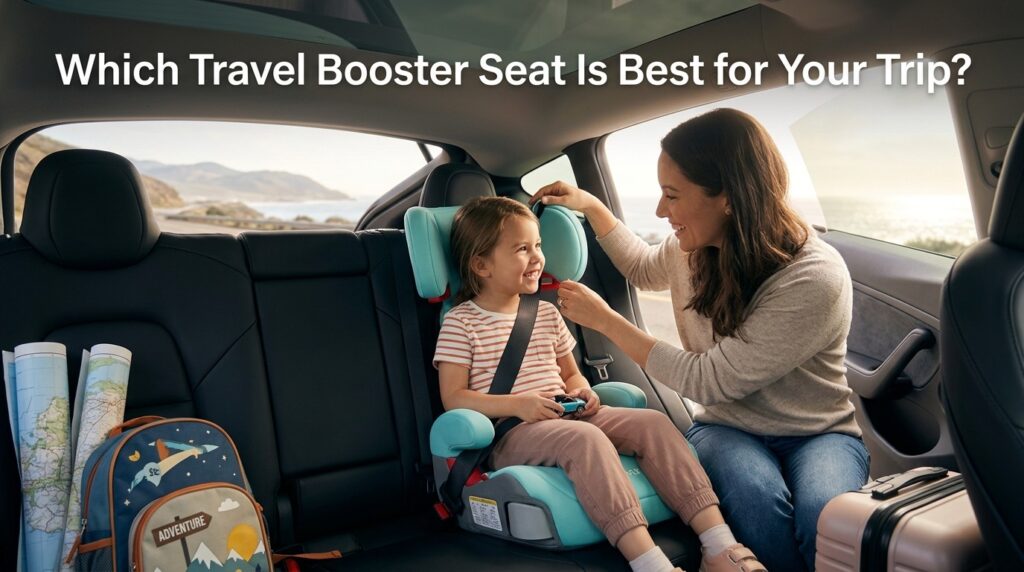
The best option depends heavily on your itinerary.
For flights followed by occasional car rides, BubbleBum or Hiccapop UberBoost may be easier to pack. Both focus on compact inflatable designs.
For a budget rental car vacation, the Graco TurboBooster 2.0 offers a straightforward backless format.
Frequent vehicle changes may make the RideSafer Travel Vest appealing. Its compact design can be useful when families spend much of the day walking or using public transport.
For long road journeys, the Peg Perego Viaggio Flex 120 provides a folding high-back option with more adjustment features.
There is no universal winner. The Travel Booster Seats safest practical decision starts with choosing the correct restraint stage for the child and then finding a product that fits both the child and vehicle.
How to Choose the Best Travel Booster Seats
Start with your child, not your suitcase.
A booster is generally the next restraint stage after a child outgrows the height or weight limits of a forward-facing harnessed car seat. Children should continue using an appropriate booster until the vehicle seat belt fits correctly without it.
Parents should check the current manufacturer requirements for age, height, and weight. They should also consider whether the child can remain properly seated for the entire journey.
Check Booster Readiness
A child must be able to sit correctly.
That means remaining upright, keeping the seat belt in the proper position, and avoiding repeated leaning or slouching.
Age and size requirements are only part of the decision. Behavioral readiness also matters.
A child who constantly moves out of position may not be ready for a booster, even if they meet a product’s minimum size requirement.
Check the Lap Belt
The lap belt should lie low and snug across the upper thighs or hips.
It should not sit high across the stomach.
A booster raises and positions the child so the vehicle belt can fit stronger parts of the body more appropriately.
Always check the belt after the child buckles in.
Check the Shoulder Belt
The shoulder belt should cross the shoulder and chest.
It should not cut across the child’s neck or face. It should also not fall off the shoulder.
Never place the shoulder belt behind the child’s back or under the arm to make an uncomfortable fit feel better.
If belt fit is poor, reassess the booster, seating position, and vehicle compatibility.
Consider the Type of Trip
Your itinerary should guide the travel features you prioritize.
For a rental car road trip, a larger booster may be manageable. The seat can remain installed or positioned in the same vehicle for most of the vacation.
For a city trip, compact size becomes more important. You may need to carry the booster through museums, restaurants, stations, and crowded streets.
Write down how many actual car rides you expect to take. This simple planning step can make the buying decision easier.
Think About Carry Weight
Travel Booster Seats A few extra pounds may not matter when moving a booster from the house to the car.
Those same pounds can feel very different after walking through a large airport with two suitcases and a tired child.
Check the product’s current published weight before buying.
Also consider shape. A light but awkward booster can still be difficult to carry.
Practice Before Departure
Never make the first setup attempt during the trip.
Open the product, read the manual, and practice in a suitable vehicle before departure.
If grandparents or another caregiver will use the booster, show them the correct process.
Travel creates distractions. Familiarity reduces rushed mistakes.
Travel Booster Seat Safety Tips Parents Should Know
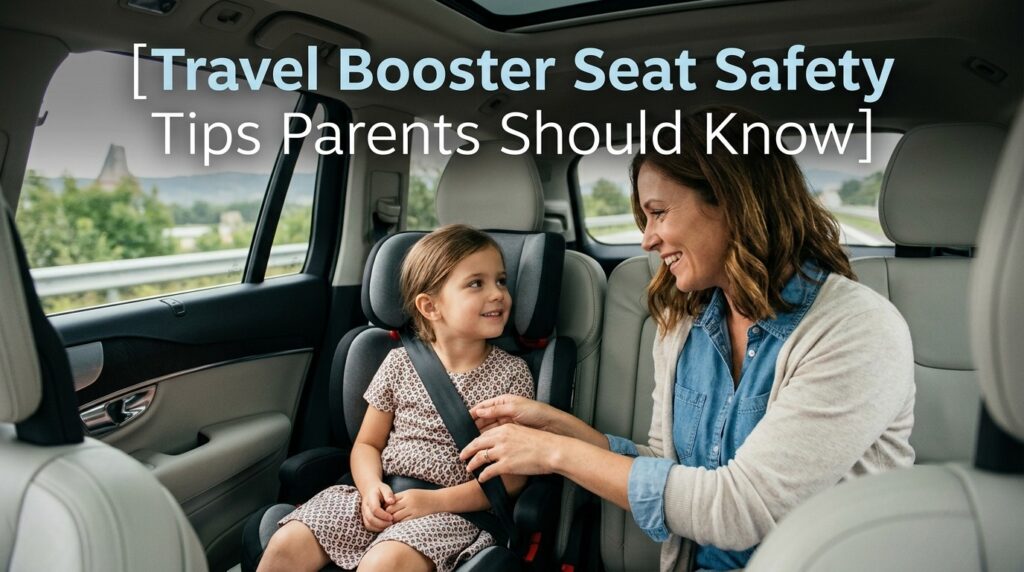
The Best Travel Booster Seats only work as intended when families use them correctly.
SUNHAT advises parents to select a restraint based on a child’s age and size, check the manufacturer’s limits, and choose a seat that fits the vehicle. Children should remain in the appropriate restraint stage for as long as they fit within the stated requirements.
Read the Manual Every Time You Buy a New Model
Do not assume every booster works the same way.
Belt guides, shoulder positioning clips, LATCH use, storage, and fit requirements can differ.
A parent with years of car seat experience should still read the new product manual.
Keep the manual accessible during travel. A digital copy can also be useful if the manufacturer provides one.
Check Local Laws Before Traveling
Child passenger laws vary.
Rules can differ between US states and between countries. Age, height, weight, seating position, taxi rules, and approved restraint requirements may not be identical.
Check current requirements for your destination before the trip.
Legal minimums should also not replace correct product use and proper belt fit.
Do Not Rush the Buckling Process
Airport transfers can feel chaotic.
The driver may be waiting. Other passengers may be loading bags. Your child may be tired.
Still, take the time needed to position the booster and seat belt correctly.
Check for twists in the belt. Confirm lap belt placement. Check the shoulder belt.
A ten-second visual check should become part of every ride.
Keep Children in the Back Seat
NHTSA recommends keeping children in the back seat at least through age 12.
Families should also follow the vehicle manual and local requirements.
When using taxis or unfamiliar cars, look at the seating positions and seat belt setup before placing the child.
Never Use an Unknown Product Without Checking It
Online marketplaces can contain products that look like child restraints but may not meet the required standards for your market.
Avoid choosing a product only because it is cheap, tiny, or advertised as “travel safe.”
Travel Booster Seats Check the manufacturer, model information, instructions, labelling, and applicable certification information.
Be especially careful with products that make broad safety claims without clear product documentation.
Inspect Travel Equipment
Travel gear gets thrown into trunks, luggage areas, and hotel storage rooms.
Inspect the booster regularly.
Look for damage, missing parts, unusual wear, or other problems described in the manufacturer instructions.
For inflatable products, follow the manufacturer’s guidance about inflation and product condition.
Know What to Do After a Crash
A child restraint involved in a crash may need replacement.
NHTSA recommends replacement after moderate or severe crashes and provides criteria related to minor crashes. Manufacturer instructions should also be followed.
Do not continue using a travel booster after a crash without checking the applicable guidance.
Backless vs. High-Back Travel Booster Seats
Backless boosters are popular for travel because they are smaller.
They work by raising the child so the vehicle’s lap-and-shoulder belt can fit correctly. Their simple shape makes them easier to carry between vehicles.
High-back boosters provide a structured back and shoulder belt guide. Many also offer head support and adjustment features.
For long road trips, some children may prefer the support of a high-back seat.
However, high-back models are generally larger and heavier. Even foldable options can require more luggage planning.
The Travel Booster Seats choice should not be based on appearance alone. Check the child’s needs, vehicle seating position, manufacturer instructions, and travel itinerary.
Are Inflatable Booster Seats Good for Travel?
Inflatable booster seats can be highly convenient for travel when an approved product is used correctly for an appropriate child.
Their main advantage is packing size. A deflated booster can take much less space than a rigid model.
However, parents should not treat every inflatable cushion as a child restraint.
Use a genuine child passenger product designed and certified for its intended market. Follow the manufacturer’s instructions and check the product before use.
Inflatable boosters are particularly appealing for short car rides during trips built mainly around public transport.
For long driving vacations, some families may prefer a more structured booster.
Can You Use a Booster Seat on an Airplane?
Backless belt-positioning boosters are generally not designed for use during a flight because aircraft passenger seats typically use lap belts rather than the lap-and-shoulder belt system these boosters require.
A Travel Booster Seats booster may still be useful at the destination for suitable road travel.
Families should check airline baggage policies and the restraint manufacturer’s instructions before flying.
Do not assume that a product described as a “travel booster” is approved for use during the flight itself.
“Travel” often refers to portability between road journeys.
How to Pack a Booster Seat for Family Travel
Packing depends on the booster type.
An inflatable booster can usually be deflated and stored according to its instructions. Keep all positioning clips, straps, and travel bags together.
A rigid backless booster may need to travel as a separate piece of family gear. Some families use a protective travel bag for easier handling.
A Travel Booster Seats folding high-back booster requires more luggage space. Measure your bag and check airline baggage rules before leaving home.
Do not remove required parts to make a booster fit into a suitcase.
Keep the instruction manual with the product or save an accessible copy.
Helpful Tips for Stress-Free Booster Seat Travel
Choosing one of the Best Travel Booster Seats is only the first step. A simple travel routine can make family transportation much easier.
Practice packing the booster before your trip. Make sure it fits where you expect it to fit.
Teach older children that the booster is essential travel equipment. They should understand that the correct sitting position matters during every ride.
When possible, allow extra time for airport transfers and rental car pickup. Rushed parents are more likely to overlook small setup details.
Check the rental vehicle before driving away. Make sure the selected rear seating position works with your restraint and seat belt.
If the fit does not work, ask about another suitable vehicle before beginning the journey.
Finally, recheck the child during long drives. Children can slouch when tired or sleeping.
Frequently Asked Questions
What is the best travel booster seat for flying?
A Travel Booster Seats compact inflatable booster such as Bubble Bum or Hiccup Booster may be convenient to transport on a flight for road use after landing. However, backless boosters are generally not used during the flight itself. Always check the manufacturer’s instructions and airline baggage rules.
At what age can a child use a travel booster seat?
There is no single age that applies to every child or product. A child must meet the booster manufacturer’s requirements and be ready to remain properly seated. Parents should also follow local child passenger laws and current safety guidance.
Are inflatable booster seats safe for rental cars?
A properly approved inflatable booster can be used in a suitable vehicle when the child meets the product requirements and the seat is used according to its instructions. Correct lap-and-shoulder belt fit is essential.
Should I rent a booster seat or bring my own?
Bringing your own booster gives you control over the product’s history, instructions, and familiarity. Renting may reduce luggage, but availability and specific models can vary. Families should compare both options before departure.
Is a backless booster good for a long road trip?
It can be suitable for an appropriately sized and booster-ready child when used correctly. However, some families prefer a high-back booster for long drives because it may provide more seating and head support. Child fit and correct belt position remain essential.
Read More:12 Best Things To Do in London with Kids
Conclusion
The Best Travel Booster Seats balance child fit, correct belt positioning, portability, and the practical needs of a real family trip. BubbleBum and Hiccapop focus on compact packing, Graco offers a simple budget option, RideSafer provides a wearable travel format, and the Peg Perego Viaggio Flex 120 suits families who want a folding high-back booster for road-heavy vacations.
Travel Booster Seats Before buying, check your child’s current size, restraint stage, and ability to sit correctly for the full ride. Then compare the product instructions with your destination, vehicle plans, and local rules. A lightweight booster is helpful, but correct fit and consistent use should always guide the final choice.
