
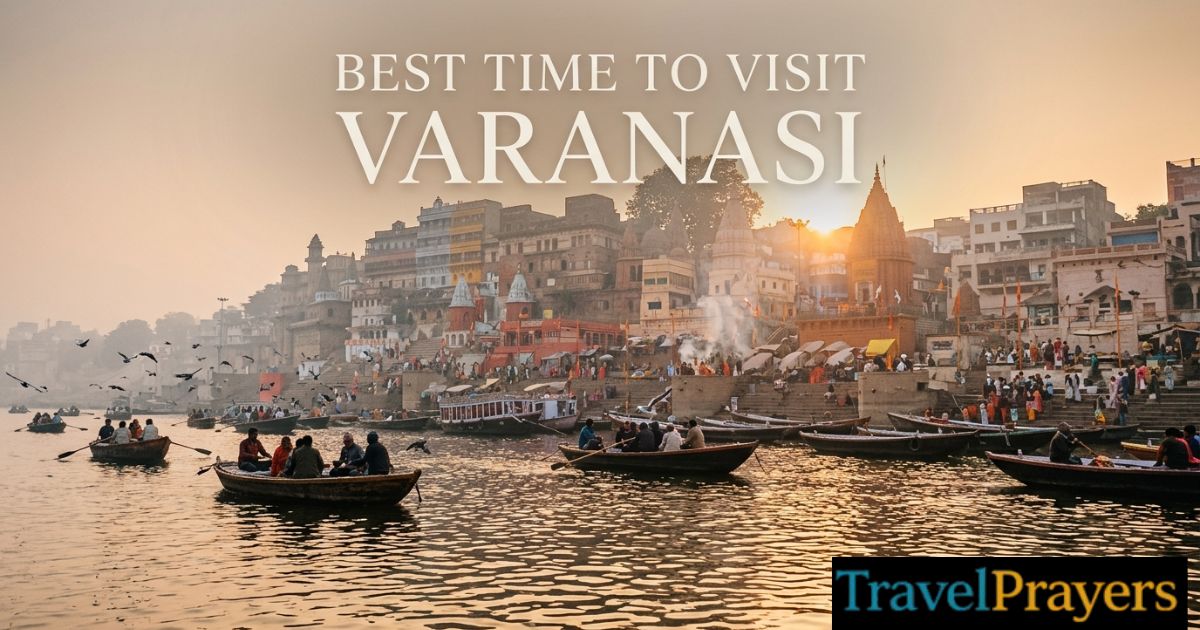
The best time to visit Varanasi is from November to February, when days are mild and walking the ghats is comfortable. October and March also work well. April to June brings serious heat. July to September brings humidity, heavy rain, and a rising Ganga that can close ghats and boat rides. If you want a festival, plan around Dev Deepawali, Maha Shivratri, or Holi, and book early.
Weather matters more here than in many Indian cities because Varanasi is a walking city. You will spend hours on stone steps, in narrow lanes, and on the river at dawn. This guide shows what each season feels like, how festivals change crowds and prices, and which months suit which kind of traveler.
Quick Guide: When Should You Visit Varanasi?
Go between November and February for the most comfortable weather. Choose November if you want the Dev Deepawali lamp festival. Choose February or early March if you prefer lighter crowds and mild days. Avoid May, June, and August unless a religious occasion brings you here.
| Month | What to expect | Verdict |
| January | Coldest month. Nights drop to around 5°C, and morning fog is common | Good, with warm clothes |
| February | Mild days, cool nights, fewer visitors than November | Best |
| March | Warming up. Maha Shivratri or Holi may fall in this window | Good, hot by late month |
| April | Summer begins. Midday sightseeing gets tiring | Hot |
| May | Very hot, with strong sun through the day | Hard going |
| June | Often the toughest month for weather | Avoid if possible |
| July | Monsoon starts. Shravan month draws Shiva devotees | Pilgrims only |
| August | Rainiest month. The Ganga can flood the ghats | Risky |
| September | Rain eases, but the river can stay high early in the month | Mixed |
| October | Post-monsoon and pleasant. Dussehra season | Good |
| November | Highs near 28°C and lows near 16°C. Dev Deepawali falls here | Best, but busy and pricey |
| December | Cool and dry. Fog can delay flights and trains | Good |
These are typical conditions, not forecasts. Check the India Meteorological Department a few days before you fly.
Varanasi Weather by Season
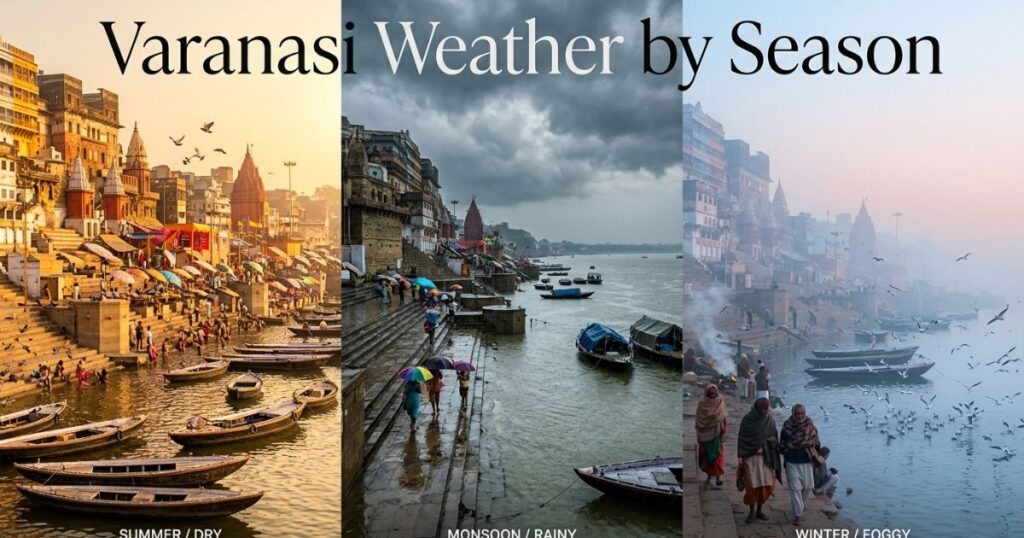
Varanasi sits on the Gangetic plain, so it has hot summers, a wet monsoon, and a cool winter. The city receives roughly 1,050 mm of rain a year, and most of it falls from July to September.
October to March: The Most Comfortable Travel Period
This is the window most travelers should choose. Temperatures stay mild enough to explore on foot from morning to night.
- October and November: Days are warm and evenings are pleasant. The river calms after the monsoon, so boat rides and the evening Ganga Aarti run normally.
- December and January: Mornings turn cold, and night temperatures can fall to around 4–5°C. Fog sometimes slows trains and flights, so avoid tight connections. Pack a warm layer for sunrise boat rides.
- February and March: Days turn gently warm without feeling harsh. This stretch gives you good weather with slightly fewer visitors than November and December.
One practical warning: air quality in north India tends to worsen in winter. Travelers with asthma or breathing problems should check the AQI before booking.
April to June: Hot Summer Conditions
Heat builds from April and peaks in May and June. Daytime highs often climb past 40°C, and the stone ghats get hot underfoot by late morning.
Pilgrims still come, and hotel prices are often lower. If you travel now, do your sightseeing between sunrise and about 9 a.m., rest indoors through the afternoon, and head out again after 5 p.m. Carry water, wear a hat, and book a room with reliable air conditioning.
If the plains heat does not suit you, high-altitude stops like the Chitkul Travel Guide, the Jispa Travel Guide, or the Shangarh meadow village guide offer a cooler alternative for the same months.
July to September: Monsoon and Humidity
August is the rainiest month, and humidity often sits between 70% and 80%. The bigger issue is the river. When monsoon rain raises the Ganga, lower ghats disappear underwater.
In August 2025, the Ganga crossed the danger mark of 71.262 m in Varanasi, reaching about 72.1 m. Ghats were submerged, the Dashashwamedh aarti moved to rooftops, and authorities banned boat movement. Floods like this do not happen every year, but they can happen in any monsoon.
Shravan, the month of Shiva worship, falls from mid-July into August. Temples fill with devotees, which makes this a meaningful time for pilgrims. It is a poor choice if you mainly want ghat walks and boat rides. If you go, keep your bookings flexible and monitor local flood updates.
Festivals That Can Affect Your Varanasi Travel Dates
Festivals add atmosphere but also crowds, traffic restrictions, and higher prices. Dates follow the lunar calendar, so they shift each year. Confirm them with the Varanasi district administration shortly before you book.
Dev Deepawali
Dev Deepawali falls on Kartik Purnima, the full moon about 15 days after Diwali. In 2026, Diwali is on 8 November and Dev Deepawali is on 24 November. Some pages list 25 November, so check the final date.
On this night, lakhs of earthen lamps line the ghats, and the riverfront glows from end to end. The Ganga Mahotsav cultural festival usually runs in the days before it.
It is best for first-time visitors and photographers who want the city’s biggest spectacle. The trade-offs are heavy crowds, restricted movement near the ghats, and hotel and boat prices that rise early. Book your stay and your evening boat well ahead.
Maha Shivratri
Varanasi is Shiva’s city, so Maha Shivratri brings long queues at the Kashi Vishwanath temple. Most calendars place Maha Shivratri 2027 on Saturday, 6 March, though a few list 5 March. Check the official Kashi Vishwanath temple website for darshan arrangements.
It suits devotees who want to take part in the night’s rituals. Travelers who prefer calm ghats and easy temple access should avoid these dates.
Holi
Holi 2027 falls around 21–22 March, with Holika Dahan the night before. Calendars differ by a day, so confirm locally. Varanasi celebrates loudly. Streets fill with colored powder, music, and large groups, and many shops close for the day.
Wear old clothes and protect your phone and camera. Solo travelers, especially women, often feel more comfortable staying inside their hotel or guesthouse on the main day. Visit the ghats before the crowds build.
Best Time to Visit Varanasi also has local Holi customs near Manikarnika Ghat, which is a working cremation ground. Treat it as a space of grief, not a photo stop.
How Festivals Should Influence Your Dates
| Your goal | Best window | Trade-off |
| Calm ghats and mild weather | Mid-February to early March, or October | Some festival spectacle is missed |
| The famous lamp-lit ghats | Around Dev Deepawali (24 Nov 2026) | Crowds and top prices |
| Temple devotion | Maha Shivratri (6 Mar 2027) or Shravan | Long queues |
| Color and street celebration | Holi (around 21–22 Mar 2027) | Noise, mess, and crowds |
| Lowest prices | April to June | Strong heat |
FAQ,s
Which month is better to visit Varanasi?
November is best for weather and Dev Deepawali, but it is also the busiest and priciest. February is the calmer, easier alternative.
Is Varanasi cheap or expensive?
Varanasi is generally affordable compared with many Indian tourist cities. Prices rise for river-view rooms and around major festivals like Dev Deepawali, so check current rates before booking.
What are the top 5 places to visit in Varanasi?
Kashi Vishwanath Temple, Dashashwamedh Ghat for the evening Ganga Aarti, Assi Ghat at sunrise, a dawn boat ride on the Ganga, and Sarnath. Sarnath sits roughly 10 km from the city and has the Dhamek Stupa.
How many days in Varanasi is enough?
Two full days cover the temple, main ghats, a boat ride, and the aarti. Add a third day for Sarnath and slower mornings.
Which area of Varanasi is best to stay in?
Stay near Assi Ghat for a quieter, cafe-friendly base, or near Dashashwamedh and Godowlia to be close to the temple and aarti. Cantonment suits easier road access but sits farther from the ghats.
Conclusion
The best time to visit Varanasi depends on what you want from the city. For comfortable weather, plan your trip between November and February. For the lamp-lit ghats of Dev Deepawali, aim for late November. For calmer mornings and lighter crowds, February and early March work well. Summer heat and monsoon floods make May, June, and August the hardest months for sightseeing.
Pick your month by weather first, then check the festival dates for that year. Festival dates change with the lunar calendar, so confirm them locally before you book flights and hotels. Whenever you go, start your days early, respect the rituals on the ghats, and keep your plans flexible. Varanasi rewards patient travelers in every season.
