
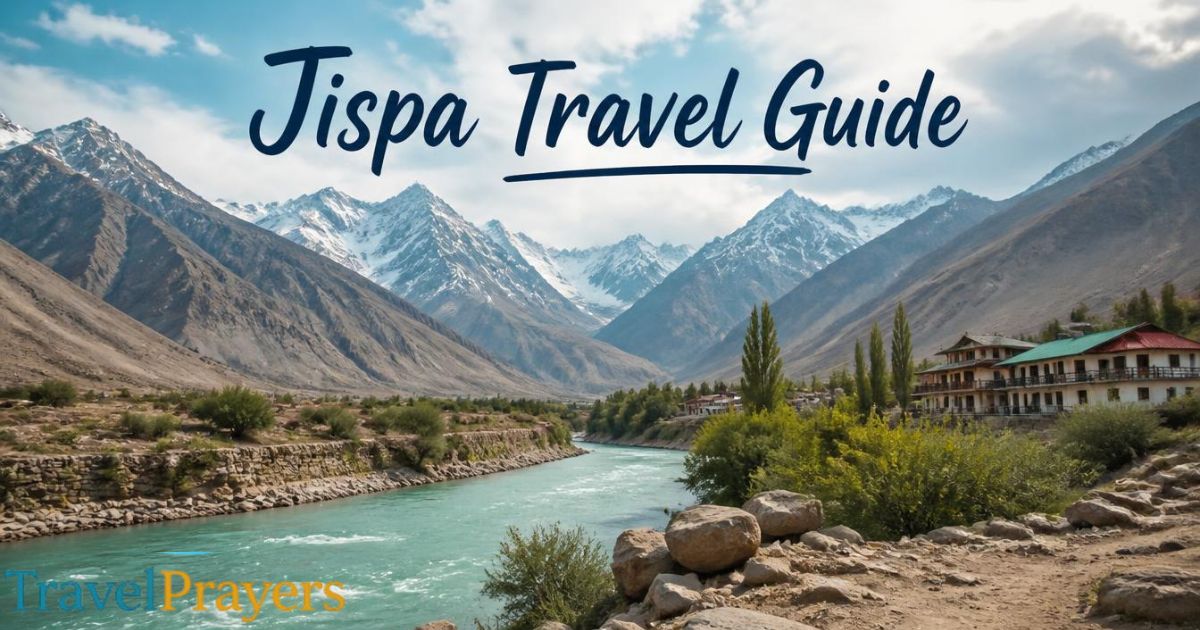
Jispa is a small village in Himachal’s Lahaul valley, at about 3,200 m (10,500 ft) on the Manali–Leh Highway. It works best as the first or second night on a Leh or Zanskar road trip. It sits about 20 km north of Keylong and 7 km south of Darcha, beside the Bhaga River. This Jispa travel guide covers road access, seasons, altitude, stays, fuel, cash and the nearby lakes.
Why Travellers Stay in Jispa Before Leh & Zanskar
Jispa gives you a lower, greener night than most other stops beyond Keylong. It also puts you close to the turn for Zanskar at Darcha and to the climb toward Baralacha La.
Jispa lies roughly 137 km from Manali and 335 km from Leh, according to one road-trip guide. Other sources give shorter Manali distances, so plan around drive time rather than one fixed figure.
The village has no major sights. Its value is the setting: a wide, open riverbed, quiet evenings and a good base for the Baralacha La lakes.
Jispa vs Sarchu: Which Overnight Stop Is Better?
For most first-time Leh travellers, Jispa is the better first night. Sarchu suits travellers who already know how they react to altitude.
| Factor | Jispa | Sarchu |
| Altitude | About 3,200 m (10,500 ft) | About 4,290 m (14,070 ft) |
| Distance from Manali | Roughly 120–137 km | About 255 km |
| Setting | Green valley, river camps, lodges | Open, barren, very exposed |
| Best for | First night, acclimatisation, short trips | Breaking a long drive, experienced high-altitude travellers |
| Main risk | Mild altitude symptoms | Sleep and headache problems at height |
Why Many Travellers Prefer Jispa
Jispa sits much lower, so most people sleep better there. Medical advice often suggests raising your sleeping altitude by no more than about 1,000 ft per 24 hours, and neither stop meets that rule from Manali at 6,700 ft. Jispa simply breaks it by a smaller margin.
It also has more stay options, a village feel and easier access to Keylong’s market and monasteries.
Why Sarchu Feels More Extreme
At Sarchu you sleep roughly 1,200 m higher than at Jispa. Nights are colder, the landscape is bare, and the camps are basic. Many travellers also reach it after a long day and a high pass, which makes altitude symptoms harder to manage. Sarchu works as a stop for those who have already spent time above 3,000 m.
Why the “Snow Wall” Season (May–June) is Best for Photography
Late May and June give the most dramatic images. Snow still lines the road above the Atal Tunnel, and Baralacha La has just reopened. May and June are when snow walls can still be seen at Rohtang and Baralacha La.
Photography tips for this window:
- Start early. Morning light on the Bhaga valley is clearer, and clouds tend to build by afternoon.
- Carry a lens cloth. Snow glare and spray from melting roadside streams cover lenses fast.
- Stay flexible. Baralacha La opens only after BRO finishes its snow clearing, usually in May, so early-season dates can shift.
Jispa During Highway Season (May to September)
The Manali–Leh Highway season is when Jispa is fully open. Camps stand along the river, buses run, and restaurants operate normally.
- Late May–June: Reopening period, snow walls, quieter roads. The Atal Tunnel to Jispa stretch is often at its best in June.
- July–August: Peak traffic. One lodging guide notes that Jispa has limited rooms and fills fast in the Leh season. Book ahead.
- September: Fewer travellers, clear skies and lower prices. Nights get colder.
Summer days can reach about 15 °C, with nights near 3–5 °C. Pack a warm jacket even in July.
Jispa in October
October is the shoulder month and a gamble. Days can be crisp and clear, but the highway beyond Jispa starts closing. Baralacha La stays buried under snow from mid-October to early May. One local guide also reports the highway typically closing after about 15 October, depending on snowfall.
It is 24 October 2026 as of writing, so Leh-bound travellers should assume the highway beyond Jispa is closed or closed. Many camps are also shut by now. Call ahead to your stay and ask a local driver or the district police about current road status.
Jispa in Winter
Winter in Jispa is harsh and quiet. The Atal Tunnel keeps the Manali side reachable, but the Baralacha La side stays closed from November.
Most seasonal camps close. Only a few lodges or homestays may operate, and heating, hot water and food choices can be limited. Winter suits experienced cold-weather travellers who want solitude and snow. It does not suit casual road-trippers.
Navigating the Manali–Jispa Route: Atal Tunnel & Lahaul Highway Conditions
From Manali you reach Jispa by passing through the Atal Tunnel, then Sissu, Tandi and Keylong. The usual drive takes about 3–5 hours depending on traffic, weather and road work.
Atal Tunnel & Highway Access
The 9.02 km Atal Tunnel opened in October 2020 and bypasses Rohtang Pass entirely, so you need no Rohtang permit. That also makes Jispa reachable much earlier and later in the year than before.
The older Rohtang route is about 140 km, open only from May to October and needs a permit. Few travellers choose it now.
By bus: HRTC runs buses between Manali, Keylong and Jispa in summer. You can check the schedule on the HRTC bus timing page. Shared taxis from Manali are an alternative.
Road Conditions & BRO Work
The Border Roads Organisation (BRO) maintains and clears the highway. It starts snow clearing around March and declares Baralacha La open around May. Expect patches of damaged tarmac, slush and rock fall after rain. Stream crossings (nallahs) beyond Jispa can be tricky, especially in the afternoon when meltwater rises.
Start early, keep your tank full and carry water. Road status can change in a day, so confirm it on the morning you drive.
Jispa to Padum Road Status: The New Zanskar Highway Reality
Zanskar’s road link now runs from Darcha, just 7 km from Jispa. The Nimmu–Padum–Darcha road is a 298 km paved road, with construction completed in March 2024. The weak point is Shinku La, which sits at about 5,050 m and stays snow-covered for much of the year.
Current picture, with dates:
- On 8 May 2026 the road was reported open, with only 4×4 vehicles allowed near Shinku La.
- A bridge or road failure near Shinku La disrupted traffic on 1 May 2026, and traffic later reopened.
- Public transport is thin. Shared cabs run on the route but not often. HRTC ran a trial Keylong–Padum bus in June 2024.
A tunnel will eventually remove the pass problem. The planned 4.25 km Shinku La tunnel lies beneath a 16,580 ft pass, and completion is now expected around 2028–29. You can follow project updates in this Tribune report on the Shinkula tunnel.
Until then, treat Shinku La as a season-only, weather-dependent crossing. Check the exact status the morning you leave Jispa or Darcha.
Acclimatization & Altitude Sickness Reality

Altitude sickness is common above 3,000 m, and Jispa Travel Guide: sits just above that line. Most healthy Travellers feel fine at 3,200 m on a slow day. Some still get headaches, poor sleep or nausea.
Air at this height holds less usable oxygen. One local guide puts the effective oxygen level at Jispa at about 14%. Sea-level air is around 21%.
Why Jispa Helps With Acclimatization
You gain altitude in steps. Manali sits near 2,000 m, Jispa at 3,200 m, then you climb past 4,000 m beyond Baralacha La. That staging is gentler than driving from Manali to Sarchu in one day. Sleeping at Jispa gives your body a night to adjust before the next climb.
High-Altitude Travel Tips
- Drink water steadily and avoid alcohol on arrival night.
- Eat light dinners and keep your first day easy.
- Rest if you get a mild headache. Do not climb higher while symptoms get worse.
- Descend and seek medical help for severe headache, confusion, breathlessness at rest or vomiting.
- Carry personal medicines. Medical facilities near Jispa are limited, and the district hospital is in Keylong.
- Speak to your doctor before travelling if you have heart, lung or blood pressure conditions.
For planning your trip length and season choices more broadly, our First-Time Europe Trip Planning Guide shows how to weigh trip length, season and budget before booking.
Jispa Stay Guide: Camps, Riverside Stays & Highway Lodges
Jispa has three main stay types. Prices and room quality shift by season, so check each property’s current rates directly.
- Riverside camps: Tents or domes beside the Bhaga River. Examples include TIH Bhaga Eco Camp, Jispa Journeys and YOLO Outdoors. They suit couples, groups and photographers, though bathrooms and heating vary.
- Highway lodges: Practical hotels for bikers and drivers. Hotel Ibex, Padma Lodge and Hotel Dekyid appear in stay guides. One guide suggests mountain-facing rooms for better views and less highway noise.
- Hostels and budget stays: Zostel Jispa works for solo travellers who like shared spaces.
- Government mountaineers’ hut: The Himachal government manages a mountaineers’ hut in Jispa. Confirm availability before relying on it.
Book early for June to August. Ask before you pay whether meals, hot water and heating come with the room.
Beyond the Stopover: Deepak Tal, Suraj Tal & Darcha Bridge
A spare day lets you see more than the village. Check the Baralacha La road before you drive up.
Deepak Tal
Deepak Tal is a small lake on the way to Baralacha La. It lies about 21 km from Jispa, and the best months are May, June and September. Wind often blurs the reflections, so go early. A few dhabas now sit near the lake, but there is no mobile network at Deepak Tal.
Suraj Tal
Suraj Tal lies just below the 4,890 m Baralacha La and is about 800 m long. It is the source area of the Bhaga River and stays inaccessible in winter. Deepak Tal to Suraj Tal is roughly 28 km. Combined with the pass, this makes a full day trip from Jispa.
Darcha Bridge & Zanskar Transition
Darcha is the last roadside village before the Zanskar turn. It is also the starting point for several treks, including the long route to Padum. One traveller account describes the old Padum trek road ending at a foot-only bridge over the Barai Nallah. Use Darcha as a short half-day stop, not a base.
Connectivity, Fuel & Cash Reality in Jispa
Prepare for patchy networks, thin fuel stops and almost no cash access.
- Cash: Jispa has no ATMs. Keylong has the only other ATM on the route, and it does not always work. Carry cash from Manali.
- Network: The district lists BSNL, Airtel 4G and Jio 4G coverage around Keylong, Tandi and Darcha. Coverage inside camps varies, and signal drops quickly past Darcha.
- Medical care: Keylong has the nearest civil hospital.
The Tandi Fuel Reality
Fuel is the main planning risk on the way to Leh. The district’s own page says Tandi, 105 km from Manali, hosts a petrol pump, with the next one at Leh, 368 km beyond. You can read this on the official Lahaul and Spiti district facilities page. Newer listings show additional pumps at Sissu and Keylong, but supply can run short, and Jispa itself has no pump. Fill up at Tandi or Keylong, and do not assume a pump will be open.
EV Charging Reality in Jispa
EV travel here is possible but needs planning. A 2021 project installed AC chargers at Hotel Ibex and Padma Lodge in Jispa. Travellers can charge overnight at these locations. Chargers are slow, power supply is not guaranteed, and the next reliable options may be far away. Call the property ahead and confirm that the charger works. Himachal’s transport department and ICLEI held EV workshops in Keylong in May 2025 to encourage more charging, so the picture may be improving.
Jispa for Zanskar & Ladakh Road Trips
Jispa works for three trip types:
- Manali–Leh road trip: Sleep in Jispa on night one. Continue to Sarchu or straight to Leh on day two. The highway only runs in season.
- Zanskar trip: Use Jispa as the stop before Darcha and Shinku La. Cross early in the day, only when the road and any police advisory allow it.
- Short Lahaul escape: Spend one or two nights in Jispa from Manali with a day trip to Deepak Tal and Suraj Tal.
For travellers who prefer a cooler, quieter break after a high road trip, our Northern Lights in Russia guide offers a useful look at cold-weather timing and packing choices.
Is Jispa Worth Visiting?
Yes, if you value a quiet riverside night and a smoother altitude step more than sightseeing. Jispa Travel Guide has no big monuments, and its best moments are simple ones: a clear morning on the Bhagya valley, a day trip to the high lakes and an easier start to Leh or Zanskar. It disappoints only visitors who expect nightlife or a packed list of sights.
Visit between late May and September for open roads and full services. Come in June for snow walls, or September for fewer crowds. Plan October and winter visits only if you are comfortable with closed passes and basic stays. Whatever the month, carry cash, fill your fuel tank early and confirm road status before you drive.
FAQ,s
How many days are enough for Jispa?
One night is enough for a Leh or Zanskar road trip. Two nights let you add Deepak Tal and Suraj Tal at an easy pace. A 3–4 day stay suits trekkers heading toward Darcha.
Which is better, Sissu or Jispa?
Jispa suits road-trippers heading to Leh or Zanskar because it is higher up the route and closer to Darcha. Sissu sits about 40 km from Manali along the Chandra River, so it suits shorter stays from Manali. Choose Sissu for a quick break and Jispa for acclimatisation.
How far is Jispa from Manali by road?
It is roughly 120 km via the Atal Tunnel, and sources quote 100–140 km. Expect about 3–5 hours of driving, depending on traffic and conditions.
Can I go to Jispa now?
Yes, you can usually reach it via the Atal Tunnel even in late October, but expect cold weather, closed camps and a highway that is closing beyond Jispa. Check road status and stay availability before you leave Manali.
Do we need a permit for Jispa?
No permit is needed for Jispa itself on the Atal Tunnel route. The tunnel route needs no Rohtang Pass permit. The older Rohtang route does require one. Carry valid photo ID, and confirm any local rules with your stay or driver before travelling.
