
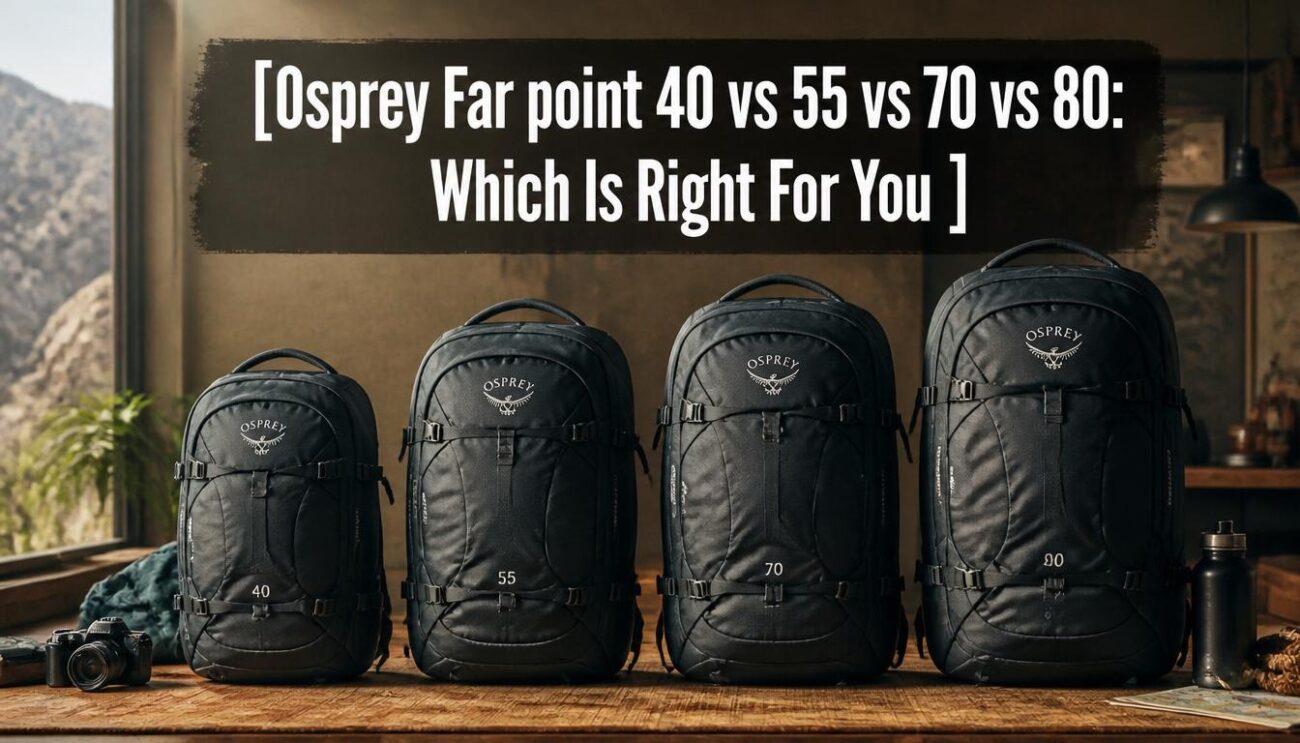
Choosing between Osprey Far point 40 vs 55 vs 70 vs 80 can feel difficult because each backpack serves a different type of traveller. Whether you plan a weekend city break, a long backpacking adventure, or a round-the-world trip, the right size can make every journey easier, more comfortable, and less stressful. Therefore, understanding the strengths of each pack before buying will help you spend your money wisely and travel with greater confidence.
Every traveler packs in a different way, and every trip has unique needs. For example, some people only carry clothes and a laptop, while others bring hiking gear, camera equipment, or cold-weather clothing. Furthermore, airline baggage rules, trip length, and personal comfort all play important roles when choosing the best backpack. As a result, selecting the right size becomes much easier when you understand your travel needs. Therefore, this guide compares every Farpoint size in simple terms, so you can quickly find the perfect backpack for your travel style.
Why Choose the Osprey Farpoint Series?
The Osprey Farpoint line has become one of the most trusted travel backpack collections in the world. First, these packs combine the comfort of a hiking backpack with the practical design of travel luggage. As a result, they work well for airports, trains, buses, and city streets.
Many travelers also choose the Farpoint series because it offers:
- Comfortable adjustable harness systems
- Durable materials for frequent travel
- Lockable zippers for added security
- Easy-to-pack suitcase-style openings
- Compression straps to reduce bulk
- Multiple sizes for different travel styles
Furthermore, the Farpoint backpacks balance comfort and organization without feeling too heavy.
Osprey Far point 40 vs 55 vs 70 vs 80 at a Glance
Featured Snippet
The main difference between Osprey Far point 40 vs 55 vs 70 vs 80 is storage capacity. The 40L works best for carry-on travel, the 55L suits longer trips, the 70L fits extended adventures, and the 80L provides maximum space for travelers carrying bulky equipment or clothing.
Quick Comparison Table
| Backpack | Best For | Carry-On Friendly | Storage Capacity |
| Farpoint 40 | Weekend trips and minimalist travel | Yes, on many airlines | Light packing |
| Farpoint 55 | Multi-week travel | Main pack often qualifies, airline rules may vary | Moderate packing |
| Farpoint 70 | Long journeys | Usually checked baggage | Large packing needs |
| Farpoint 80 | Extended travel and bulky gear | No | Maximum storage |
This table gives a simple overview. However, each backpack offers unique advantages depending on your travel plans.
Osprey Farpoint 40 Overview
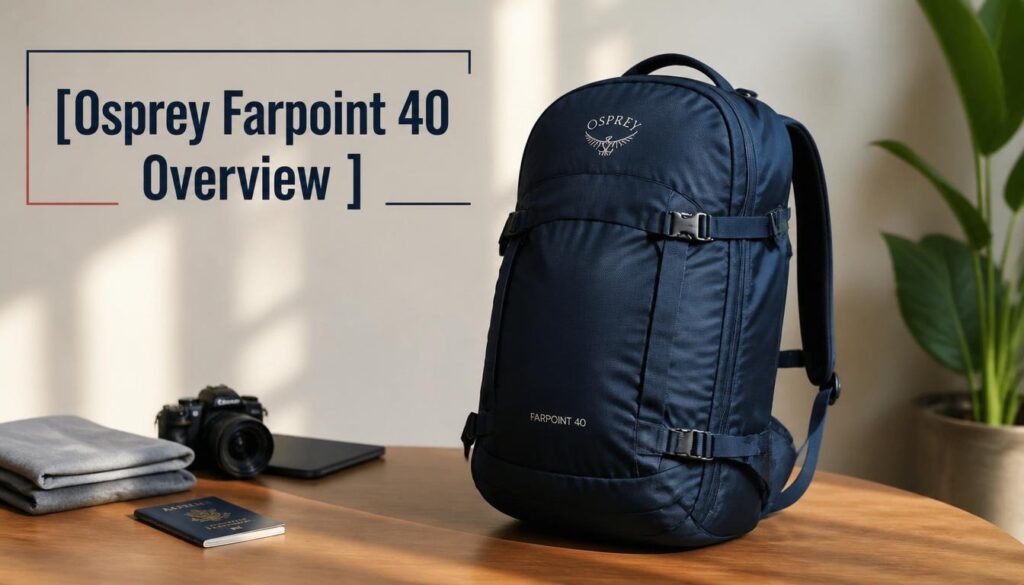
The Farpoint 40 is the smallest model in the lineup. Therefore, it remains one of the most popular choices for international travelers.
Many airlines generally accept this backpack as cabin baggage, although size rules may vary between airlines. As a result, many travelers avoid checked baggage fees while keeping everything close during the journey.
Best Features
The Farpoint 40 offers several useful benefits:
- Lightweight design
- Comfortable shoulder straps
- Large front-loading compartment
- Laptop storage
- Internal compression straps
- Durable construction
Moreover, it works well for business trips, digital nomads, and vacation travelers.
Best For
The Farpoint 40 is ideal if you:
- Travel for one week or less
- Prefer lightweight packing
- Want faster airport transfers
- Stay mostly in hotels
- Move between cities often
However, travelers carrying winter clothing or camping equipment may find the storage space limited.
Osprey Farpoint 55 Overview
The Farpoint 55 provides a smart balance between portability and storage. Furthermore, it includes a detachable daypack that adds extra flexibility during travel. In addition, the extra storage space makes packing for longer trips much easier. Therefore, it remains a popular choice for travelers who want both convenience and versatility. As a result, it works well for a wide range of travel styles and destinations.
The main backpack holds most of your clothing and gear. Meanwhile, the smaller daypack carries essentials such as:
- Passport
- Camera
- Snacks
- Water bottle
- Tablet
- Small electronics
This two-pack system makes sightseeing much easier after reaching your destination.
Why Travelers Like the Farpoint 55
Many backpackers consider the 55L version the sweet spot between small and large packs.
Key advantages include:
- More room than the 40L
- Detachable daypack
- Comfortable suspension system
- Better organization
- Suitable for longer vacations
In addition, it remains easier to carry than larger expedition packs.
Who Should Buy It?
The Farpoint 55 works well for:
- Two- to four-week holidays
- Backpacking through Europe
- Multi-country trips
- Digital nomads
- Travelers needing extra flexibility
However, careful packing still matters because overloading the bag can reduce comfort.
Osprey Farpoint 70 Overview
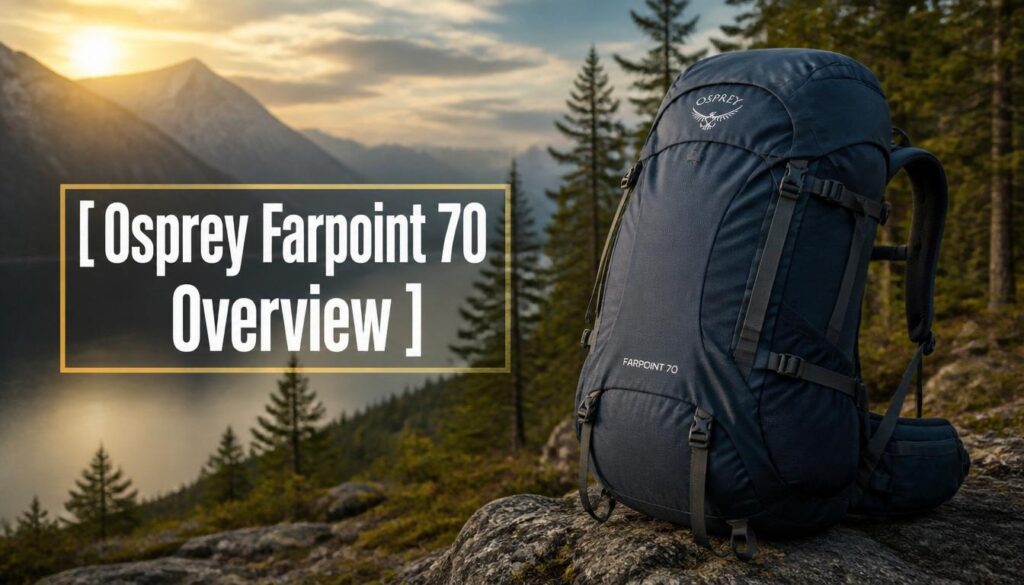
The Farpoint 70 targets travelers planning long adventures or carrying additional equipment. Therefore, it offers much more packing space than the smaller models.
This size becomes useful when travelling across different climates. For example, you may need summer clothes, warm jackets, hiking shoes, and outdoor accessories all on one trip. In addition, the extra space helps you stay organised without packing too tightly. Therefore, you can carry everything you need while keeping your belongings easy to access during your journey.
Main Advantages
The Farpoint 70 offers:
- Large storage capacity
- Comfortable carrying frame
- Adjustable torso fit
- Durable fabric
- Detachable daypack
- Strong compression straps
Moreover, the larger frame distributes weight better than many standard travel backpacks.
Ideal Travelers
This model suits:
- Long-term backpackers
- Gap year travelers
- Adventure travelers
- Outdoor explorers
- Travelers carrying photography equipment
However, the larger size usually requires checked baggage on most airlines.
Osprey Farpoint 80 Overview
The Farpoint 80 is the largest option in the series. As a result, it suits travelers who need maximum storage instead of minimal packing.
Rather than focusing on airline convenience, this backpack prioritizes carrying large amounts of gear comfortably. Moreover, it offers extra storage for longer trips and bulky equipment. Therefore, it is an excellent choice for travellers who need to carry more gear without sacrificing comfort.
Some travelers choose it for:
- Expedition travel
- Volunteer programs
- Long overseas stays
- Cold-weather adventures
- Multi-month backpacking trips
Furthermore, the suspension system helps manage heavier loads during extended walks.
Strengths of the Farpoint 80
Important benefits include:
- Very large capacity
- Excellent support
- Comfortable hip belt
- Durable construction
- Plenty of organization
- Suitable for bulky equipment
However, fully packed bags can become quite heavy. Therefore, thoughtful packing remains important.
Capacity Comparison
Storage size greatly affects your travel experience. Consequently, choosing too much or too little space may create unnecessary problems.
| Model | Short Trips | Long Trips | Heavy Gear | Easy to Carry |
| Farpoint 40 | Excellent | Fair | Limited | Excellent |
| Farpoint 55 | Excellent | Very Good | Moderate | Very Good |
| Farpoint 70 | Good | Excellent | Very Good | Good |
| Farpoint 80 | Fair | Excellent | Excellent | Moderate |
This comparison shows that no single backpack fits every traveller. Instead, the best choice depends on your packing style, destination, and trip length. Therefore, thinking about your travel needs before buying is important. As a result, you can choose a backpack that offers the right balance of space, comfort, and convenience for every journey.
Which Backpack Feels Most Comfortable?
Comfort depends on both backpack design and packing habits. First, carrying unnecessary items adds extra weight that quickly becomes tiring.
The Farpoint 40 usually feels the lightest because it encourages minimalist packing. Meanwhile, the Farpoint 55 balances comfort with additional storage, making it popular among frequent international travellers. Furthermore, it provides greater flexibility for longer trips or extra gear. As a result, many travellers consider it an excellent balance between capacity, comfort, and portability.
The Farpoint 70 distributes heavier loads well. However, carrying extra weight for many hours still requires good physical fitness. Likewise, the Farpoint 80 offers strong support, but it performs best when travelers genuinely need its larger capacity.
Overall, choosing the smallest backpack that comfortably fits your gear often creates the most enjoyable travel experience. Therefore, you can move more easily through airports, train stations, and busy streets. In addition, lighter packing helps reduce stress and makes every journey more comfortable and flexible.
Osprey Far point 40 vs 55 vs 70 vs 80: Key Differences
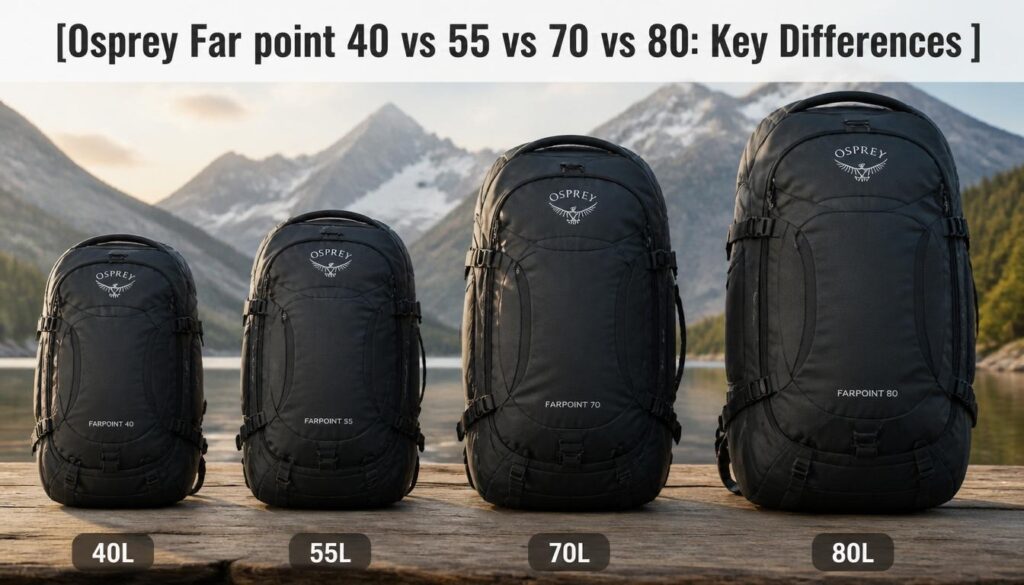
Choosing the right backpack becomes much easier when you compare the main features side by side. Therefore, you should think about how long you travel, how much you pack, and how often you move between destinations. A larger backpack may seem better at first. However, carrying extra weight every day can quickly become tiring.
Size and Packing Space
The biggest difference between these backpacks is capacity. First, the 40L model supports light packing and short trips. Next, the 55L gives you more room without becoming overly bulky. Meanwhile, the 70L offers plenty of space for long journeys, and the 80L provides the largest storage for travelers with bulky gear. Furthermore, each size is designed for a different travel style and packing need. Therefore, choosing the right capacity depends on your destination, trip length, and the amount of gear you plan to carry. As a result, you can enjoy a more comfortable and organised travel experience.
If you usually pack only the essentials, the 40L or 55L will likely feel more comfortable. On the other hand, if you travel for several months or visit places with changing weather, the 70L or 80L may suit you better.
Weight Comparison
A larger backpack usually weighs more before you even start packing. Therefore, keeping your load as light as possible improves comfort throughout your trip.
Here is a simple comparison:
| Model | Empty Weight | Best Packing Style |
| Farpoint 40 | Lightest | Minimalist travel |
| Farpoint 55 | Light | Balanced packing |
| Farpoint 70 | Medium | Long-term travel |
| Farpoint 80 | Heaviest | Heavy-duty packing |
Although the weight difference may seem small, every extra kilogram matters after several hours of walking.
Carry-On Compatibility
Many travelers want to avoid checked baggage fees. Therefore, carry-on compatibility often becomes the deciding factor.
Farpoint 40
The Farpoint 40 is generally designed to meet many airline cabin baggage limits. However, airline rules differ, so checking your airline’s latest size requirements before flying is always wise.
Farpoint 55
The main backpack may fit some airline requirements when packed carefully. However, attaching the daypack usually makes the overall size larger than most cabin limits.
Farpoint 70
The Farpoint 70 generally requires checked baggage because of its larger dimensions.
Farpoint 80
The Farpoint 80 almost always travels as checked luggage due to its size and capacity.
Therefore, travelers who fly frequently often prefer the 40L because it offers the greatest flexibility at airports.
Comfort During Long Trips

Comfort matters just as much as storage space. After all, you may carry your backpack through airports, train stations, city streets, and uneven paths.
Fortunately, every Farpoint backpack includes features designed for comfortable travel.
Adjustable Harness
Each model uses an adjustable carrying system. Therefore, you can fit the backpack more closely to your body.
A better fit helps:
- Reduce shoulder pressure
- Improve balance
- Increase walking comfort
- Reduce back strain
Hip Belt Support
The padded hip belt carries much of the backpack’s weight. As a result, your shoulders stay more relaxed during long walks.
This feature becomes even more valuable on the larger 70L and 80L models.
Ventilation
The back panel allows better airflow than many traditional backpacks. Consequently, your back may stay cooler while walking in warm weather.
Although no backpack completely prevents sweating, better ventilation improves overall comfort.
Organization Features
Packing becomes easier when every item has its own place. Therefore, the Farpoint series includes several practical storage features.
Most models include:
- Front-loading suitcase opening
- Internal mesh pockets
- Compression straps
- Laptop storage on selected models
- External grab handles
- Lockable zipper sliders
Moreover, the suitcase-style opening lets you see everything without unpacking the entire bag.
Which Backpack Fits Your Travel Style?
Every traveler packs differently. Therefore, matching the backpack to your travel habits creates the best experience.
For Weekend Travelers
The Farpoint 40 is usually the smartest choice.
It offers enough room for:
- Clothes
- Shoes
- Toiletries
- Small electronics
- Travel documents
Furthermore, its compact size makes moving through airports much easier.
For Digital Nomads
Many digital nomads choose the Farpoint 55.
The extra space helps carry:
- Laptop
- Charger
- Camera
- Clothing
- Daily essentials
Meanwhile, the detachable daypack works well during daily sightseeing or café visits.
For Backpacking Europe
Travelers exploring several countries often enjoy Farpoint 55 or 70.
These models provide enough space for:
- Multiple clothing layers
- Comfortable shoes
- Travel accessories
- Souvenirs
However, the 55L usually feels easier when changing trains or buses often.
For Adventure Travel
Adventure travelers often need:
- Hiking gear
- Outdoor clothing
- Sleeping equipment
- Extra footwear
Therefore, the Farpoint 70 or 80 provides the additional storage these trips often require.
Which Backpack Works Best for Families?
Families often travel differently from solo backpackers. Therefore, packing needs may change.
Parents travelling with children usually appreciate extra storage for:
- Snacks
- Extra clothing
- Toys
- Medicine
- Baby supplies
However, carrying an oversized backpack while helping children can become exhausting. As a result, many parents still prefer the Farpoint 55 because it balances capacity and comfort.
Best Backpack for Different Trip Lengths
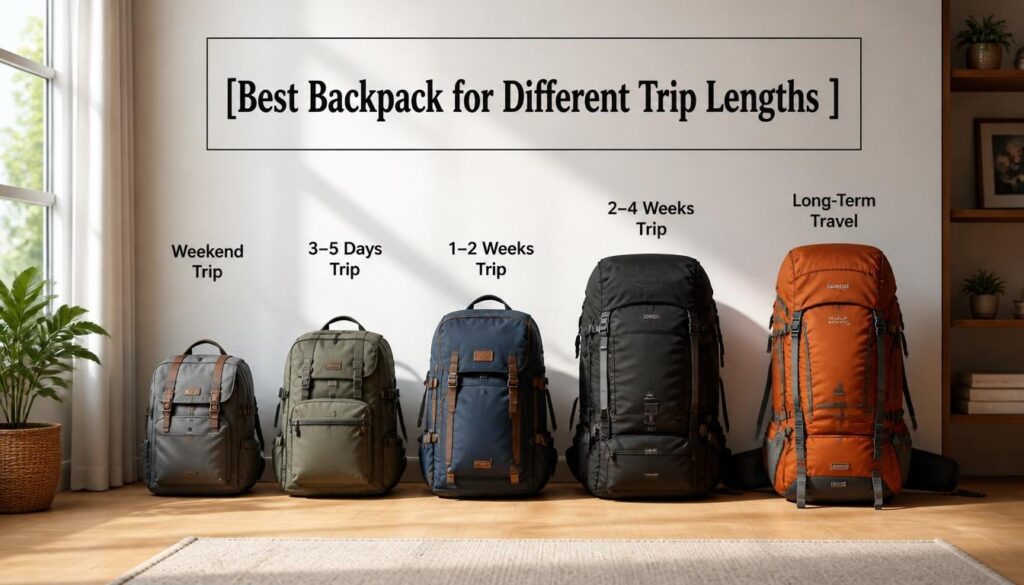
Choosing the correct backpack often depends on how many days you plan to travel.
Three to Five Days
The Farpoint 40 usually offers enough space for careful packers.
One to Two Weeks
The Farpoint 55 provides additional flexibility without becoming excessively large.
Three to Six Weeks
The Farpoint 70 gives you extra room for changing weather and longer travel.
Several Months
The Farpoint 80 becomes useful when you need to carry larger amounts of clothing or outdoor equipment.
Nevertheless, experienced travelers often discover they need fewer items than expected.
Budget Considerations
Backpacks represent a long-term investment. Therefore, choosing the right size the first time saves money later.
Generally:
- Smaller backpacks often cost less.
- Larger backpacks usually cost more because they use additional materials.
- Prices may vary between retailers, seasons, and regions.
Rather than choosing the largest model automatically, focus on buying the size that matches your travel habits.
Durability and Build Quality
Osprey has built a strong reputation for producing reliable travel backpacks. Therefore, many travelers continue using the same Farpoint backpack for years.
The Farpoint series typically includes:
- Tough fabrics
- Strong stitching
- Quality buckles
- Durable zippers
- Reinforced carrying handles
Moreover, careful packing and regular cleaning can help extend the backpack’s lifespan.
Safety Tips While Travelling
Keeping your belongings secure should always be a priority.
Follow these simple tips:
- Lock your zippers when possible.
- Keep valuables close to your body.
- Avoid overpacking.
- Label your backpack clearly.
- Store passports safely.
- Keep important documents backed up digitally.
Furthermore, staying aware of your surroundings helps protect both you and your belongings.
Is the Farpoint Series Good for Hiking?
The Farpoint collection works well for travel. However, it is not designed as a dedicated hiking backpack.
For short walks or easy trails, these backpacks perform well. On the other hand, serious mountain hiking usually requires packs designed specifically for trekking.
Therefore, choose the Farpoint if your trip focuses mainly on travel rather than technical hiking.
Booking and Packing Advice
Before buying your backpack, think carefully about your travel plans.
Ask yourself:
- How long will I travel?
- Will I mostly fly?
- Do I move between cities often?
- Do I pack light?
- Will I carry outdoor gear?
Answering these questions makes selecting the right backpack much easier.
Likewise, practise packing before your trip. You may discover that you need much less space than you first expected.
Overall, smart packing often matters more than owning the biggest backpack.
Frequently Asked Questions
Is Osprey Far point 40 vs 55 vs 70 vs 80 suitable for first-time travelers?
Yes. The Farpoint series is beginner-friendly because it combines comfort, durability, and simple organization. Therefore, first-time travelers can pack and carry their gear with confidence. Moreover, choosing the right size for your trip helps make travel easier and more enjoyable.
Which Farpoint backpack is best for carry-on travel?
The Farpoint 40 is generally the best option for carry-on travel. It is designed with airline cabin limits in mind, although requirements may vary by airline. Therefore, always check your airline’s baggage policy before your flight.
Is the Farpoint 55 worth buying over the Farpoint 40?
Yes, if you need more storage or like having a detachable daypack. The extra capacity makes longer trips easier. However, if you prefer minimalist travel and frequent flights, the Farpoint 40 may be the better choice.
Should I choose the Farpoint 70 or the Farpoint 80?
Choose the Farpoint 70 if you want plenty of space without carrying the largest pack. On the other hand, choose the Farpoint 80 if you often travel for several months or carry bulky outdoor equipment. Therefore, your packing style should guide your decision.
Are these backpacks comfortable for long walks?
Yes. Every Farpoint model includes an adjustable harness, padded shoulder straps, and a supportive hip belt. As a result, weight spreads more evenly across your body. Moreover, proper adjustment improves comfort during long travel days.
Which Farpoint backpack is best for international travel?
For most travelers, the Farpoint 40 or Farpoint 55 offers the best balance between comfort, organization, and portability. Furthermore, these sizes work well for city breaks, multi-country trips, and extended vacations without feeling unnecessarily large.
How do I choose the right Farpoint size?
Start by thinking about your trip length, packing habits, and transportation. If you pack light, choose the 40L. Next, select the 55L for longer holidays. Meanwhile, the 70L suits extended travel, and the 80L works best for bulky gear or very long adventures.
Also Read;
Scotland vs Ireland: Which Country Should You Visit?
Could Austin Become a Delta Hub? Future Growth Explained
Conclusion
Choosing between Osprey Far point 40 vs 55 vs 70 vs 80 depends on how you travel rather than simply choosing the biggest backpack. The Farpoint 40 is an excellent choice for minimalist travelers who want a lightweight, carry-on-friendly bag. Meanwhile, the Farpoint 55 provides extra flexibility with its detachable daypack, making it ideal for longer vacations and multi-country adventures. Furthermore, the Farpoint 70 offers generous storage for extended journeys, while the Farpoint 80 gives experienced travelers the maximum capacity for bulky clothing and outdoor equipment.
Overall, there is no single backpack that fits everyone because every journey is different. Therefore, consider your trip length, packing style, airline plans, and comfort before making your decision. In addition, remember that packing smart often matters more than carrying a larger backpack. By matching the backpack to your travel needs, you can enjoy smoother airport transfers, easier sightseeing, and greater comfort throughout every adventure.
