

Could Austin Become a Delta Hub is a question many travellers and aviation fans now ask. Austin has grown fast over the last few years. Moreover, the city attracts business travellers, tourists, students, and technology companies. As a result, many people wonder if Delta Air Lines could turn Austin into one of its future airline hubs. While Delta already has a strong presence in the city, becoming a true hub depends on several important factors. Therefore, understanding those factors helps travellers know what the future may bring.
Could Austin Become a Delta Hub? This question is becoming more important as Delta continues to expand its presence at Austin-Bergson International Airport (US). The airline has increased flights, added new destinations, and strengthened its operations in the growing Texas market. In addition, Delta is expanding its airport presence, while US is investing heavily in new gates and terminal facilities. Therefore, Austin has many of the qualities needed for future growth, although Delta currently considers it a focus city rather than a full hub. With more routes and international opportunities developing, Could Austin Become a Delta Hub? remains an interesting possibility for the future.
Austin is one of the fastest-growing cities in the United States. Furthermore, its airport continues to welcome more passengers every year. Could Austin Become a Delta Hub has added many new flights and improved its services in Austin. Meanwhile, other airlines are also expanding in the city. This article explains what makes an airline hub, why Austin matters to Delta, what opportunities and challenges exist, and whether Austin could realistically become Delta’s next major hub.
What Does It Mean to Be a Delta Hub?
Featured Snippet
A Could Austin Become a Delta Hub is an airport where an airline connects many flights, making it easier for passengers to transfer between domestic and international routes. It usually has frequent departures, many destinations, and strong airline operations. Airlines use hubs to connect smaller cities with hundreds of destinations through one convenient stop.
A hub usually includes:
- Large numbers of daily departures
- Many connecting passengers
- Airline lounges
- Maintenance facilities
- Crew bases
- Strong customer services
- Long-term investment
Delta operates several major hubs across the United States. These airports support thousands of passengers every day and connect travellers around the world.
Why Austin Has Become Important for Delta
Austin has changed dramatically over the past decade. Furthermore, its economy continues to grow faster than many other large American cities.Large technology companies have opened offices in Austin. Moreover, thousands of professionals move there every year. As a result, business travel continues to increase.At the same time, Austin attracts leisure visitors from around the world. People visit for:
- Live music
- Food culture
- Outdoor activities
- Festivals
- Sporting events
- Business conferences
Could Austin Become a Delta Hub benefits from both business and leisure demand. Therefore, Austin fits well into the airline’s long-term strategy.Unlike some airports that rely mainly on tourism, Austin serves many different traveller types. This balance creates stable demand throughout much of the year.
Could Austin Become a Delta Hub?
Many aviation experts believe Austin has strong potential. However, becoming a full Delta hub would require much more than adding new routes.Delta would likely need to expand several important areas before Austin could operate like its largest hubs.
These include:
| Requirement | Why It Matters |
| More gates | Supports additional daily flights |
| Larger terminals | Handles growing passenger numbers |
| More connecting flights | Creates better network efficiency |
| Additional airline staff | Supports larger operations |
| Expanded airport facilities | Improves passenger experience |
Delta has already increased flights from Austin. Meanwhile, airport expansion projects may create additional opportunities over time.Even so, becoming a hub is a long-term decision rather than a short-term project.
Austin’s Growing Airport Supports Future Expansion
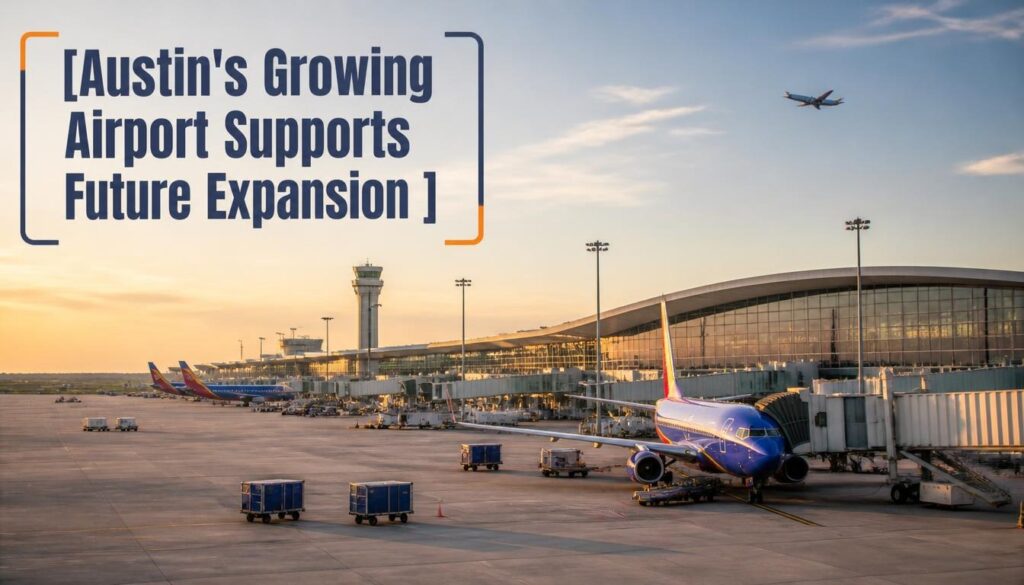
Austin-Bergstrom International Airport has experienced remarkable growth. Furthermore, passenger demand has increased well beyond earlier expectations.Airport leaders continue planning improvements that could support future airline expansion.
Several developments may help include:
- Larger terminals
- Additional aircraft parking
- New passenger gates
- Improved taxiways
- Better passenger facilities
These improvements benefit every airline operating at the airport. Therefore, Delta could eventually expand more easily if additional infrastructure becomes available.Modern airports need space to grow. Without enough gates and operational capacity, even strong passenger demand cannot fully support hub development.
Why Business Travel Gives Austin an Advantage
Business travel remains one of Delta’s strongest markets. Fortunately, Austin continues attracting major companies from many industries.
The city has become well known for:
- Technology
- Artificial intelligence
- Software development
- Healthcare
- Finance
- Education
- Research
Business travellers often book higher-priced tickets. Moreover, they travel throughout the year instead of only during holiday seasons.This steady demand helps airlines operate profitable routes.Delta already serves many important business destinations from Austin. Therefore, adding more flights could strengthen these connections over time.Corporate travel also creates demand for premium cabins, airport lounges, and flexible schedules.
Austin’s Location Makes Connections Easier
Location plays an important role when airlines evaluate future hubs.Austin sits in Central Texas, making it useful for flights across many regions.
Passengers can easily travel between:
- The East Coast
- The West Coast
- The Midwest
- The Southern United States
- Parts of Mexico
- Some Caribbean destinations
This central position reduces flying time for many routes. Could Austin Become a Delta Hub Furthermore, airlines often prefer airports that allow efficient aircraft scheduling throughout the day.Austin’s geography supports many domestic routes. However, international growth would also need continued demand before a full hub becomes practical.
Delta Has Already Expanded Service in Austin
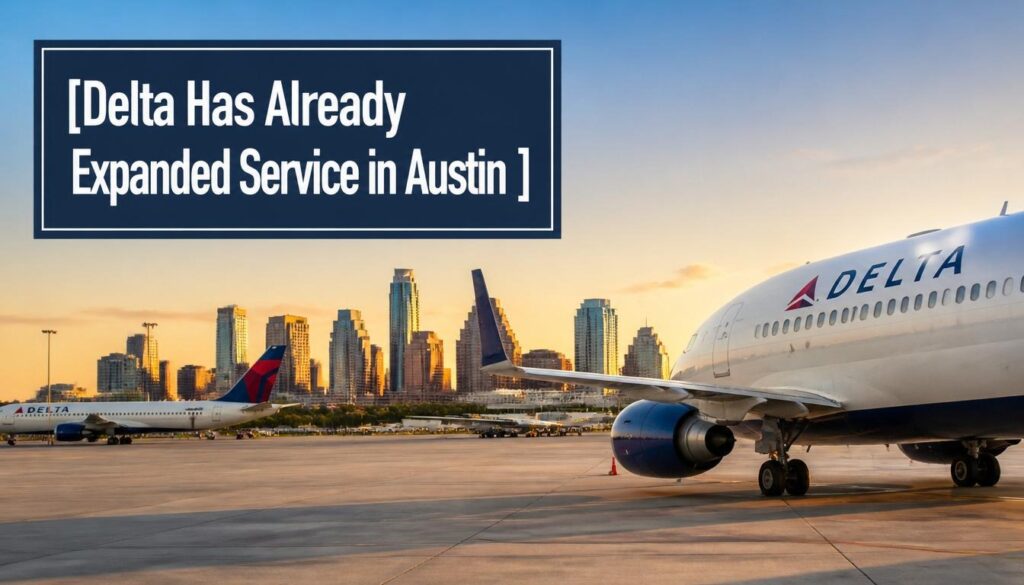
Delta’s investment in Austin has become increasingly visible.
Over recent years, travellers have seen:
- More daily departures
- Additional nonstop routes
- Better flight schedules
- Expanded customer services
- Increased premium travel options
These improvements show Could Austin Become a Delta Hub confidence in the Austin market.However, airlines often expand gradually before making larger long-term commitments.Instead of opening a new hub immediately, airlines usually test passenger demand first. Therefore, Austin’s continued growth will remain important in future planning.
Competition Remains One of the Biggest Challenges
Although Austin offers exciting opportunities,Could Austin Become a Delta Hub does not operate alone.Several major airlines already serve Austin with extensive domestic networks.Competition creates benefits for passengers because airlines compete through:
- Better schedules
- Competitive fares
- Improved services
- More destination choices
- Frequent flight options
However, strong competition also makes hub development more complex.Could Austin Become a Delta Hub must balance investment with profitability. Therefore, every new route requires careful planning before long-term expansion happens
Why Austin Is a Delta Focus City
Many travellers notice Could Austin Become a Delta Hub continues adding flights in Austin. However, the airline calls Austin a focus city instead of a hub. This difference matters because each type of airport serves a different purpose.A focus city receives extra attention from an airline. Furthermore, it usually offers more nonstop routes and better schedules than smaller stations. However, it does not handle the same number of connecting passengers as a hub.Delta uses focus cities to strengthen important markets. Therefore, Austin already plays a valuable role in the airline’s network. The airline can test new routes, grow passenger demand, and improve services before making larger investments.
Focus City vs. Hub
The table below explains the main differences.
| Feature | Focus City | Hub |
| Daily Flights | High | Very High |
| Connecting Passengers | Some | Large Number |
| Route Network | Regional and National | Domestic and International |
| Airline Facilities | Moderate | Extensive |
| Long-Term Investment | Growing | Very Large |
| Operational Importance | High | Highest |
Austin already meets several focus city standards. Meanwhile, becoming a hub would require much greater investment.
Airport Expansion Could Change the Future
Austin-Bergson International Could Austin Become a Delta Hub continues planning for future growth. Furthermore, passenger numbers have increased much faster than many expected.Airport expansion normally includes several improvements.
These may include:
- Additional passenger gates
- Larger terminal buildings
- Better baggage systems
- Improved aircraft parking
- New taxiways
- More passenger services
These projects help every airline operating at the airport. Therefore, Could Austin Become a Delta Hub Delta could increase flights more easily if more airport capacity becomes available.Airport growth also improves the travel experience. As a result, passengers often enjoy shorter waiting times and better facilities.
Could International Flights Grow Further?
International travel continues growing from Austin. Moreover, many residents and business travellers now want direct overseas flights.Could Austin Become a Delta Hub Delta could expand international services if passenger demand continues increasing. However, airlines usually study market performance carefully before adding long-distance routes.Several factors influence international expansion.
These include:
- Passenger demand
- Airport facilities
- Aircraft availability
- Operating costs
- Seasonal travel trends
- Business travel demand
International flights require significant investment. Therefore, airlines usually expand slowly rather than adding many routes at once.
Business Growth Supports Airline Expansion
Austin’s economy remains one of its biggest strengths. Furthermore, new companies continue choosing the city for offices and headquarters.
Many industries now operate in Austin, including:
- Technology
- Semiconductor manufacturing
- Healthcare
- Education
- Finance
- Artificial intelligence
- Clean energy
Business travellers often fly throughout the year. Therefore, airlines can maintain stronger passenger demand even outside holiday seasons.Delta benefits from this steady travel pattern. Meanwhile, growing corporate travel may encourage additional flight expansion.
Leisure Travel Continues to Increase
Austin is not only a business destination. It also attracts millions of leisure travellers every year.
Visitors come to enjoy:
- Live music
- Local restaurants
- Outdoor parks
- Cultural festivals
- Sporting events
- Family holidays
This combination of business and leisure travel creates balanced demand.For example, business travellers often fly during weekdays. Meanwhile, holiday travellers usually fly during weekends and vacation periods.This balanced traffic helps airlines operate flights more efficiently.
How Passengers Would Benefit From a Delta Hub
If Austin eventually became a Could Austin Become a Delta Hub, travellers could enjoy many advantages.First, passengers would likely have more nonstop destinations.Furthermore, additional daily departures would create greater flexibility. Travellers could choose flight times that better match their schedules.
Other possible benefits include:
- Faster flight connections
- Shorter layovers
- More premium cabin choices
- Better loyalty programme options
- Additional international routes
- Improved airport lounges
- Greater flight availability
Although these benefits sound attractive, they depend on future airline decisions and airport expansion.
Challenges Delta Must Still Consider
Even strong markets face challenges.First, building a hub requires billions of pounds in long-term investment across aircraft, employees, airport facilities, and operations.Furthermore, Delta must carefully evaluate passenger demand before making major changes.
Important challenges include:
- Airport capacity
- Competition from other airlines
- Economic conditions
- Fuel prices
- Aircraft availability
- Labour requirements
- Long-term profitability
Each factor influences future planning. Therefore,Could Austin Become a Delta Hub must balance opportunity with financial responsibility.
How Austin Compares With Delta’s Existing Hubs
Delta already operates several well-established hubs across the United States.These airports have developed over many years and support thousands of daily passengers.
| Airport Feature | Austin | Established Delta Hub |
| Focus City Status | Yes | No |
| Connecting Traffic | Moderate | Very High |
| Domestic Routes | Growing | Extensive |
| International Network | Limited | Large |
| Daily Departures | Increasing | Very High |
| Long-Term Infrastructure | Expanding | Fully Developed |
Austin continues making progress. However, established hubs still offer much larger operations.
Best Time to Fly Through Austin
Travellers can visit Austin year-round, but each season offers a different experience. Could Austin Become a Delta Hub is a topic worth considering as travel demand changes throughout the year. Spring and autumn usually bring comfortable weather, while summer is warmer and holidays can be busier. Winter often has fewer crowds, making it easier to find available flights. Booking early can provide more flight choices in any season.
Booking Tips for Better Flight Options
Planning ahead helps travellers save both time and money.
Consider these practical tips:
- Compare several travel dates.
- Book early for popular seasons.
- Travel during quieter weekdays when possible.
- Join airline loyalty programmes.
- Check baggage policies before booking.
- Review connection times carefully.
- Monitor fare changes before purchasing.
These simple steps often improve the overall travel experience.
Accessibility at Austin Airport
Austin-Bergstrom International Airport continues improving accessibility for many passengers.
Generally, travellers can expect features such as:
- Accessible parking
- Wheelchair assistance
- Accessible restrooms
- Passenger lifts
- Family facilities
- Service animal support
However, services may vary depending on the Could Austin Become a Delta Hub and specific travel needs. Therefore, passengers should contact their airline before travelling if special assistance is required.
Safety Tips for Travellers
Safe travel begins with good preparation.First, arrive at the airport early enough for check-in and security.Furthermore, keep travel documents easy to reach throughout your journey.
Other helpful tips include:
- Charge electronic devices before travelling.
- Keep valuables with you.
- Follow airport instructions.
- Check flight updates regularly.
- Pack according to airline baggage rules.
- Stay hydrated during longer journeys.
These simple habits help create a smoother travel experience.
Future Outlook for Could Austin Become a Delta Hub

Austin is already one of Could Austin Become a Delta Hub’s fastest-growing markets. Strong demand, airport expansion, and new routes create future opportunities. However, becoming a full hub will depend on passenger growth and Delta’s long-term strategy. For now, Austin remains a promising focus city with potential for more nonstop flights.
Why Travellers Should Watch Austin’s Growth
Austin is changing quickly. Furthermore, every new airline investment creates more travel opportunities for visitors and residents alike. In addition, continued airport expansion and rising passenger demand support the city’s long-term growth. As a result, Austin is becoming an even more attractive destination for both business and leisure travellers.
Travellers could benefit from:
- More nonstop destinations
- Better flight schedules
- Greater competition
- Improved airport facilities
- Additional premium travel options
- Easier domestic connections
- Potential international growth
These improvements make Austin an increasingly attractive airport regardless of whether it officially becomes a Could Austin Become a Delta Hub. Furthermore, passengers can enjoy more convenient travel options and better airport services as the airport continues to grow. As a result, Austin is well positioned to attract even more airlines, routes, and travellers in the future.
Is Austin Likely to Become a Delta Hub?
No one can say for certain today, but Could Austin Become a Delta Hub is a strong possibility. Austin has a growing economy, population, passenger demand, and business travel market. Furthermore, airport development supports future growth. For now, Austin remains a Delta focus city. However, continued growth could make it a stronger candidate for future hub status.
Frequently Asked Questions
Is Could Austin Become a Delta Hub a realistic possibility?
Yes. Austin has strong passenger growth, a healthy economy, and increasing airline investment. However, Delta has not announced plans to make Austin an official hub.
Why is Austin important to Delta Air Lines?
Austin attracts both business and leisure travellers. Furthermore, its growing economy creates steady demand for domestic flights and possible future international services.
What is the difference between a Delta hub and a focus city?
First, a hub mainly connects passengers between many flights across a large network, making travel to many destinations easier. Meanwhile, a focus city receives significant airline investment and more nonstop routes. However, it supports fewer connecting passengers and offers a smaller network than a full hub. In addition, airlines often use focus cities to test new routes and build passenger demand before considering larger expansion. Therefore, a focus city can become more important over time if travel demand continues to grow.
Will Delta continue adding flights from Austin?
Delta regularly reviews passenger demand and market conditions. Therefore, additional routes may be introduced when they fit the airline’s long-term strategy.
Does Austin Airport have room to grow?
Yes. Airport expansion projects aim to increase passenger capacity, improve facilities, and add more gates. However, project timelines may change as development continues.
Could Austin receive more international Delta flights?
Possibly. International expansion depends on passenger demand, airport infrastructure, aircraft availability, and overall market conditions.
Should travellers choose Austin for connecting flights?
Austin already offers many convenient domestic routes. Furthermore, its modern airport and growing airline network make it an attractive option for many travellers. In addition, passengers can enjoy a wide range of flight choices and smooth airport facilities. As a result, Austin is becoming an increasingly convenient airport for both business and leisure travel.
Also Read;
USA First Time Travel Guide for 2026 Visitors
The Points Guy – Maximize your travel
Conclusion
Could Austin Become a Could Austin Become a Delta Hub remains an important question in the airline industry. Austin has a strong economy, rising passenger demand, airport growth, and increasing business travel. Furthermore, Delta continues adding flights and strengthening its presence. Although Austin is still a focus city, its growth could bring more flights, better connectivity, and greater importance in Delta’s future network.
Overall, Could Austin Become a Delta Hub? is a possibility, but it is not guaranteed. Delta’s continued expansion shows that the airline sees strong long-term potential in Austin, while major airport improvements could provide the capacity needed for additional flights and connections. Delta has also committed to significantly increasing its leased gates at US, from four to 15, which highlights the airline’s growing presence. However, Austin still faces strong competition from Southwest and other major airlines. As a result, Delta may continue developing Austin as a powerful focus city before deciding whether a full hub is commercially necessary.
Overall, Could Austin Become a Delta Hub has many strengths that support future airline growth. Moreover, airport expansion, strong business travel, tourism, and a central location make the city attractive for long-term development. While no official announcement confirms future hub status, the possibility remains realistic if current growth continues. Therefore, travellers can expect more routes, improved services, and a better travel experience as Delta continues investing in Austin.
