
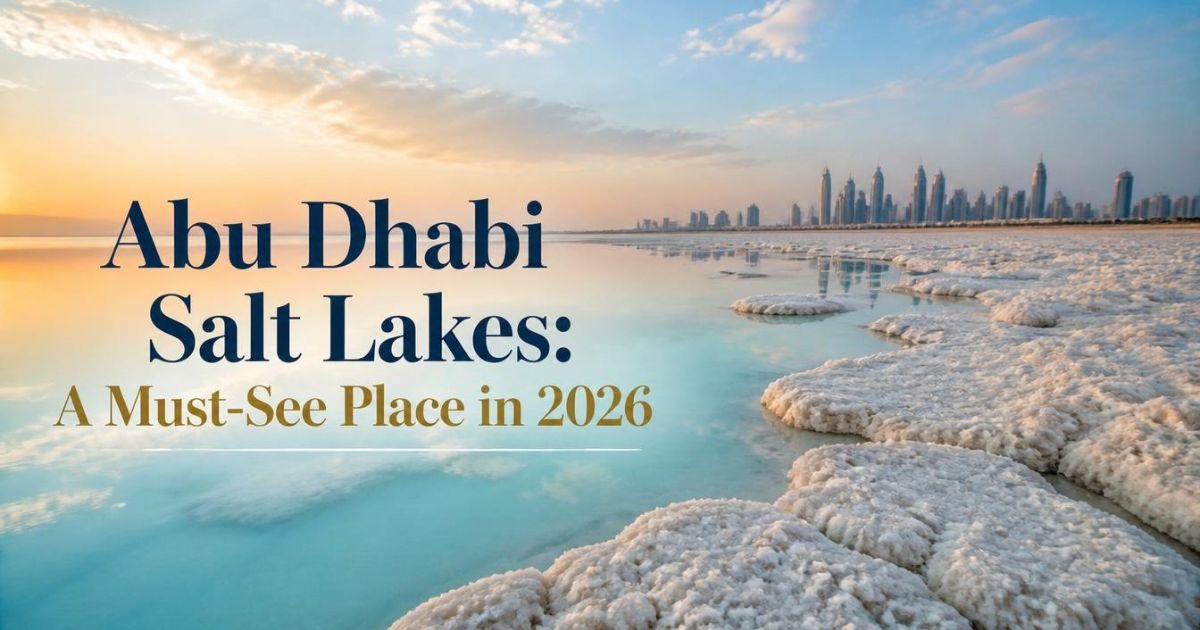
The Abu Dhabi Salt Lakes are a striking desert landscape where turquoise water meets bright white salt formations. Located in the Al Wathba area, these lakes have become popular with photographers, road-trippers, and travelers looking for a quieter side of Abu Dhabi.
The site is different from Abu Dhabi’s polished city attractions. There are no large visitor facilities or rows of shops. Instead, you get open desert, unusual salt shapes, shallow water, and plenty of space to enjoy the landscape.
In 2026, the lakes are still best treated as a raw outdoor destination rather than a developed tourist attraction. Recent reporting also notes that access involves a dirt track and that visitors should bring water, sun protection, and anything else they may need during their visit.
What Are the Abu Dhabi Salt Lakes?
The Abu Dhabi Salt Lakes are salt-rich water bodies in the desert around Al Wathba and Al Bihouth. They are known for their blue-green water and pale salt formations that develop around the edges of the water.
The surrounding landscape is part of a wider desert environment where salt flats, sand, and water create an unusual contrast.
It is worth knowing that the popular Al Wathba Long Salt Lake is not the same place as the nearby Al Wathba Wetland Reserve. The wetland reserve is a protected nature area managed by the Environment Agency – Abu Dhabi, while the salt-lake area is a more basic outdoor location visited mainly for its landscape and photography.
That distinction matters when planning your trip because the two places have different visitor experiences and facilities.
Where Are the Abu Dhabi Salt Lakes?
The popular salt lakes are in the Al Bihouth area of Abu Dhabi, close to Al Wathba South and the Fossil Dunes.
The exact route can vary because the salt lakes are reached through desert tracks rather than a normal tourist road. Recent travel reporting places the drive at roughly one hour from Abu Dhabi city, followed by an uneven off-road section.
Abu Dhabi Salt Lakes Because there are several water bodies and similarly named locations in the area, checking the exact destination on your navigation app before leaving is important.
One commonly referenced location is Al Wathba Salt Lake Front, while travelers also search for Al Wathba Long Salt Lake.
Do not assume that every result marked “Al Wathba Lake” leads to the same spot.
Why Visit the Abu Dhabi Salt Lakes?
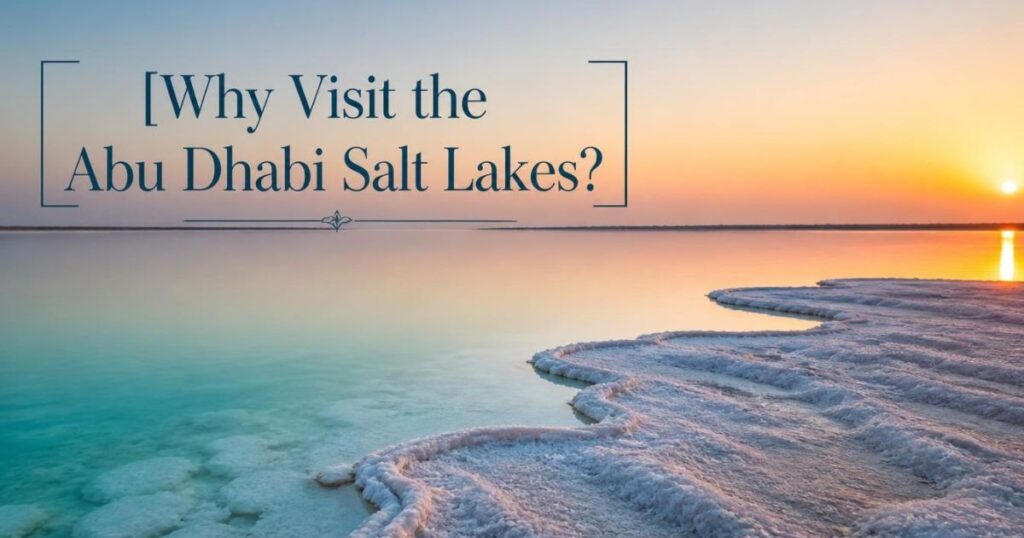
The main reason to visit is the landscape.
You can see a strong contrast between:
- Turquoise or greenish water
- White salt deposits
- Golden desert sand
- Low dunes
- Open skies
- Unusual natural formations
This combination makes the lakes especially interesting for photography.
The experience is also much quieter than visiting Abu Dhabi’s major attractions. There are no big buildings or entertainment complexes surrounding the lake.
Instead, the appeal comes from simply being outdoors and seeing a landscape that feels very different from the modern side of the city.
The Salt Formations
The Abu Dhabi Salt Lakes salt formations are one of the most interesting features.
As water evaporates in a hot, dry environment, minerals and salts can remain behind. Over time, these deposits can form pale crusts and unusual shapes around the water.
The result is a landscape that changes with water levels, weather, evaporation, and conditions on the ground.
That also means photographs you see online may not exactly match what you find when you arrive.
Is the Abu Dhabi Salt Lake Worth Visiting?
Yes, if you enjoy unusual landscapes, photography, quiet desert trips, and outdoor exploration.
It may not be worth the drive if you expect a fully developed attraction with restaurants, toilets, shaded seating, paved paths, and organized activities.
The salt lakes are more about the setting than a long list of things to do.
Recent coverage of the site describes it as a raw, undeveloped location without public toilets, cafes, or shaded rest areas.
So, the best way to think about the visit is as a short desert escape and photography stop, rather than a full-day theme-park-style attraction.
Best Time to Visit Abu Dhabi Salt Lakes
The cooler months are generally the most comfortable time to explore the desert around Abu Dhabi.
November through March is a practical period for outdoor visits because temperatures are usually more manageable than during the peak summer heat.
Winter also makes it easier to spend time outside, walk around the lake, and take photographs without dealing with extreme daytime temperatures.
Visit Around Sunrise or Sunset
For photography, early morning and late afternoon can be especially attractive.
Sunrise provides softer light and cooler conditions.
Near sunset, the changing light can highlight the white salt crust against the darker desert and water.
However, remember that the site is undeveloped. If you stay until after sunset, make sure you can safely find your way back to your vehicle.
A phone light or small torch is useful, particularly if you walk away from the car.
How to Get to the Abu Dhabi Salt Lakes
Driving is the most practical option.
The salt lakes are outside the main urban area, and the final approach can include uneven desert terrain. Recent reporting recommends following the appropriate Al Wathba Salt Lake Front location on Google Maps and preparing for a dirt-track section.
Before leaving Abu Dhabi, check your navigation route carefully.
A Simple Driving Plan
- Leave Abu Dhabi city and head toward the Al Wathba area.
- Follow your navigation app toward the specific salt-lake location.
- Make sure you have enough fuel before entering the more remote section.
- Expect some uneven or sandy terrain near the lake.
- Park responsibly without damaging the salt formations or surrounding landscape.
- Walk carefully around the water and salt crust.
The Abu Dhabi Salt Lakes final approach is one reason you should not treat the location like a normal city attraction.
Do You Need a 4×4?
A 4×4 or SUV can be helpful because some approaches involve rough or sandy desert tracks.
However, conditions can change, and some recent visitor reports say that certain routes have been manageable in regular cars. Because access can vary, it is better not to assume that every sedan will safely reach every part of the site.
If you are unfamiliar with desert driving, an SUV with suitable clearance is the safer choice.
More importantly, do not force a vehicle through soft sand simply to reach the lake.
Getting stuck in a remote desert area can turn a simple sightseeing trip into a serious problem.
What Should You Bring?
There are limited facilities around the salt lakes, so prepare before you leave.
Bring:
- Plenty of drinking water
- Sunscreen
- A hat
- Sunglasses
- Comfortable walking shoes
- Snacks or a packed meal
- A phone with navigation
- A portable charger
- A small torch if staying near sunset
- A rubbish bag for your waste
Recent reporting specifically recommends carrying water, sunscreen, hats, comfortable shoes, and a light source if visiting around sunset.
Fuel is another important consideration. There may be petrol stations along the main roads, but you should not depend on finding fuel after leaving the main route toward the lakes.
Are There Toilets or Cafés?
Do not rely on them.
The salt-lake site is not a developed visitor attraction, and recent 2026 reporting says there are currently no public toilets, cafés, or shaded rest areas at the site.
This is one of the biggest differences between visiting the salt lakes and visiting a conventional Abu Dhabi attraction.
Plan your food, drinks, and personal needs before you arrive.
Can You Swim in the Salt Lakes?
You should not treat the Abu Dhabi Salt Lakes as a regular swimming destination.
Although visitors may see people entering or bathing in some water areas, the site is not presented as a managed swimming facility. Water conditions, depth, salinity, cleanliness, and access can vary.
There are also no lifeguards or standard recreational facilities to rely on.
For a sightseeing trip, it is better to enjoy the landscape from the shore and avoid entering unfamiliar water.
Are the Salt Lakes Good for Photography?
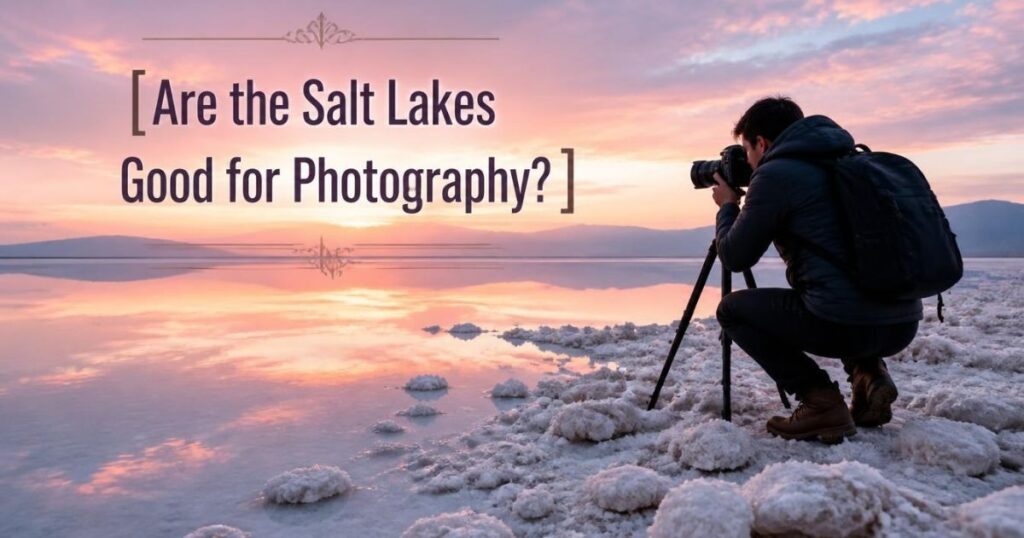
Yes. Photography is one of the strongest reasons to visit.
The unusual combination of water, salt, sand, and sky creates plenty of opportunities for landscape photography.
Try photographing:
- Salt formations close to the water
- Reflections on calm water
- The lake against the desert
- Wide shots showing the surrounding landscape
- Details in the salt crust
- Sunrise colors
- Sunset light
- Natural patterns in the salt
A wide-angle lens can help capture the scale of the desert, while a phone camera can still produce excellent results in good light.
Do not edit your photographs so heavily that they misrepresent the conditions. The water color can change depending on light, weather, water level, and camera processing.
What Should You Expect From the Landscape?
One important tip is to keep your expectations realistic.
Social media photographs often show the lakes under particularly favourable conditions.
When you arrive, the water may look different from online images. It may also be shallower, less colorful, or partly dried depending on recent conditions.
The Abu Dhabi Salt Lakes landscape itself is still interesting, but it is better to appreciate the location for what it is rather than expecting an exact copy of a photograph you saw online.
This is especially important for first-time visitors.
Abu Dhabi Salt Lakes vs. Al Wathba Wetland Reserve
These two places are often confused because they are both associated with Al Wathba.
| Feature | Salt Lakes | Al Wathba Wetland Reserve |
| Main appeal | Salt formations and desert scenery | Wildlife and wetlands |
| Best for | Photography and outdoor exploration | Birdwatching and nature |
| Facilities | Very limited | Visitor facilities when open |
| Location | Al Bihouth/Al Wathba area | Al Wathba |
| Entry | No standard attraction ticket | Official reserve information lists free entry |
| Experience | Raw and undeveloped | Managed protected area |
The Al Wathba Wetland Reserve is officially recognized as a protected area and a Ramsar wetland. It supports more than 250 bird species and is particularly known for Greater Flamingos.
However, there is an important 2026 update: the Environment Agency – Abu Dhabi currently states that the wetland reserve is temporarily closed for development until further notice.
So, check the official status before planning to visit the reserve.
Can You Combine the Salt Lakes With Other Places?
Yes. The Al Wathba area has several interesting places, making a desert day trip more worthwhile.
One natural attraction nearby is the Al Wathba Fossil Dunes.
The fossil dunes have a very different appearance from the salt lakes. Instead of water and salt crusts, they feature unusual hardened sand formations shaped by natural processes over a long period.
Combining the two can give you two contrasting desert landscapes in one outing.
However, check road conditions and opening information for each location separately.
Is It Family-Friendly?
The Abu Dhabi Salt Lakes salt lakes can work for families who enjoy outdoor trips, but they are not as convenient as a developed attraction.
Parents should consider:
- Heat exposure
- Limited shade
- Lack of nearby services
- Uneven ground
- Vehicle access
- Distance from the city
- Children staying away from unfamiliar water
Bring enough drinking water and avoid spending long periods outside during the hottest part of the day.
For families with very young children, a shorter visit around the cooler parts of the day may be more comfortable.
Is the Area Wheelchair Accessible?
You should not expect standard wheelchair-friendly access at the salt lakes.
The surrounding terrain can include sand and uneven desert surfaces, and the final approach is not comparable with a paved attraction designed for accessibility.
Travelers who need step-free or accessible facilities should consider a more developed attraction instead.
Important Things to Know Before You Go

A little preparation can make a big difference.
Check the Exact Location
There are multiple places and map listings associated with Al Wathba lakes.
Check your route before leaving rather than relying on a last-minute search after entering the desert.
Fill Up With Fuel
Start with enough fuel for the return journey.
Recent reporting specifically advises travelers to fuel up before leaving the main road because there are no petrol stations after the turn toward the lakes.
Carry Your Own Water
Do not assume that you can buy drinks when you arrive.
The Abu Dhabi Salt Lakes site does not have the type of visitor services found at major Abu Dhabi attractions.
Protect the Environment
Take all rubbish with you.
Do not drive across salt formations, damage the landscape, or leave food waste behind.
The wider Al Wathba area includes environmentally important habitats, so responsible behavior matters. The Environment Agency – Abu Dhabi also asks visitors to respect the environment and wildlife at its protected sites.
Watch Your Step
Salt crust can look solid but may not be safe everywhere.
Stay on stable ground and avoid walking onto areas that appear fragile or wet.
How Long Do You Need at the Salt Lakes?
For most travelers, a couple of hours can be enough to see the main landscape, take photographs, and enjoy the surroundings.
You may want longer if you plan to have a picnic, photograph both sunrise and sunset, or explore the surrounding desert.
The drive itself can take a significant part of the trip, so think of the salt lakes as a road-trip stop rather than an attraction that requires an entire day.
What Makes the Abu Dhabi Salt Lakes Different?
Abu Dhabi is known around the world for modern architecture, luxury hotels, shopping, beaches, and large cultural attractions.
The salt lakes show a completely different side of the emirate.
Here, there is no impressive skyline.
Instead, the attraction is the contrast between a harsh desert environment and water surrounded by bright mineral deposits.
That simple contrast is what makes the location memorable.
A Simple Visit Plan
If you want to keep the trip easy, use this approach:
Morning option
- Leave Abu Dhabi early.
- Drive toward Al Wathba.
- Visit the salt lakes.
- Take photographs while temperatures are comfortable.
- Stop for food after returning to a developed area.
Sunset option
- Leave Abu Dhabi with enough daylight.
- Arrive before sunset.
- Explore the lake and photograph the changing light.
- Pack a torch or phone light.
- Leave before conditions become difficult to navigate.
For first-time visitors, the second option can be attractive for photography, but you should plan the return journey carefully.
Final Thoughts
The Abu Dhabi Salt Lakes are worth considering if you want to see a quieter and more unusual side of the emirate.
Their appeal is simple: unusual salt formations, colorful water, desert scenery, and a peaceful outdoor setting.
At the same time, this is not a polished tourist attraction. Facilities are limited, access can be rough, and conditions can change.
That is exactly why preparation matters.
Bring water, fuel, sun protection, comfortable shoes, and a reliable navigation plan. Most importantly, leave the landscape clean and avoid damaging the salt formations.
If you enjoy photography, desert road trips, and natural landscapes that look different from Abu Dhabi’s famous city attractions, the salt lakes can make a rewarding addition to your 2026 travel plans.
Frequently Asked Questions
Where are the Abu Dhabi Salt Lakes?
The popular salt lakes are in the Al Bihouth area near Al Wathba South, southeast of Abu Dhabi city. They are also close to the Al Wathba Fossil Dunes area.
How far are the Abu Dhabi Salt Lakes from the city?
The drive from Abu Dhabi city is roughly one hour, although the exact time depends on your starting point, traffic, and the condition of the final desert track.
What is the best time to visit Abu Dhabi Salt Lake?
The cooler months, particularly November through March, are generally more comfortable for outdoor exploration. Sunrise and sunset can also provide better light for photography.
Are Abu Dhabi Salt Lakes free to visit?
There is no standard paid attraction ticket mentioned for the informal salt-lake site. However, access conditions and site arrangements can change, so check current information before traveling.
Are there toilets at the Abu Dhabi Salt Lakes?
Recent 2026 reporting says the salt-lake site currently has no public toilets, cafés, or shaded rest areas.
Do I need a 4×4 to visit?
A 4×4 or SUV can be useful because some approaches include rough or sandy tracks. Road conditions can vary, so drivers should use caution and avoid entering terrain their vehicle cannot safely handle.
Can I swim in the salt lakes?
The lakes should not be treated as managed swimming areas. There are no standard recreational facilities or lifeguards, so visitors are better off enjoying the scenery from the shore.
Is Al Wathba Salt Lake the same as Al Wathba Wetland Reserve?
No. They are different places. The salt lakes are known for their desert salt formations, while Al Wathba Wetland Reserve is a protected wetland famous for wildlife and Greater Flamingos.
Is Al Wathba Wetland Reserve open in 2026?
The Environment Agency – Abu Dhabi currently says that Al Wathba Wetland Reserve is temporarily closed for development until further notice. Check the official page before making plans because its status can change.
What should I bring to the salt lakes?
Bring plenty of water, sunscreen, a hat, comfortable shoes, snacks, navigation, and a portable charger. If you plan to stay around sunset, bring a torch or make sure your phone has enough battery.
Conclusion
The Abu Dhabi Salt Lakes are a great choice for travelers who want to see a quieter and more unusual side of Abu Dhabi. The white salt formations, colourful water, and open desert views make the area a special place for photography and a short outdoor trip. With the right planning, you can enjoy the scenery without spending a full day there.
Before visiting the Abu Dhabi Salt Lakes, carry enough water, sun protection, snacks, and a reliable navigation plan. The area has limited facilities, so preparation is important. If you enjoy natural landscapes and simple desert adventures, this spot can be a memorable addition to your Abu Dhabi travel plans in 2026.
