
Annual Vacation Budget planning can help you travel more without putting too much pressure on your money. Moreover, a clear yearly travel plan makes it easier to choose destinations, hotels, flights, and activities. Instead of booking a trip first and checking the cost later, you can plan everything around a set amount. Therefore, you can enjoy more holidays while still protecting your everyday finances and savings goals. This guide shares simple ways to save, plan, and spend wisely throughout the year.
Furthermore, the right Annual Vacation Budget is different for every traveller. Your ideal amount depends on your income, family size, travel style, destination, and available time. However, you do not need a huge budget to enjoy great travel experiences. With smart planning, flexible dates, careful bookings, and realistic spending limits, you can often make your travel money go further. As a result, you may enjoy more short breaks, longer holidays, or even an extra international trip each year.
What Is an Annual Vacation Budget?
An Annual Vacation Budget is the total amount you plan to spend on travel during one year. It can include flights, hotels, food, local transportation, activities, travel insurance, and unexpected costs.
For example, you may decide how much money you can comfortably use for travel each year. Then, you can divide that amount between one large vacation and several smaller trips.
Moreover, a yearly budget gives your travel plans a clear limit. You can compare destinations based on what you can actually afford instead of choosing trips without a financial plan.
Why Is an Annual Vacation Budget Important?
A yearly Annual Vacation Budget helps you control your spending before and during your trips. Therefore, you can enjoy your vacation without worrying about every purchase.
It can also help you save in advance. Instead of finding money at the last minute, you build a travel fund throughout the year.
Furthermore, a budget helps you make better choices. You may choose a cheaper travel date, a different hotel, or a nearby destination when your first option costs too much.
How to Create an Annual Vacation Budget
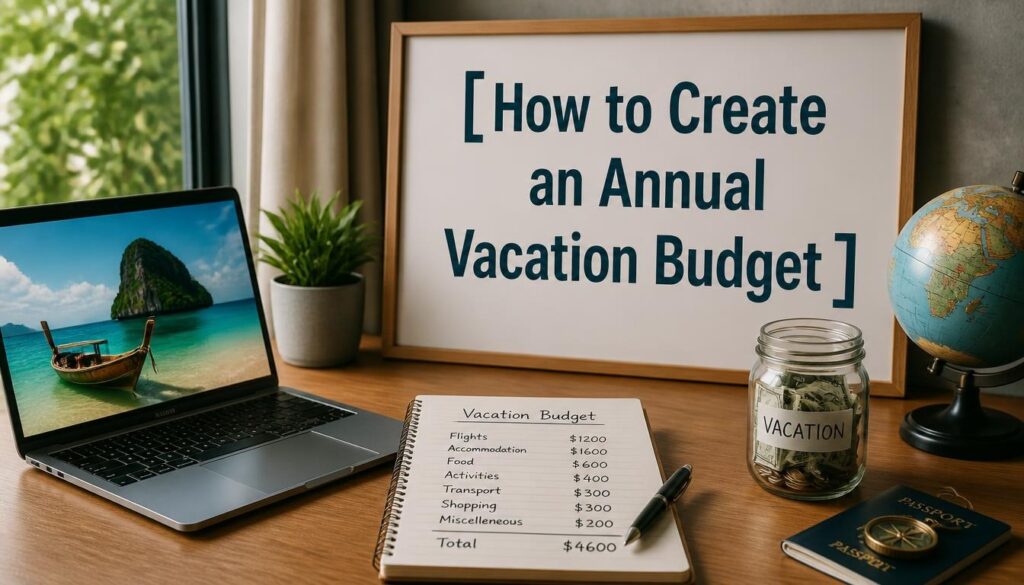
Creating an Annual Vacation Budget does not have to be difficult. First, look at your regular income, essential expenses, savings goals, and other financial commitments.
Then, decide how much you can comfortably put toward travel. Do not choose an amount that makes it difficult to pay important bills or maintain your other savings goals.
Next, decide how many trips you want to take. You could plan one major vacation, several short breaks, or a combination of both.
Finally, divide your travel money across the year. This gives each trip a clear spending limit and makes it easier to stay on track.
Step 1: Choose Your Yearly Travel Goal
Annual Vacation Budget Start with one realistic number for your yearly travel spending. This amount should reflect what you can afford rather than what other people spend.
For example, you may prefer to spend more on one special holiday. Alternatively, you may want several affordable trips throughout the year.
Therefore, think about the type of travel that makes you happiest. Your budget should support your travel goals instead of forcing you into a specific style.
Step 2: Divide the Money Between Trips
Once you know your yearly amount, divide it between your planned holidays. You do not need to split the money equally.
For example, one international trip may need a larger share than a weekend city break. Meanwhile, a local trip may require much less money.
Moreover, keeping separate amounts for each trip can make planning easier. You will know when you need to save more and when you can spend less.
Step 3: Add an Emergency Amount
Do not plan to spend every dollar in your travel fund. Instead, leave some money available for unexpected costs.
Annual Vacation Budget plans can change because of delays, extra transportation, lost items, or other unexpected needs. Therefore, having a small reserve can give you more peace of mind.
Also, keep important documents and emergency contacts easy to access. Good preparation can make unexpected situations easier to manage.
19+ Annual Vacation Budget Tips to Travel More for Less
A smart Annual Vacation Budget is not only about spending less. It is about using your money where it gives you the most value.
The following tips can help you plan more trips without making your travel experience feel cheap or stressful.
1. Start Saving Before You Choose a Destination
First, build your travel fund before making major bookings. This gives you a clearer idea of what you can afford.
Moreover, regular savings can make a large vacation cost feel more manageable. Even smaller monthly contributions can build a useful fund over time.
2. Automate Your Travel Savings
Set up a regular transfer to your travel savings account when practical. Therefore, saving becomes a habit rather than a decision you must make every month.
You can choose a monthly amount that fits your finances. Then, your travel fund can grow steadily throughout the year.
3. Plan Your Trips Around Your Budget
Do not choose an expensive destination and then try to force it into a small Annual Vacation Budget. Instead, choose destinations that fit your available money.
Furthermore, compare the full cost of each trip. A cheap flight does not always mean a cheap vacation.
4. Compare the Total Trip Cost
Look beyond the flight price when comparing destinations. Include hotels, food, transportation, activities, taxes, and other known costs.
For example, a destination with cheap flights may have expensive accommodation. Meanwhile, another location may cost more to reach but less to visit.
Therefore, compare the total expected cost before making your final choice.
5. Be Flexible With Your Travel Dates
Flexible dates can give you more choices. Therefore, check different departure and return dates when your schedule allows.
You can also compare different trip lengths. Sometimes, changing your dates by a day or two may provide a better overall option.
However, prices vary by destination and season. Always check current prices before booking.
6. Consider Shoulder-Season Travel
Shoulder seasons can provide a useful balance between busy periods and quieter travel times. However, the benefits vary by destination.
Therefore, check the typical weather and local travel patterns before booking. You should also check whether attractions and services operate normally during your chosen dates.
7. Compare Different Airports
If several airports are practical for your trip, compare them. One airport may offer better flight choices or schedules.
However, include the cost of reaching each airport. A cheaper ticket may not save money if getting there costs much more.
8. Compare Hotels by Total Price
Do not choose accommodation based only on the advertised nightly rate. Check taxes, fees, breakfast, parking, and other charges where applicable.
Moreover, look at the hotel’s location. A slightly more expensive hotel may save money if it reduces daily transportation costs.
9. Choose Accommodation That Matches Your Needs
The cheapest room is not always the best value. Therefore, consider location, comfort, safety, reviews, and useful facilities.
Families may value larger rooms or kitchen facilities. Meanwhile, solo travelers may prefer a central location with easy access to transport.
10. Mix Paid and Free Activities
You do not need to pay for every experience. Many destinations offer parks, walking routes, public spaces, beaches, viewpoints, and cultural areas.
Therefore, combine free activities with the attractions you really want to visit. This lets you spend more on experiences that matter most.
11. Set a Daily Spending Limit
Before your trip, estimate how much you can spend each day. Include food, transportation, activities, and small purchases.
Moreover, keep the limit realistic. A very strict daily budget may make it difficult to enjoy your trip.
Instead, create a flexible range and leave some money for unexpected expenses.
12. Plan Your Meals
Food can become a major part of travel spending. Therefore, decide in advance how you want to manage meals.
You could combine restaurants with groceries, cafés, and simple meals. However, food costs vary widely between destinations.
Always research the local cost level before setting your final food allowance.
13. Use Public Transport When It Makes Sense
Public transportation can sometimes reduce local travel costs. However, availability and convenience vary from one destination to another.
Therefore, check routes, payment methods, schedules, and travel times before relying on public transport.
For families and travelers with accessibility needs, convenience may matter more than the lowest price.
14. Walk When Practical
Walking can help you save on short local journeys. It can also help you discover neighborhoods and local areas more naturally.
However, always consider distance, weather, accessibility, and personal safety. Choose walking routes that are practical for your situation.
15. Avoid Unnecessary Rental Cars
Rental cars can be useful in destinations where public transport is limited. However, they can add rental, fuel, parking, and other costs.
Therefore, check whether you actually need a car for your trip. If most attractions are easy to reach without one, another transport option may provide better value.
16. Book Important Costs Carefully
Flights and hotels can have changing prices. Therefore, compare options before booking major parts of your trip.
However, booking early does not always guarantee the lowest price. Availability, demand, dates, and destination can affect costs.
Also, check cancellation rules before paying. A slightly higher flexible rate may sometimes suit uncertain plans better.
17. Use Travel Rewards Responsibly
Travel rewards may help reduce eligible travel costs. However, rewards should support your normal spending habits.
Do not spend extra money simply to earn points or reach a reward level. Therefore, always consider the real cost of earning and using rewards.
Also, check fees, restrictions, expiration rules, and redemption conditions before relying on rewards.
18. Track Your Spending During Every Trip
Keep a simple record of your travel expenses. You can use a spreadsheet, notes app, or budgeting tool.
Moreover, separate spending into categories such as food, hotels, transportation, and activities.
This makes it easier to see where your money goes. As a result, you can create better budgets for future trips.
19. Review Your Budget After Every Vacation
After returning home, compare your planned costs with your actual spending. Look at the areas where you spent more or less than expected.
Therefore, you can use these lessons for your next trip. Over time, your travel estimates can become more accurate.
20. Leave Room for Unexpected Costs
Finally, keep some money outside your normal daily spending plan. Unexpected costs can appear even when you plan carefully.
Therefore, avoid making your budget so tight that one small problem causes stress.
A little flexibility can make your trip more comfortable and easier to manage.
Best Ways to Divide Your Annual Vacation Budget

Your Annual Vacation Budget can support different types of travel. The best structure depends on your lifestyle, available time, and preferred destinations.
| Travel Style | Example Plan | Budget Focus | Best For |
| One Big Trip | One major annual holiday | Flights and accommodation | Long international trips |
| Short Breaks | Several smaller trips | Transport and short stays | Flexible travelers |
| Mixed Plan | One big trip plus short breaks | Balanced spending | Most travel styles |
| Local Travel | Several nearby holidays | Hotels and activities | Lower travel costs |
| Family Plan | One or more family trips | Rooms, food, activities | Families |
Moreover, you can change your plan during the year. If one trip costs less than expected, you can move some unused money toward another vacation.
One Big Vacation
One large vacation can work well if you prefer longer stays. You may also have more time to explore one destination in depth.
However, a major trip can require careful saving. Therefore, start planning early and compare the total cost.
Several Short Trips
Short breaks can provide more frequent travel experiences. They may also work well for travelers with limited vacation days.
However, repeated transportation costs can add up. Therefore, compare the total annual cost before choosing this model.
A Combination of Big and Small Trips
A mixed approach can provide variety throughout the year. You could save more for one major holiday while taking smaller breaks around it.
Moreover, this plan gives you several travel moments instead of waiting for one trip.
How to Save More for Your Annual Vacation Budget
Saving for travel becomes easier when you create a clear system. First, decide what you want to achieve.
Then, connect your savings to specific trips. A clear goal can make it easier to stay motivated.
Save a Fixed Amount Each Month
Choose a monthly amount that fits your finances. Then, transfer it regularly into your travel fund.
Therefore, your vacation savings can grow without requiring large last-minute deposits.
Save Extra Money for Travel
You can also direct occasional extra money toward your travel fund. This may include gifts, refunds, bonuses, or money saved from other purchases.
However, keep your important financial priorities in place. Travel should remain enjoyable rather than create financial pressure.
Reduce Small Unnecessary Costs
Look for spending that does not add much value to your daily life. Then, move some of those savings toward travel.
Moreover, small changes can become useful when repeated for many months.
How to Choose Destinations for Your Annual Vacation Budget
Destination choice can have a major effect on your yearly travel costs. Therefore, compare destinations based on the complete trip rather than one price.
Compare Flight and Transport Costs
Start by checking the cost of reaching the destination. Then, consider airport transfers and local transportation.
Moreover, think about travel time. The cheapest route may not always provide the best overall value.
Compare Accommodation Costs
Next, compare accommodation in areas that suit your plans. A cheaper hotel outside the main area may create higher transport costs.
Therefore, compare hotel price and location together.
Compare Daily Costs
Food, activities, and local travel can affect the final cost significantly. Therefore, research typical costs before setting your budget.
Remember that prices vary by destination, season, property, and travel style. Use current information when making final bookings.
How to Make Your Annual Vacation Budget Last Longer
A good travel budget should work before and during your vacation. Therefore, continue making smart choices after you arrive.
Spend More on What Matters
Choose the experiences that are most important to you. Then, reduce spending on things that add little value.
For example, you might choose one special tour instead of several smaller paid activities.
Control Shopping Costs
Shopping can quickly increase your travel spending. Therefore, decide how much you are comfortable spending before your trip.
A separate shopping limit can help you enjoy buying souvenirs without affecting your food or activity budget.
Use a Travel Spending Tracker
Record your expenses as you go. This helps you see whether you are staying close to your daily plan.
Moreover, tracking can prevent small purchases from becoming a large surprise at the end.
Transportation Tips for Your Annual Vacation Budget
Transportation can be one of the largest travel expenses. Therefore, compare different options before making final arrangements.
Compare Flights, Trains, and Buses
Depending on your destination, trains or buses may offer useful alternatives to flights. However, compare total travel time and all known costs.
Moreover, check baggage rules and transfer requirements. A lower ticket price may include fewer features.
Plan Airport Transfers
Research how you will reach your hotel after arrival. Therefore, you can avoid making expensive decisions when tired or unfamiliar with the area.
Compare public transport, hotel transfers, taxis, and other suitable options.
Consider Location
A central hotel may cost more but reduce daily transportation. Meanwhile, a cheaper property farther away may require more travel.
Therefore, compare accommodation and transport together rather than separately.
Family Planning With an Annual Vacation Budget

Families need to consider more travelers and different needs. Therefore, start by listing expected costs for each family member.
Consider accommodation, food, transportation, activities, and other needs. Moreover, leave some flexibility for changes in plans.
Choose Family-Friendly Accommodation
Look for accommodation that meets your family’s practical needs. This may include room size, kitchen access, laundry facilities, or convenient transport.
However, always compare the total price. A useful facility is only valuable if it fits your overall budget.
Mix Activities
Children and adults may enjoy different experiences. Therefore, plan a mix of paid attractions and free activities.
This can reduce daily costs while keeping the trip interesting for everyone.
Accessibility and Your Annual Vacation Budget
Accessibility should be included in your travel planning from the beginning. Therefore, research hotels, transportation, attractions, and routes before booking.
Check important accessibility details directly with providers when information online is unclear. Also, consider whether the lowest-priced option truly meets your needs.
Moreover, allow extra time and money when your travel requirements make this necessary. Comfort and safe access should remain important parts of your budget.
Safety Tips for Your Annual Vacation Budget
Saving money should never mean ignoring safety. Therefore, research your destination and check current official travel guidance before departure.
Keep essential documents, emergency contacts, and important booking details accessible. Moreover, consider appropriate travel insurance based on your needs.
Use secure payment methods and avoid carrying unnecessary amounts of cash. Finally, keep some emergency money separate from your daily spending amount.
How to Track Your Annual Vacation Budget
Tracking your travel money can make future planning much easier. Start by recording your yearly target and planned trips.
Then, create categories for transportation, accommodation, food, activities, and extra costs.
| Budget Category | Before the Trip | During the Trip | After the Trip |
| Transportation | Estimate and book | Track extra costs | Compare actual cost |
| Accommodation | Compare total prices | Check added charges | Record final cost |
| Food | Set daily target | Track spending | Review average |
| Activities | Choose priorities | Record purchases | Keep lessons |
| Emergency Money | Set aside | Use only when needed | Return unused funds |
Furthermore, reviewing this table after each trip can improve your future planning. You will quickly see which categories need more or less money.
Use a Simple Spreadsheet
A spreadsheet can keep all your travel information in one place. You can create a separate section for every trip.
For example, record planned costs beside actual costs. This makes differences easy to identify.
Review Your Budget Every Few Months
Do not wait until the end of the year. Review your travel fund regularly.
Therefore, you can change future plans when your savings or travel goals change.
Best Booking Tips for an Annual Vacation Budget

Smart booking can help you use your travel money more effectively. However, the cheapest option is not always the best option.
Compare the Full Price
Check the complete booking cost instead of looking only at the first displayed price. Include known taxes, fees, baggage, and other charges.
Moreover, compare what each option includes. A slightly higher price may offer better value.
Check Cancellation Rules
Plans can change. Therefore, understand cancellation and change conditions before booking.
A flexible booking may cost more, but it can provide useful protection when your dates are uncertain.
Check Hotel Location
Look at the location before booking accommodation. Consider transport, planned attractions, walking distance, and daily convenience.
As a result, you can avoid choosing a cheap hotel that creates higher costs elsewhere.
Frequently Asked Questions
How much should I spend on vacations each year?
There is no single amount that suits every traveler. Your yearly travel budget should fit your income, regular expenses, savings goals, family needs, and travel style. Therefore, choose an amount you can afford comfortably without affecting essential financial priorities.
What should an annual vacation budget include?
It should include transportation, accommodation, food, activities, local travel, travel insurance, and unexpected costs. Moreover, you should consider known taxes and fees when estimating prices. A complete budget gives you a more realistic picture of your total travel spending.
How can I travel more without spending more?
Start by choosing destinations based on total costs rather than flight prices alone. Then, compare dates, accommodation, transport, and activities. Furthermore, mix free experiences with paid attractions and track your daily spending. These steps can help your money cover more travel.
Is one long vacation better than several short trips?
It depends on your travel goals and destination. One long trip may spread some costs across more days, while several short trips can provide more frequent breaks. Therefore, compare transportation, accommodation, and daily costs before choosing your preferred travel style.
How can families reduce vacation costs?
Families can compare accommodation carefully and choose convenient locations. Moreover, mixing free activities with paid attractions can reduce daily spending. Planning meals and transportation in advance can also help. However, family needs vary, so your budget should reflect your children’s ages and requirements.
Should I use travel rewards to reduce vacation costs?
Travel rewards can provide value when used responsibly. However, you should not spend extra money simply to earn points. Therefore, use programs that match your normal spending and understand their fees, restrictions, and redemption rules before relying on them.
What is the best way to stay within a vacation budget?
Start with a realistic yearly amount and divide it between your planned trips. Then, create spending categories and track your actual costs. Moreover, keep an emergency amount separate. Finally, review every trip so your next Annual Vacation Budget becomes more accurate.
Conclusion
A well-planned Annual Vacation Budget can help you enjoy more travel without creating unnecessary financial pressure. Instead of waiting for the perfect time to travel, you can create a realistic plan around your available money. Moreover, simple choices can make a big difference throughout the year. Flexible dates, smart destination choices, suitable accommodation, careful transportation planning, and daily spending limits can all improve your travel value. Therefore, you can focus more on enjoying your trip and less on worrying about every expense. The goal is not to spend as little as possible, but to get more meaningful experiences from the money you have.
Furthermore, your Annual Vacation Budget should change as your travel goals and circumstances change. One year may focus on a major international holiday, while another may include several affordable short breaks. Therefore, review your spending after every trip and use those lessons for your next plan. Keep your budget realistic, leave room for unexpected costs, and spend more on experiences that truly matter to you. With consistent saving and thoughtful planning, you can turn travel into a regular part of your year. As a result, more trips can become possible without sacrificing the financial goals that matter in everyday life.
