
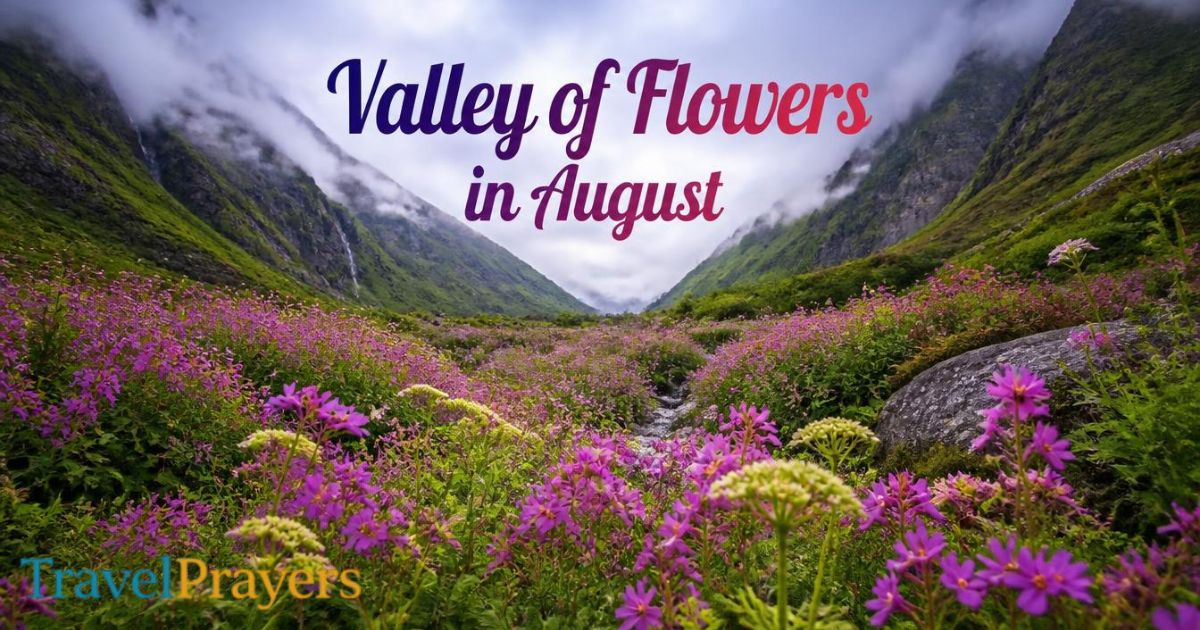
Valley of Flowers in August is worth the trip if you want peak bloom and can handle rain, mist, and the chance of road delays. The first half of the month is the strongest window, when meadows turn thick with balsam, primulas, and Himalayan orchids. The cost is a wet trail, cold air at 3,500 m, and landslide-prone roads on the way to Govindghat. This guide covers August weather, the flowers you can expect, monsoon risks, the 2026 permit rules, and a practical 5-day plan.
Last checked October 2026. The 2026 season ran from 1 June to 31 October. Fees, timings, and road conditions change, so confirm them on the official portal before you book.
Is August a Good Time to Visit the Valley of Flowers?
Yes, especially the first two weeks. Most trek operators and guides place peak bloom between mid-July and mid-August. By the last week of August, many flowers begin to fade.
August suits you if:
- Flowers are your main goal.
- You can handle daily rain and wet boots.
- You can add buffer days for road delays.
Choose September if you prefer clearer skies and fewer landslide worries. You will see fewer flowers, but the views of the surrounding peaks improve as rain eases.
Valley of Flowers in August at a Glance
| Detail | August conditions |
| Bloom stage | Peak in early August; fading by late August |
| Temperature in the valley | Roughly 6 to 12°C by trek operators’ estimates; colder at night |
| Rain | Frequent, with mist and fog |
| Trail | Muddy and slippery in places; stream crossings run higher |
| Road risk | High on the Rishikesh–Joshimath–Govindghat stretch |
| Park status (2026) | Open 1 June to 31 October |
| Entry timing | 7 AM to 2 PM; exit by 5 PM |
| Camping | Not allowed inside the park |
Weather in August: Temperature, Rain and Visibility
Expect cool, damp days. Operators report valley temperatures of about 6 to 12°C in August. Ghangaria, the base village at roughly 3,000 m, feels a little warmer, while nights drop sharply.
Rain does not fall evenly. Govindghat and the lower trail usually get heavier showers than the valley itself, and clouds often thicken in the afternoon. Mornings are often clearer, so start early. The park lets you in from 7 AM, and the last entry is 2 PM.
Visibility swings fast. You may walk through a bright meadow, then lose the peaks in fog within an hour. Treat any clear view as a bonus, not a promise.
Which Flowers Bloom in August?
The valley holds hundreds of species, and they bloom in phases, not all at once. In August, expect:
- Balsam: One of the strongest blooms of the month.
- Primulas and Himalayan orchids: Common across the damp meadows.
- Brahma Kamal: The sacred flower of Uttarakhand, which grows in high alpine zones.
- Cobra lily and Himalayan blue poppy: These often peak earlier, around July, so you may see only late blooms in August. Do not expect a blue poppy carpet.
No guarantee covers any single species. Rain, snowmelt timing, and temperature shift the calendar each year.
Early August vs Late August
| Period | What to expect |
| 1 to 15 August | Fullest bloom, high rain, heavier trail traffic around holidays |
| 16 to 31 August | Petals begin to drop; more green than color in some patches; slightly lower crowds |
Plan for the first half of August if bloom matters most. Independence Day weekend usually brings extra visitors, so book Ghangaria lodging early.
Monsoon Risks: Landslides, Road Closures and Trail Conditions
The trek itself is rated easy to moderate. The hard part is the journey to the trailhead.
The route to Govindghat follows the Badrinath National Highway (NH-7), which crosses landslide zones such as Lambagad near Joshimath. On 6 August 2026, debris from heavy rain blocked the highway near Helang in Chamoli, and authorities suspended traffic while crews cleared it. Delays of a few hours are common in monsoon, and longer closures happen.
Protect your plan:
- Add at least one spare day at the start or the end of the trip.
- Avoid driving on this highway at night.
- Check the day’s road status with your driver or hotel before leaving.
- Pause the trek if the forest department issues a weather advisory. Authorities have temporarily restricted trekking in Uttarakhand during heavy-rain alerts in past seasons.
- Never cross a swollen stream. Wait for it to drop.
On the trail, slippery rocks and fast streams cause more problems than the altitude does. Poles and good boots reduce the risk.
How to Reach the Valley of Flowers
The usual route runs Rishikesh or Haridwar → Joshimath → Govindghat → Pulna → Ghangaria → Valley of Flowers.
| Leg | Distance | How |
| Dehradun airport to Govindghat | About 275 km, around 9 hours | Taxi or bus |
| Govindghat to Pulna | About 4 to 5 km | Shared jeep |
| Pulna to Ghangaria | About 9 to 10 km, 4 to 6 hours | Walk, mule, or porter |
| Ghangaria to the valley | About 4 km one way | Walk |
Jolly Grant Airport at Dehradun is the closest major airport, and Rishikesh and Haridwar are the main rail points. Many trekkers sleep a night at Govindghat or Joshimath first, so they can start the Pulna trail fresh.
A helicopter service between Govindghat and Ghangaria runs in season, and weather often disrupts it. Treat it as a backup, not a plan.
Permits, Fees, Timings and Rules for 2026

Entry needs a forest department permit. In 2026, the state moved toward online registration. You can check the process and register through the official Valley of Flowers portal of the Uttarakhand Forest Department.
Reported 2026 details:
- Fee: One guide lists ₹200 for Indian citizens and ₹800 for foreign nationals, valid for three days. Another source quotes a lower figure, so confirm the current rate on the portal.
- Daily cap: Several guides mention a limit on daily visitors. Register ahead for your exact date.
- Timings: Entry from 7 AM to 2 PM, and everyone must leave by 5 PM.
- Camping: Not allowed. You stay in Ghangaria and enter as a day visitor.
- ID: Carry a government ID for every traveler.
- Cameras: Rules for camera fees have changed in past seasons, so ask at the checkpoint.
A Practical 5-Day Valley of Flowers Plan
| Day | Plan |
| 1 | Reach Joshimath or Govindghat from Rishikesh or Haridwar |
| 2 | Jeep to Pulna, trek about 10 km to Ghangaria |
| 3 | Full day in the valley; leave Ghangaria by 7 AM; start back by 1:30 PM |
| 4 | Hemkund Sahib or a second valley day, depending on weather and energy |
| 5 | Trek down to Pulna, jeep to Govindghat, continue to Joshimath or beyond |
Add a buffer day if your flight, train, or work return date is fixed. Monsoon delays rarely follow your schedule.
Where to Stay: Ghangaria
Ghangaria is the only practical base. It sits about 4 km below the valley and holds guesthouses, dormitories, and small eateries. Expect simple rooms, shared facilities in cheaper options, and limited mobile signal.
Carry enough cash, and book early for August weekends. Keep clothes and electronics in waterproof bags at all times.
What to Pack for the Valley of Flowers in Monsoon
- Waterproof trekking shoes with good grip
- A poncho or rain jacket, plus a pack cover
- Quick-dry trousers; skip jeans, which stay wet for hours
- A fleece or light down layer for cold evenings
- Trekking poles
- Dry bags or zip pouches for phones and documents
- A power bank
- Sunscreen and a hat for the rare clear spell
- A small first-aid kit, including blister care and rehydration salts
- A copy of your permit and ID
Trek Difficulty and Who Should Go
The route is moderate for most reasonably fit adults. The long day from Pulna to Ghangaria tests knees and lungs because the path climbs steadily to about 3,000 m. The valley walk itself rises gently to roughly 3,350 to 3,650 m.
Altitude sickness can affect anyone at this height, even if the trek feels easy. Walk slowly, drink water, and rest at Ghangaria before the valley day. Head down if you develop a strong headache, vomiting, or confusion.
Families with older children, first-time trekkers, and photographers can all manage this route with the right gear. Anyone with heart, lung, or knee problems should speak to a doctor first.
Can You Add Hemkund Sahib?
Yes. Hemkund Sahib, a Sikh pilgrimage site at about 4,329 m, starts from Ghangaria. The climb is steep and takes most of a day. Many travelers visit it on day 4 as a separate outing from the valley. Do not stack both on the same day.
Valley of Flowers in August vs July vs September
| Month | Bloom | Rain | Best for |
| July | Building toward peak; early flowers such as blue poppy and cobra lily | Rain increases through the month | Early bloom, fewer fading flowers |
| August | Peak in the first half; fading in the last week | Heavy, with mist and fog | Maximum flowers, if you accept risk |
| September | Fewer flowers, more golden-green color | Lower rain by mid-month | Clearer views, calmer trail |
Common Mistakes to Avoid
- Booking a tight itinerary. One landslide can eat a day. Leave a buffer.
- Starting the valley walk late. Entry closes at 2 PM, and afternoon rain is common.
- Wearing cotton and jeans. They stay wet and cold.
- Skipping the permit check. Register before you leave.
- Assuming all flowers bloom together. Each species has its own window.
- Ignoring weather advisories. Heavy-rain alerts can pause treks, and your safety comes first.
Plan Beyond the Valley
If the August forecast looks unsafe, shift your dates or choose another Himalayan trip. Our guides to Chitkul in Kinnaur, Jispa on the Manali–Leh Highway, and the Shangarh meadow village in Sainj Valley give you other mountain options. For a serious summit challenge, read about the Deo Tibba Peak Expedition. You can also browse more routes in the travel category on TravelPrayers.
The valley and its neighboring Nanda Devi park are protected together as a UNESCO site. Read the UNESCO World Heritage listing for Nanda Devi and Valley of Flowers National Parks to understand why the rules around camping and group size exist.
Frequently Asked Questions
Is Valley of Flowers open in August?
Yes. The park stays open from June 1 to October 31 in the 2026 season, and August falls in the middle of that window. The forest department can pause entry during heavy rain or landslides, so check the status before you travel.
Is August the best month to see flowers in the Valley of Flowers?
The first half of August is among the best times, along with the second half of July. Bloom is often at its fullest then. By the last week of August, petals begin to fall.
How much rain should I expect in August?
Expect frequent showers, mist, and clouds. Rain usually feels heavier at Govindghat and on the lower trail than inside the valley. Mornings are often clearer, so start early.
Is the Valley of Flowers trek safe in the monsoon?
It is manageable with the right preparation, but it carries real risks. The biggest ones are landslides on the road to Govindghat, slippery rocks, and swollen streams. Check road and weather alerts daily, carry rain gear, and keep spare days in your plan.
How many days do I need for Valley of Flowers in August?
Plan 4 to 5 days from Rishikesh or Haridwar. That covers the road journey, the walk to Ghangaria, a full valley day, and a return buffer. Add a sixth day if you want Hemkund Sahib or extra weather margin.
