
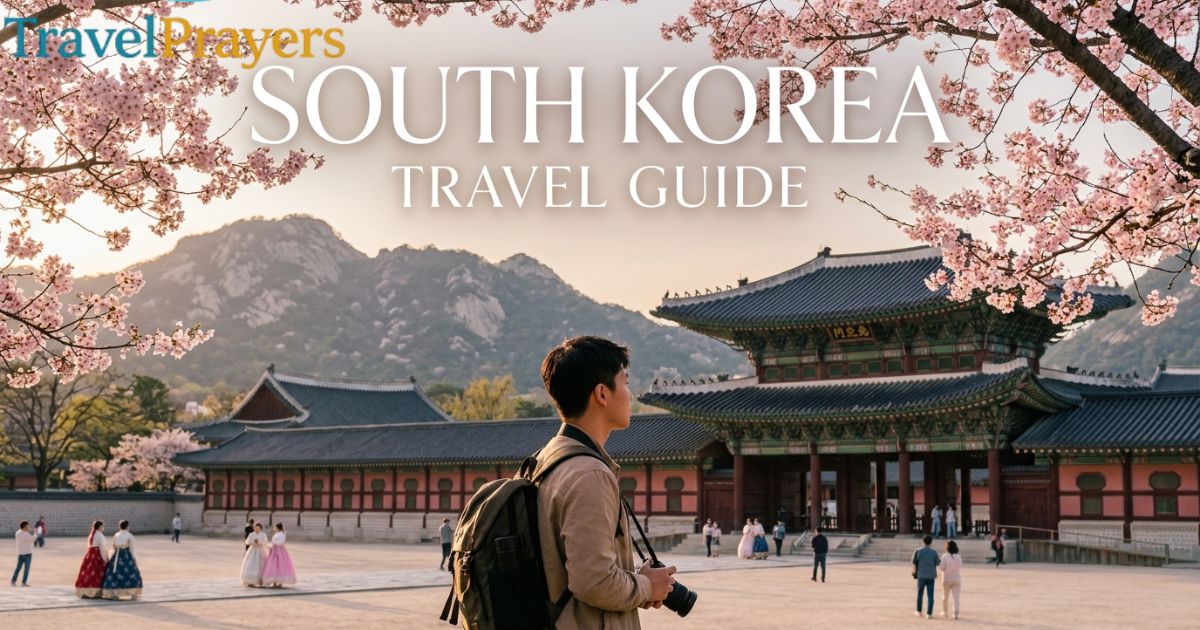
Indian passport holders need a pre-approved visa for South Korea, so planning starts with paperwork. A realistic one-week trip from India usually costs ₹1.5–2.5 lakh per person, flights included. Spring and autumn offer the best weather. This South Korea travel guide covers the visa, costs, a 7-day plan, transport, food, and the mistakes that trip up first-timers.
Why South Korea Is Worth the Trip
South Korea packs palaces, mountains, beaches, and some of the world’s best public transport into a country smaller than Gujarat. A first-timer can see a 600-year-old royal palace in the morning and a neon food street at night. Everything connects by fast train, metro, or a short flight.
What sets it apart from other East Asian destinations
- Easy to navigate. Signs in Seoul’s metro and major stations include English. Trains run on time.
- Cheaper than Japan. One travel agency estimate puts Korea at 15–20% cheaper than Japan on flights, hotels, and food. Treat that as a rough guide.
- Four real seasons. Cherry blossoms, green summers, red autumn leaves, and snow all draw visitors.
- Food culture. Street snacks cost little, and Korean barbecue is a social meal.
- Variety in one trip. You can combine a big city, a coastal city, and a volcanic island in a single week.
The main drawbacks are the visa process, which takes planning, and the lack of daily direct flights from many Indian cities.
Visa Requirements for Indian Travelers
Yes, Indians need a visa. There is no visa on arrival and no tourist e-visa for regular Indian passports. Apply well before you book anything non-refundable.
Which Visa Do You Need?
Most tourists need the C-3-9 short-term general tourist visa. It allows stays of up to 90 days per entry.
One exception exists. Jeju Island lets Indian citizens stay visa-free for up to 30 days, but only if you fly directly to Jeju without entering the mainland first. Several sources describe this rule, so confirm the current conditions before booking a Jeju-only trip.
K-ETA does not apply to Indians. K-ETA is for citizens of visa-exempt countries. A few websites claim otherwise. Treat any site that offers K-ETA for Indian passports with suspicion, and check Korea’s official visa portal first.
How to Apply
Applications go through the Korea Visa Application Centre in India or the Korean diplomatic mission. Processing commonly takes 5–15 working days, depending on the source and season. Apply at least three to four weeks before departure.
Expect to submit:
- A passport valid for at least six months, with blank pages
- Recent passport-size photographs
- A completed application form
- Bank statements and income proof, such as ITR or salary slips
- Flight and hotel bookings or a day-wise itinerary
- Travel insurance (strongly advised, and sometimes asked for)
Requirements vary by applicant and can change, so use the checklist on the official portal.
e-Arrival Card: Don’t Miss This
From 1 January 2026, foreign visitors must also fill out a free online e-Arrival Card within 72 hours before arrival. It is separate from the visa. Use only the official Korean government site, not a paid third-party service.
Visa Cost for Indians
Reported official fees effective 1 August 2026:
| Visa type | Fee (approx.) |
| Single-entry, up to 90 days | ₹3,600 |
| Single-entry, over 90 days | ₹5,400 |
| Double-entry | ₹6,300 |
| Multiple-entry | ₹8,100 |
The application centre adds a service charge. Some sites still quote older or dollar-based fees, such as US$40. Fees and policies are subject to change, so confirm before you pay.
South Korea Trip Cost from India
A 7-day trip costs roughly ₹1.5–2.5 lakh per person for most mid-range travelers, including flights. Budget travelers can bring that down to about ₹1–1.4 lakh. Estimates from several Indian travel sites vary, and the numbers below are working ranges, not quotes.
Flights (Round Trip from India)
Return fares from Delhi or Mumbai commonly fall between ₹35,000 and ₹70,000. Booking two to three months ahead usually helps. One budget traveler who booked nine months early reported much lower fares than last-minute prices. Direct flights exist from Delhi on some schedules, and one-stop routes via Bangkok, Singapore, or Vietnam often cost less.
Accommodation Per Night
- Hostels and guesthouses: about ₹1,500–2,500
- Mid-range hotels: about ₹4,000–8,000
- Upscale hotels: ₹10,000 and above
Seoul neighborhoods like Hongdae, Myeongdong, and Dongdaemun have many mid-range options near metro stations.
Food Per Day
Budget about ₹1,200–2,500 per day if you mix street food, convenience stores, and one sit-down meal. The won is worth roughly ₹0.06 at the time of the sources we checked, so check the current rate before you travel.
Transport Within South Korea
Metro and bus rides in Seoul cost about 1,500 won per trip. The Seoul–Busan KTX costs roughly 55,000–60,000 won one way. Taxis add up quickly, especially for longer rides.
Total Budget Summary
| Expense (7 days, per person) | Budget | Mid-range |
| Flights | ₹35,000–45,000 | ₹50,000–70,000 |
| Visa | ₹3,600+ | ₹3,600+ |
| Stay (6–7 nights) | ₹12,000–18,000 | ₹30,000–50,000 |
| Food | ₹8,000–12,000 | ₹14,000–20,000 |
| Local transport and KTX | ₹6,000–9,000 | ₹8,000–12,000 |
| Sightseeing and shopping | ₹8,000–15,000 | ₹15,000–30,000 |
| Approx. total | ₹1–1.4 lakh | ₹1.6–2.5 lakh |
Add travel insurance. Solo travelers pay more for rooms, while couples split hotel costs.
Best Time to Visit South Korea
The best time depends on weather, crowds, and budget. Spring and autumn win for most Indian travelers.
Spring: March to May ⭐ Best Overall
Cherry blossoms usually bloom in late March to mid-April. Days are mild, and sightseeing is comfortable. This is also the most crowded and expensive period, so book early.
Autumn: September to November ⭐ Best for Value
Clear skies and red-gold leaves make this the best season for photographs. Prices are often more reasonable than in spring. Seoraksan and Naejangsan see the most foliage in October.
Winter: December to February
Winter is cold and dry, with temperatures often below freezing in Seoul. It suits ski trips and Christmas lights, and flights tend to cost less. Pack proper thermals.
Summer: June to August
Summer is hot and humid, with a rainy period in late June and July. Beaches in Busan and Jeju are busy in August. Rain can disrupt outdoor plans, so keep a flexible schedule. For how monsoon changes a trip in a very different landscape, see our guide to the Valley of Flowers in August.
If you like picking a month by weather and festivals, our month-by-month guide to Varanasi shows the same approach for an Indian city.
Top Places to Visit in South Korea
Seoul — The Main Event
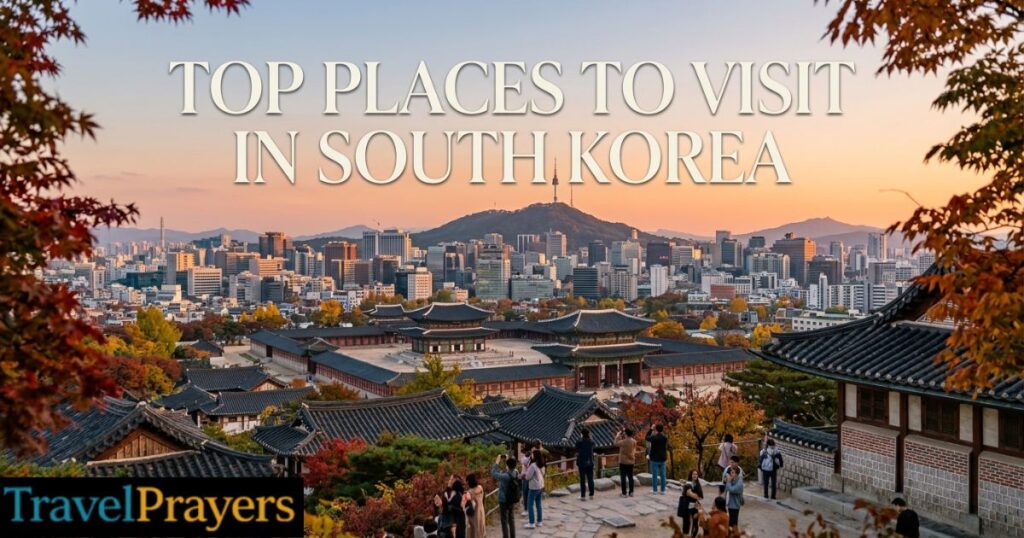
Seoul mixes palaces and skyscrapers. Gyeongbokgung Palace is the grandest royal site, and wearing a hanbok usually gets you free entry. Bukchon Hanok Village, Myeongdong’s street food, Hongdae’s nightlife, and N Seoul Tower round out a first visit. Allow at least three to four days.
Busan — Korea’s Coastal Soul
Busan is South Korea’s second-largest city, about 2.5 hours from Seoul by KTX. Haeundae Beach, Gamcheon Culture Village, Haedong Yonggungsa Temple, and the Jagalchi fish market are the main draws. It feels more relaxed than Seoul.
Jeju Island — Nature at Its Best
Juju offers volcanic landscapes, waterfalls, and coastal drives. Hallas an is South Korea Travel Guide tallest mountain, and Seongsan Echelon is a famous sunrise crater. Rent a car or hire a driver, since public buses cover distances slowly.
Gyeonggi — Korea’s Ancient Capital
Gyeongju was the capital of the Silla kingdom. Bulguksa Temple, Seokguram Grotto, and the royal tombs sit close together. It works well as a stop between Seoul and Busan.
South Korea Itinerary: 7 to 10 Days
7-Day Itinerary
Day 1: Arrive in Seoul. Check in, then walk through Myeongdong for street food.
Day 2: Palaces and old Seoul. Visit Gyeongbokgung, Bukchon Hanok Village, and Insadong.
Day 3: Day trip. Choose Nami Island, a DMZ tour (book ahead), or Suwon’s fortress.
Day 4: Seoul to Busan. Take the morning KTX. Spend the evening at Haeundae.
Day 5: Busan. Gamcheon Culture Village, Haedong Yonggungsa, and Jagalchi Market.
Day 6: Return to Seoul. Shop in Hongdae or Dongdaemun and see N Seoul Tower at night.
Day 7: Departure. Leave time for the airport train and tax-refund counters.
10-Day Itinerary (Adds Jeju)
Keep Days 1–5 as above. Fly from Busan or Seoul to Jeju on Day 6. Spend Days 7–8 on Hallasan, Seongsan Ilchulbong, and the west coast. Return to Seoul on Day 9 and depart on Day 10. Domestic flights to Jeju leave from Gimpo and Busan, and booking early usually saves money.
Getting Around South Korea
The T-money Card — Get This First
T-money is a rechargeable card for the metro, buses, and many taxis. Buy it at convenience stores or airport counters and top it up with cash. It works across most cities.
Metro
Seoul’s metro is fast, clean, and easy to follow. Lines are color-coded, and stations show English names.
KTX High-Speed Train
KTX trains connect Seoul with Busan and other cities. Book seats online or at stations, especially on weekends and holidays.
Flights to Jeju
Daily flights run from Seoul (Gimpo) and Busan. The flight takes about an hour.
Taxis and Ride Apps
Taxis are safe but expensive for long trips. Kakao T is the most widely used local ride app, though foreign cards can be hit-or-miss.
Navigation Apps
Google Maps works poorly for walking and driving directions in Korea. Naver Map and KakaoMap work better. Papago helps with translation.
What to Eat in South Korea
Must-Eat Dishes
- Bibimbap: rice with vegetables, egg, and gochujang
- Korean barbecue: grilled meat shared at the table
- Tteokbokki: spicy rice cakes, a street-food staple
- Kimchi jjigae: a spicy stew
- Hotteok: a sweet filled pancake, popular in winter
- Naengmyeon: cold noodles, good in summer
For Vegetarian Travelers
Vegetarian food is possible but take care. Many dishes use fish sauce, anchovy stock, or meat broth. Look for temple food restaurants, which are plant-based. Ask for “no meat, no fish.” Itaewon and some parts of Seoul have Indian restaurants. Packing instant snacks from India can help on tight days.
Important Things to Know Before You Go
- Money: Cards work widely, but carry some cash for street stalls and markets.
- Electricity: Korea uses 220V sockets (Type C/F). Indian plugs often fit, but carry an adapter.
- Internet: Buy an eSIM or a pocket Wi-Fi in advance.
- Tipping: Not expected.
- Tax refund: Tourists can claim refunds on larger purchases. Keep receipts and your passport.
- Etiquette: Remove shoes indoors, and use both hands when receiving items from elders.
- Insurance: Medical costs for visitors can be high.
- Rules change: Visa fees, arrival procedures, and airline routes can change. Check official sources before departure, including Visit Korea’s tourism site.
Planning more trips? Browse our travel guides for destinations across Asia and the Himalaya. If you want a high-altitude trip after Korea, our Everest Base Camp altitude guide explains how to acclimatize.
South Korea Tour Packages from India
Packages suit first-time travelers who want help with visa paperwork and hotels. One Indian blog notes that a typical 6–7 day package can cost around ₹1.8–2 lakh, with extra expenses not covered. Another puts a 5-day trip at ₹1.3–1.8 lakh. Prices depend on season and hotel class.
Before booking, check:
- Whether flights, visa help, and airport transfers are included
- Hotel names and locations
- Which meals are covered
- Entry tickets for sites like Nami Island or the DMZ
- Cancellation and refund rules
Self-planning costs less if you are comfortable booking your own trains and hotels. Packages cost more but reduce stress.
Recommended Destinations
If you have extra days, consider these after the main four:
- Seoraksan National Park (near Sokcho): mountain hiking, best in autumn
- Jeonju: known for hanok houses and traditional food
- Suwon: a UNESCO-listed fortress, an easy day trip from Seoul
- DMZ: a guided border-area tour from Seoul, which needs advance booking
Frequently Asked Questions
Is South Korea expensive to travel?
South Korea costs more than Southeast Asia but less than Japan or Western Europe. Seoul hotels and taxis are the biggest costs. Street food, public transport, and hostels keep daily spending manageable.
How many days are enough for South Korea?
Seven days covers Seoul, a day trip, and Busan. Ten days lets you add Jeju or Gyeongju. Five days works if you stay mostly in Seoul.
Do travelers need a visa for South Korea?
Yes, Indian passport holders need a visa, usually the C-3-9 tourist visa. Jeju Island offers a visa-free option only on a direct flight to Jeju. Check the official visa portal before you apply.
What is the best time to visit South Korea?
Spring (March–May) and autumn (September–November) are best, with mild weather and scenery. Autumn often has better prices. Winter suits skiing, and summer is hot and rainy.
Can Indians use K-ETA for South Korea?
No. K-ETA is only for citizens of visa-exempt countries. Indian passport holders need a visa instead, and they must also complete the e-Arrival Card online before arrival.
Conclusion
South Korea works well for Indian travelers who plan ahead. Start with the visa, book flights early, and pick spring or autumn for the best weather. A week lets you enjoy Seoul and Busan without rushing, and Jeju fits a longer trip.
Use this South Korea travel guide as a starting point, then verify visa fees, flight options, and entry rules on official sites before you book. A little preparation makes the trip smoother and more affordable.
