
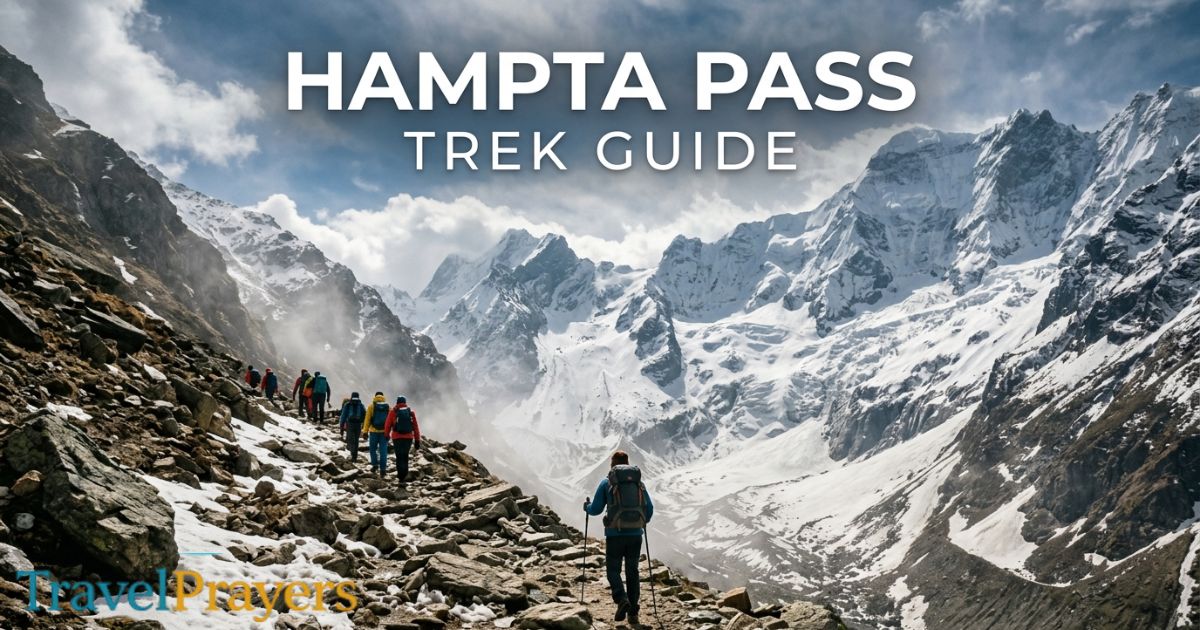
The Hampta Pass trek is a 5-day crossover in Himachal Pradesh. It starts near Manali in the green Kullu Valley, climbs to 4,270 m (14,010 ft), and ends in the dry Chandra Valley of Lahaul. Most operators charge about ₹6,500 to ₹12,500 per person from Manali, plus 5% GST. The season runs from mid-June to mid-October. As of early November 2026, snow has closed the pass, so plan your next trek for June 2027.
This Hampta Pass Trek Guide covers the day-by-day route, realistic costs, the best month for your goals, permits, difficulty and the mistakes that cost trekkers days. Operators publish slightly different altitudes and distances, so this guide shows ranges where they disagree.
Hampta Pass Trek at a Glance
| Detail | What to expect |
| Region | Kullu and Lahaul districts, Himachal Pradesh |
| Highest point | Hampta Pass, 4,270 m (14,010 ft) |
| Duration | 5 days / 4 nights from Manali |
| Walking distance | About 25–28 km (operators quote 24–35 km) |
| Difficulty | Moderate; Day 3 is the hardest |
| Season | Mid-June to mid-October |
| Route type | Crossover (you start and end in different valleys) |
| Typical cost | ₹6,500–₹12,500 per person + 5% GST, Manali to Manali |
The Himachal Pradesh government lists the pass at 4,270 m on its official trekking portal. It also shows a minimum of five days for the trek. Treat that as a planning baseline, because operators run the route in four to six days.
Why Hampta Pass Differs From Other Treks Near Manali
Hampta is a crossover, not an out-and-back hike. After Day 3 you cannot simply turn around, because the trail drops into a different valley. That shapes how you plan, as the sections below explain.
The two sides of the pass also look very different. The Kullu side has pine forest, meadows and waterfalls. The Lahaul side is bare, brown and dry. The Pir Panjal range blocks much of the monsoon, so rain hits the Kullu side harder than the Lahaul side.
Is the Hampta Pass Trek Difficult?
The trek is moderate, and fit beginners can finish it. Operators accept trekkers from roughly age 10–12 up to about 60, depending on fitness and the company.
Three things make it harder than it looks on paper:
- Fast altitude gain. You start near 2,800 m at Jobra and cross 4,270 m by Day 3. That is a steep climb in under three days.
- The long Day 3. Trekkers walk about 8–9 km over 6–9 hours, with a steep final push to the pass.
- River crossings. Operators report two or three crossings. Water runs highest in June and July from snowmelt, and after heavy rain.
Start training six to eight weeks before the trek. Walk or jog 5 km regularly, climb stairs, and build up to carrying a loaded daypack. Many operators also expect you to finish a short distance in a set time, so check each company’s fitness test.
Hampta Pass Trek Itinerary: Day by Day
Camp names and altitudes differ slightly between operators. The route below is the most common one from Manali to Chhatru, with Chandratal Lake as an optional ending.
| Day | Route | Walking | Altitude at camp |
| 1 | Manali → Jobra (drive) → Chika | 2–3 km, 2–3 hrs | About 3,050 m (10,100 ft) |
| 2 | Chika → Balu Ka Ghera | 5–7 km, 5–6 hrs | About 3,600 m (11,900 ft) |
| 3 | Balu Ka Ghera → Hampta Pass → Shea Goru | 8–9 km, 6–9 hrs | About 3,800 m at Shea Goru |
| 4 | Shea Goru → Chhatru, then drive to Chandratal | 5–6 km, about 4 hrs | Chhatru about 3,350 m |
| 5 | Chandratal → Manali (drive) | None | Manali 2,050 m |
Day 1: Manali to Chika
Your guide picks you up in Manali (2,050 m) and drives you to Jobra, the trailhead near Prini. The walk to Chika is short and gentle, through forest and meadow. Use the afternoon to rest and adjust to the altitude. Your phone signal will likely disappear after Chika and not return until the road at Chhatru.
Day 2: Chika to Balu Ka Ghera
The trail follows a valley and crosses the Jwara meadows. You may cross a stream or two and walk over boulders before reaching Balu Ka Ghera. This campsite sits at the foot of the pass and has the best views of the trek. Sleep early, because Day 3 starts before sunrise.
Day 3: Crossing Hampta Pass
This is the day that decides the trek. Groups leave in the dark, usually between 4 and 6 a.m., so they reach the pass before afternoon clouds and wind arrive. The climb is steady, and early-season snow can cover the upper section. At the top you look back at green Kullu and forward to dry Lahaul. The descent to Shea Goru is steep and loose in places, so trekking poles help your knees.
Day 4: Shea Goru to Chhatru
The trail follows the river downstream through a rocky valley and ends at the Chhatru road. From there, most groups drive to Chandratal Lake, roughly 70–75 km away. Drive time depends on the road and can run from three to five hours. Whether you reach Chandratal depends on road conditions and permissions that day, so treat it as likely but not guaranteed.
Day 5: Return to Manali
The group drives back to Manali, often via the Atal Tunnel or the Rohtang route, depending on road status. Don’t book a same-evening bus out of Manali. Delays on the road are common, and a missed bus costs more than an extra night’s stay.
Best Time for the Hampta Pass Trek
The best month depends on what you want to see. The pass is typically trekkable from mid-June to mid-October and closed from November to May.
| Month | What you get | Main drawback |
| Mid-June to early July | Snow near the pass, blooming Kullu meadows | High, cold river crossings |
| Late July to August | Lush green Kullu side, full waterfalls | Monsoon rain, mud, possible trail closures |
| September | Clearest skies, easiest Chandratal access | Cooler nights |
| October | Cold, crisp air, fewer trekkers | Early snow can close the pass |
For most first-timers, September gives the most reliable mix of weather and views. If you want snow, choose late June. If you want green landscapes, choose August, but add buffer days. Authorities have restricted trekking in the Kullu–Manali region during bad monsoon periods before. One operator reported that the Kullu Forest Division suspended Hampta Pass activity in September 2025 over unsafe conditions. Check current status before you book.
Hampta Pass Trek Cost
Operator packages from Manali typically cost ₹6,500 to ₹12,500 per person, plus 5% GST. Prices vary by season, group size, and tent sharing. Packages starting from Delhi usually run higher, around ₹9,800 to ₹15,500 per person, because they add transport.
| Cost item | Usually included? | Notes |
| Camping, tents, sleeping bags | Yes | Check whether sleeping bags are included or rented |
| Meals on the trek | Yes | Breakfast, lunch, snacks and dinner |
| Guide and trek staff | Yes | Group sizes vary by operator |
| Forest permits and camping fees | Usually | Confirm in writing |
| Manali–Jobra and Chhatru–Manali transfers | Usually | Some packages exclude them |
| GST (5%) | No | Added on top of the base price |
| Chandratal entry fee | Often no | One source reports about ₹150 per person |
| Porter or mule for your bag | No | Pay extra if you don’t want to carry it all |
| Gear rental, insurance, Manali hotel | No | Budget separately |
Cheaper isn’t always better. Very low prices can mean larger groups, thinner staff or skipped permits. Ask each operator how many guides go with the group, whether they carry oxygen and a first-aid kit, and what their forest permit covers.
Permits and Rules
A forest permit is required for the Kullu side of the route. Most operators arrange it for you, which is the easiest route for first-timers. Independent trekkers should ask at the Forest Office in Manali before setting out. Sources disagree on whether Indian nationals need an individually issued permit, so verify the current rule locally.
Enforcement is real. The Tribune has reported forest officials turning back hundreds of trekkers who lacked permission. Vehicles heading into Lahaul and Spiti may also need an e-pass, and your operator should handle that. Rules change, so confirm details with your operator and the local forest office before departure.
How to Reach Manali
Manali is the base for the trek.
- By road: Overnight buses run from Delhi and Chandigarh. Delhi to Manali is roughly a 12–14 hour journey, and Chandigarh is closer.
- By air: The nearest airport is Kullu–Manali Airport at Bhuntar, about 50 km from Manali. Flights are limited and weather can disrupt them.
Arrive a day early. Manali sits at 2,050 m, and a night there helps your body adjust before you climb.
What to Pack
Layers matter more than quantity. Mornings are cold, afternoons can be hot, and rain can arrive anytime on the Kullu side.
- Broken-in trekking shoes with good grip
- Waterproof jacket and rain pants (even though Lahaul is dry)
- Fleece and a warm down or padded jacket
- Quick-dry trekking pants and base layers (skip cotton)
- Warm cap, gloves, sunglasses and high-SPF sunscreen
- Trekking poles, headlamp, water bottles and a daypack with a rain cover
- Personal medicines and a basic first-aid kit
Carry some cash. There are no ATMs once you leave Manali.
Altitude Sickness on Hampta Pass
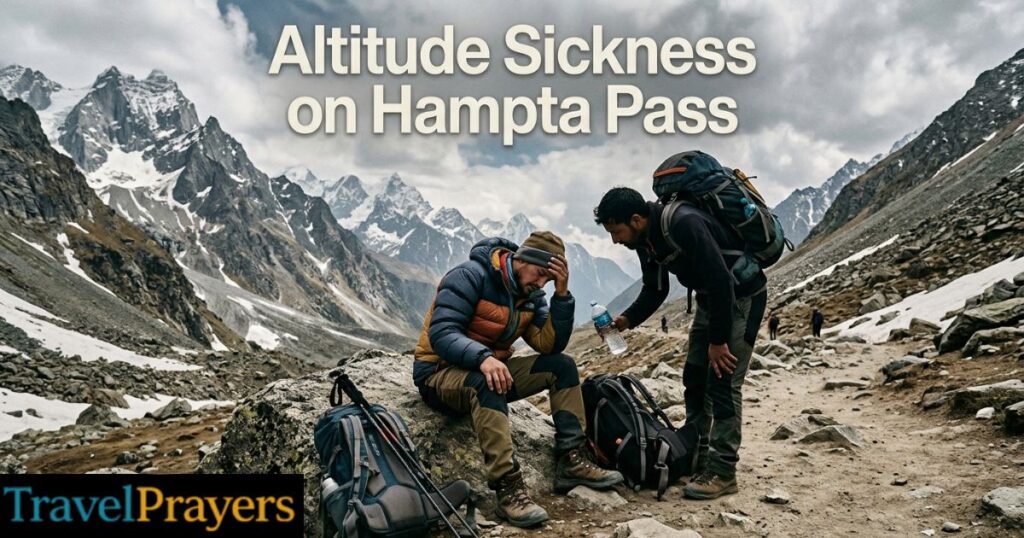
Acute mountain sickness can affect anyone who climbs fast, whatever their fitness. Typical signs are headache, nausea, dizziness and unusual tiredness. Drink plenty of water, avoid alcohol, and tell your guide about symptoms early. Do not take altitude medicine such as Diamox without asking a doctor first. Our Everest Base Camp altitude guide explains AMS symptoms and acclimatization rules that apply to any high-altitude trek.
Common Mistakes to Avoid
- Booking a tight 5-day window. One rain delay can break the plan. Add a spare day in Manali.
- Skipping rain gear in the dry season. The Kullu side stays wet well into September.
- Starting Day 3 late. Afternoon weather turns quickly above 4,000 m.
- Counting on Chandratal. Road status decides it, so keep your expectations flexible.
- Choosing the cheapest operator without checking permits and staffing.
Plan More Himalayan Trips From Manali
Hampta Pass pairs well with other Himachal destinations. The Jispa travel guide covers the Manali–Leh highway stretch north of Chhatru. For a bigger peak challenge, read the Deo Tibba Peak expedition guide. If you prefer a quieter village stay, see our guides to Shangarh in the Sainj Valley and Chitkul in Kinnaur. Another monsoon-season option in the region is Valley of Flowers in August.
Frequently Asked Questions
Is the Hampta Pass trek good for beginners?
Yes, if you are fit and prepared. The trek is rated moderate and many first-time trekkers complete it with a guided group. Train for at least six weeks, and expect Day 3 to be tough.
How many days does the Hampta Pass trek take?
Most operators run it in five days and four nights from Manali, including the Chandratal drive. The trekking itself takes about three to four days. Add a buffer day for weather.
What is the best time to do the Hampta Pass trek?
September offers the clearest skies and easiest Chandratal access. June has snow and high rivers, while July and August bring monsoon rain on the Kullu side. The pass closes from November to May.
How much does the Hampta Pass trek cost?
Guided packages usually cost ₹6,500 to ₹12,500 per person from Manali, plus 5% GST. Delhi-based packages cost more. Budget extra for gear rental, porters, insurance and an extra night in Manali.
Do I need a permit for the Hampta Pass trek?
You need forest permission for the Kullu-side route, and operators normally arrange it. Independent trekkers should check with the Forest Office in Manali. Rules and closures can change, so verify before you travel.
Final Thoughts
The Hampta Pass trek packs two landscapes into five days, and it rewards preparation. Pick your month by what you want to see, add a buffer day, and confirm permits and staffing with your operator. Once you check current conditions, you can book with confidence for the next season.
